
GST Compliance: Cost or Business Necessity for Businesses in India? In today’s competitive business environment, many small businesses and startups still see GST compliance as an extra expense rather than a strategic business requirement. However, proper GST compliance is no longer optional for businesses in India that are growing. It directly impacts business credibility, cash flow, taxation, vendor relationships, and long-term growth. Whether you are a startup, trader, manufacturer, freelancer, or service provider, understanding the importance of GST compliance can help your business avoid penalties and create financial stability.
What is GST Compliance?
GST compliance refers to fulfilling all obligations under the Goods and Services Tax system, including:
- GST registration
- Timely GST return filing
- Issuing proper tax invoices
- Maintaining accounting records
- Reconciliation of GSTR-1, GSTR-2B, and GSTR-3B
- Payment of GST liability
- E-invoicing and e-way bill compliance where applicable
Businesses that fail to comply may face penalties, notices, interest charges, and restrictions on Input Tax Credit (ITC).
Why Many Businesses Think GST Compliance is a Cost
Many small business owners consider GST compliance an additional burden because of:
- CA or accountant fees
- Accounting software costs
- Time spent on documentation
- Frequent GST law updates
- Monthly and annual filing requirements
For startups and SMEs, these costs may appear unnecessary initially. But ignoring GST compliance often creates much bigger financial and legal risks later.
GST Compliance is a Business Necessity — Here’s Why
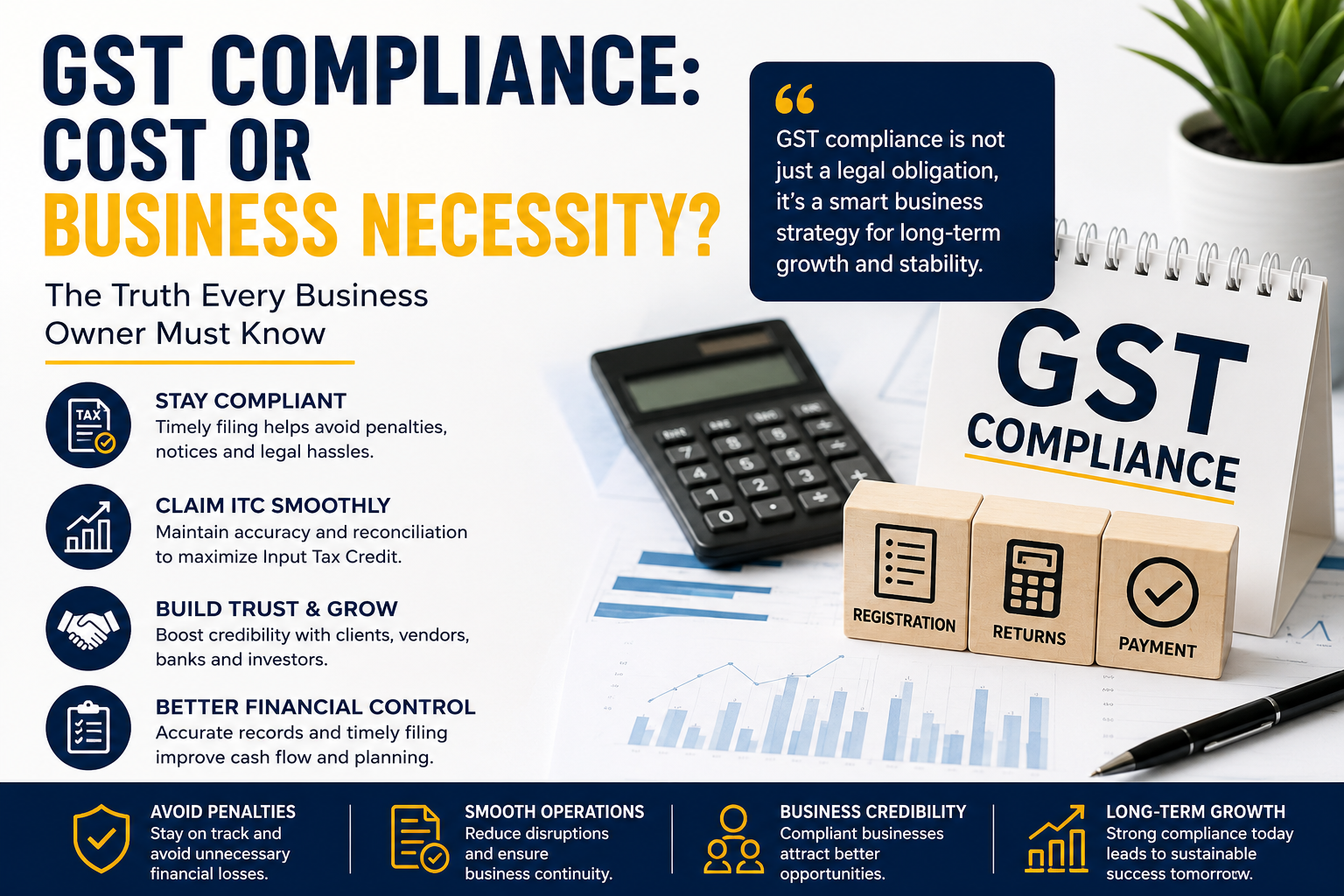
1. Avoid Heavy Penalties and Notices
Late filing of GST returns attracts:
- Late fees
- Interest on tax liability
- GST notices from authorities
- Possible cancellation of GST registration
Timely compliance helps businesses avoid unnecessary legal complications and financial losses.
2. Claim Input Tax Credit (ITC) Smoothly
One of the biggest advantages of GST is Input Tax Credit. Businesses can reduce tax liability by claiming credit on eligible purchases.
However, ITC can only be claimed when:
- Vendors file returns correctly
- Invoices match with GSTR-2B
- Compliance records are maintained properly
Poor GST management can block working capital and reduce profitability.
3. Builds Business Credibility
GST-compliant businesses appear more professional and trustworthy to:
- Clients
- Vendors
- Investors
- Banks
- Government departments
Many large companies prefer working only with GST-compliant vendors to avoid ITC mismatches.
4. Improves Financial Discipline
Regular GST filing encourages businesses to maintain:
- Proper bookkeeping
- Accurate invoicing
- Organized financial records
- Better cash flow tracking
This improves overall business management and financial planning.
5. Helps During Funding and Loans
Banks and investors often review:
- GST returns
- Sales records
- Tax compliance history
Consistent GST compliance increases the chances of:
- Business loans
- Startup funding
- Credit approvals
6. Reduces Risk During GST Audits
Businesses with poor documentation face higher risks during:
- Department scrutiny
- GST audits
- Assessment proceedings
Proper compliance reduces stress and legal exposure.
Common GST Compliance Mistakes Businesses Make
Many businesses unknowingly create compliance risks by:
- Filing incorrect GST returns
- Ignoring GSTR-2B reconciliation
- Claiming excess ITC
- Missing return due dates
- Using incorrect HSN/SAC codes
- Failing to maintain invoices properly
These mistakes can lead to penalties and tax disputes.
How Businesses Can Improve GST Compliance
Maintain Proper Accounting Records
Use reliable accounting software and update books regularly.
Reconcile GST Data Monthly
Match:
- Sales invoices
- Purchase invoices
- GSTR-1
- GSTR-2B
- GSTR-3B
File Returns Before Due Dates
Avoid last-minute filing to reduce errors and portal issues.
Work With Qualified Professionals
Professional guidance helps businesses stay updated with changing GST rules.
Conduct Internal GST Reviews
Periodic reviews help identify compliance gaps early.
GST Compliance: Expense or Investment?
Businesses that treat GST compliance as an investment usually benefit through:
- Better financial management
- Higher credibility
- Reduced penalties
- Smoother operations
- Improved growth opportunities
On the other hand, businesses ignoring compliance often spend significantly more on:
- Penalties
- Interest
- Litigation
- Tax disputes
- Business disruptions
Final Thoughts
GST compliance is no longer just a statutory formality. It has become an essential part of running a successful business in India. Proper compliance protects businesses from penalties, improves operational efficiency, and supports long-term growth.
Instead of viewing GST compliance as a cost, businesses should consider it a strategic investment that strengthens financial health and business reputation.