
Choosing the right bank account is an important financial decision for both individuals and businesses. Two of the most common types of bank accounts are Savings Accounts and Current Accounts. While both help you manage money, they serve different purposes and come with distinct features. If you're wondering about the difference between a savings account and a current account, this guide will help you understand their features and benefits, and determine which one is best suited to your needs.
What Is a Savings Account?
A Savings Account is designed for individuals who want to save money while earning interest on their deposits. It is ideal for salaried employees, students, homemakers, and anyone looking to build financial security.
Key Features of a Savings Account
- Earns interest on deposited funds
- Suitable for personal savings
- Easy online banking access
- Low minimum balance requirements
- ATM, debit card, and mobile banking facilities
- Encourages disciplined saving habits
Benefits of a Savings Account
- Helps build an emergency fund
- Generates passive income through interest
- Safe and secure storage of funds
- Easy access to money when required
What Is a Current Account?
A Current Account is primarily designed for businesses, entrepreneurs, startups, traders, and professionals who conduct frequent financial transactions.
Unlike savings accounts, current accounts generally do not offer interest on deposits. Instead, they provide higher transaction limits and business-friendly banking services.
Key Features of a Current Account
- Unlimited or high-volume transactions
- Suitable for business operations
- Overdraft facility available
- Faster payment processing
- Multiple banking services for businesses
- Higher minimum balance requirements
Benefits of a Current Account
- Facilitates smooth business transactions
- Helps manage daily cash flow
- Supports large deposits and withdrawals
- Provides overdraft support during cash shortages
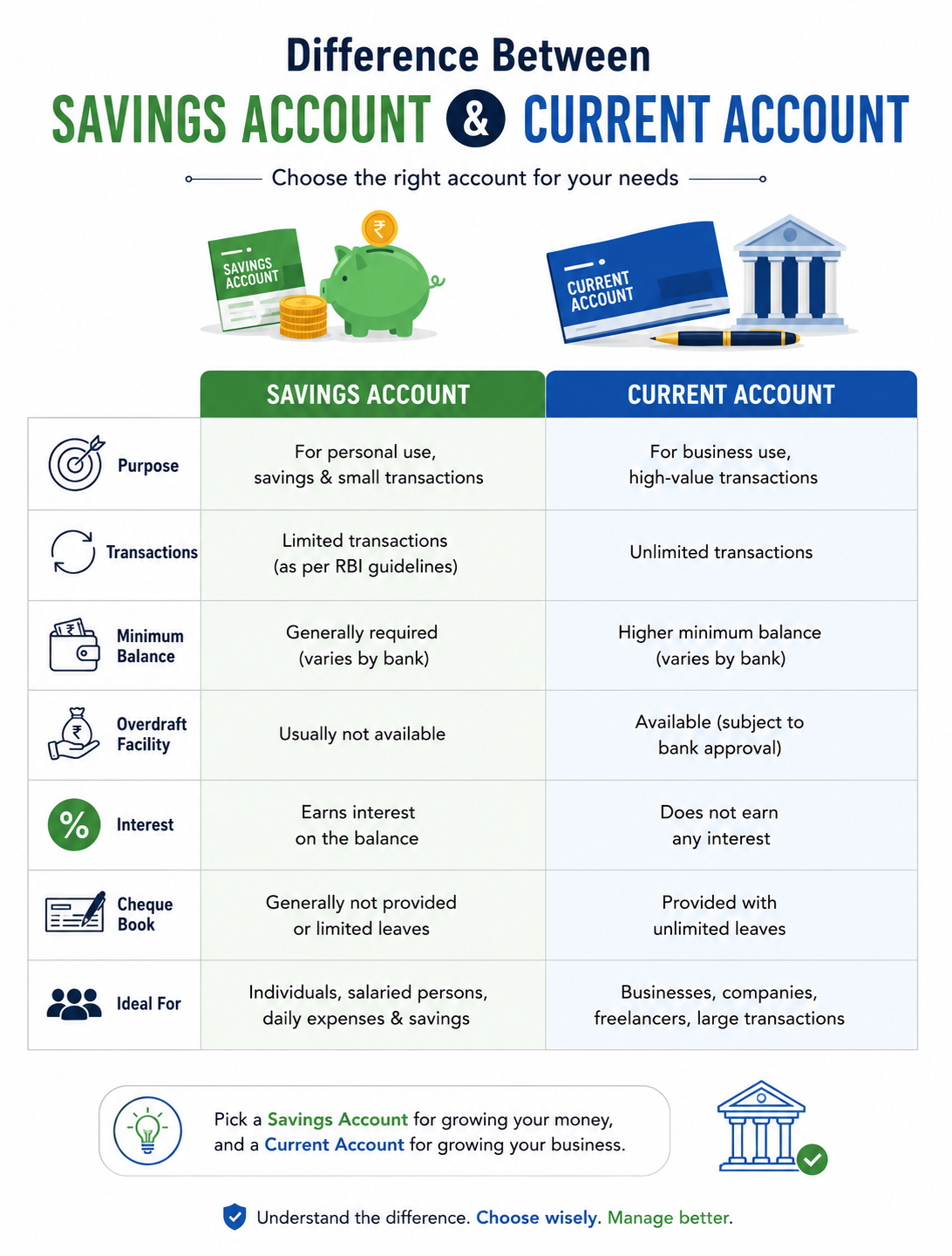
Savings Account vs Current Account: Key Differences
| Feature | Savings Account | Current Account |
|---|---|---|
| Purpose | Personal savings | Business transactions |
| Interest | Earns interest | Usually no interest |
| Account Holder | Individuals | Businesses, firms, professionals |
| Transaction Limit | Limited in some cases | High or unlimited |
| Minimum Balance | Low | Generally higher |
| Overdraft Facility | Rarely available | Commonly available |
| Cash Deposits & Withdrawals | Moderate | Frequent and large transactions |
| Best For | Saving money | Running a business |
Who Should Open a Savings Account?
A savings account is ideal if you:
- Are a salaried employee
- Want to save for future goals
- Need a secure place for personal funds
- Want to earn interest on your balance
- Have limited daily banking transactions
Who Should Open a Current Account?
A current account is suitable if you:
- Own a business or startup
- Operate a partnership firm or LLP
- Run a private limited company
- Handle frequent transactions
- Need an overdraft facility
- Require seamless business banking
Can a Business Use a Savings Account?
While small businesses may initially use a savings account, it is generally not recommended for long-term business operations. Most banks require businesses to maintain a current account because it offers transaction flexibility and specialised business banking features.
Using a current account also improves financial record-keeping and enhances credibility with customers and vendors.
Which Account Is Better: Savings or Current?
The answer depends on your financial needs.
Choose a Savings Account If:
- Your goal is to save money
- You want to earn interest
- You have personal banking requirements
- Your transaction volume is low
Choose a Current Account If:
- You run a business
- You need unlimited transactions
- You require overdraft facilities
- You manage regular payments to vendors and employees
Conclusion
Understanding the difference between a savings account and a current account is essential for effective financial management. A savings account helps individuals grow their money through interest, while a current account supports businesses with high-volume transactions and operational flexibility.
Before opening an account, evaluate your financial goals, transaction requirements, and banking needs. Choosing the right account can improve money management and support long-term financial success.
Frequently Asked Questions (FAQs)
1. Does a current account earn interest?
Generally, current accounts do not provide interest on deposits.
2. Can I open a current account without a business?
Some banks allow professionals and self-employed individuals to open current accounts, but requirements vary.
3. Which account is best for salaried employees?
A savings account is usually the best option for salaried individuals.
4. Can I have both a savings account and a current account?
Yes, many individuals and business owners maintain both accounts for separate purposes.
5. Why do businesses prefer current accounts?
Current accounts offer unlimited transactions, overdraft facilities, and business-specific banking services.