



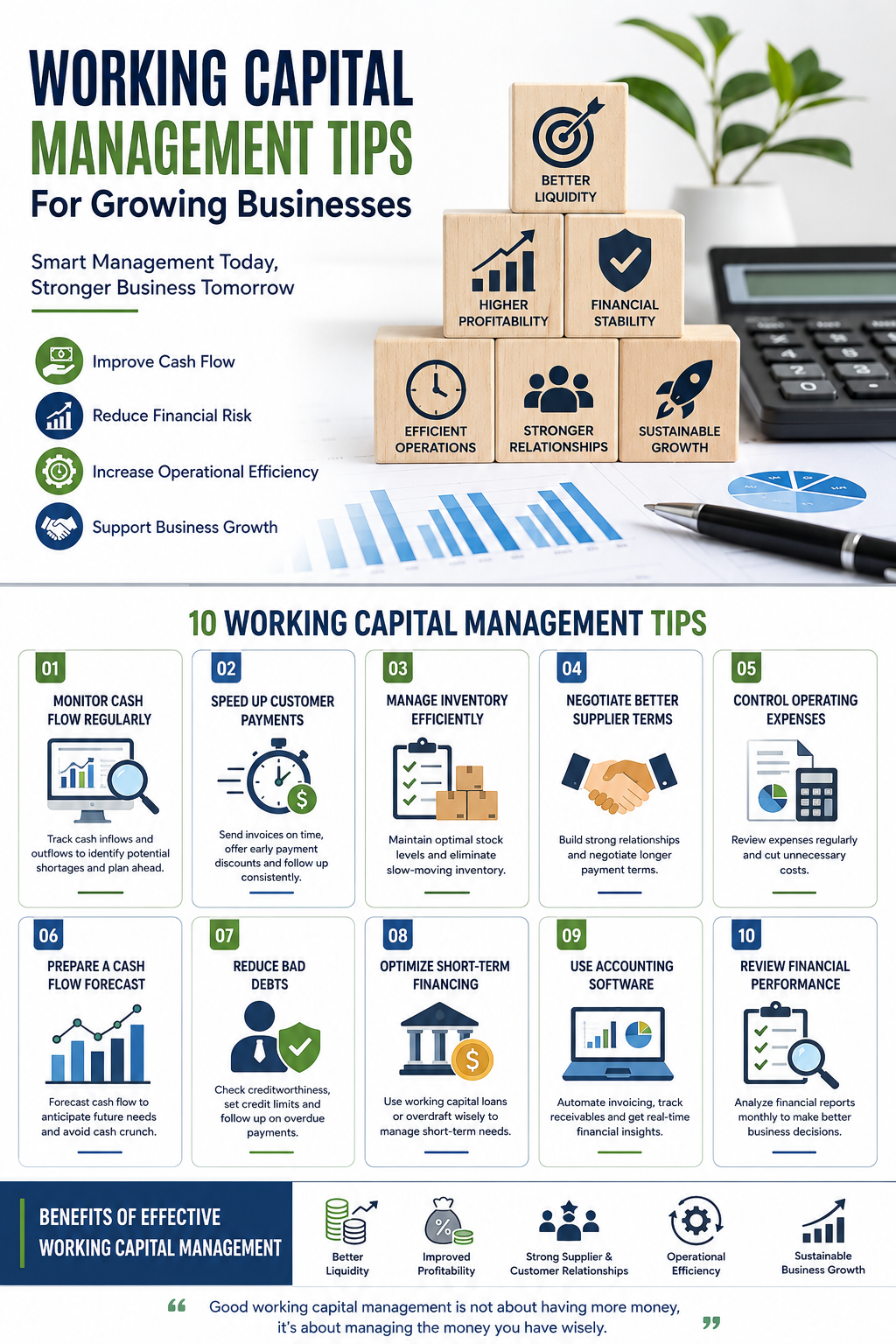
Every growing business needs sufficient cash to manage daily operations, pay employees, purchase inventory, and invest in expansion. While profits are important, they don't always guarantee that a business has enough cash available when needed. This is where working capital management becomes essential. Effective working capital management enables businesses to maintain liquidity, enhance operational efficiency, and ensure long-term financial stability. In this guide, we'll explain what working capital is, why it matters, and provide practical tips to optimize it.
What is Working Capital?
Working capital is the difference between a company's current assets and current liabilities.
Formula:
Working Capital = Current Assets − Current Liabilities
Current assets include:
- Cash and bank balances
- Accounts receivable
- Inventory
- Short-term investments
Current liabilities include:
- Accounts payable
- Short-term loans
- Outstanding expenses
- Taxes payable
A positive working capital indicates that a business can comfortably meet its short-term obligations.
Why Working Capital Management is Important
Managing working capital efficiently offers several advantages:
- Improves business cash flow
- Ensures smooth daily operations
- Reduces borrowing requirements
- Enhances supplier relationships
- Supports business expansion
- Improves profitability
- Helps manage financial risks
- Builds investor confidence
10 Working Capital Management Tips for Growing Businesses
1. Monitor Cash Flow Regularly
Cash flow is the backbone of every business.
Track:
- Daily cash inflows
- Monthly expenses
- Upcoming payments
- Seasonal variations
Using cash flow forecasting helps identify potential shortages before they become serious.
2. Speed Up Customer Payments
Late payments reduce available working capital.
Ways to improve collections:
- Send invoices immediately
- Offer early payment discounts
- Accept multiple payment methods
- Set clear payment terms
- Automate payment reminders
Faster collections improve liquidity.
3. Manage Inventory Efficiently
Excess inventory locks up valuable cash.
Maintain optimal inventory by:
- Tracking stock levels
- Forecasting demand
- Removing slow-moving items
- Using inventory management software
Efficient inventory control frees up working capital.
4. Negotiate Better Supplier Payment Terms
Strong supplier relationships can improve cash flow.
Consider:
- Longer payment periods
- Bulk purchase discounts
- Flexible payment schedules
Never delay payments without prior agreement.
5. Control Operating Expenses
Review business expenses regularly.
Reduce unnecessary costs such as:
- Unused software subscriptions
- Excess office expenses
- High utility costs
- Inefficient business processes
Cost control directly improves available working capital.
6. Prepare a Cash Flow Forecast
Forecasting helps businesses prepare for future financial needs.
Include:
- Expected sales
- Customer payments
- Supplier payments
- Payroll
- Taxes
- Loan repayments
Monthly forecasting supports better financial planning.
7. Reduce Bad Debts
Unpaid customer invoices hurt working capital.
Reduce credit risk by:
- Performing customer credit checks
- Setting credit limits
- Following up on overdue invoices promptly
- Using written payment agreements
Healthy receivables improve cash availability.
8. Optimize Short-Term Financing
Businesses may require temporary funding during growth phases.
Suitable financing options include:
- Working capital loans
- Overdraft facilities
- Invoice financing
- Business credit lines
Choose financing based on actual business needs.
9. Use Accounting Software
Modern accounting software helps businesses:
- Monitor cash flow
- Track receivables
- Manage inventory
- Generate financial reports
- Automate invoicing
Real-time financial data improves decision-making.
10. Review Financial Performance Frequently
Analyze key financial reports every month.
Review:
- Balance Sheet
- Profit & Loss Statement
- Cash Flow Statement
- Accounts Receivable Aging
- Inventory Reports
Regular monitoring helps identify financial issues early.
Common Working Capital Management Mistakes
Avoid these common mistakes:
- Poor cash flow planning
- Excessive inventory
- Delayed customer collections
- Ignoring unpaid invoices
- Overspending on fixed assets
- Taking unnecessary short-term loans
- Lack of budgeting
- Poor expense management
Best Practices for Effective Working Capital Management
- Prepare monthly budgets
- Monitor cash flow weekly
- Improve invoice collection processes
- Negotiate supplier terms
- Maintain emergency cash reserves
- Reduce unnecessary expenses
- Invest in accounting software
- Review financial reports regularly
Benefits of Effective Working Capital Management
Businesses that manage working capital efficiently enjoy:
- Better liquidity
- Improved profitability
- Faster business growth
- Reduced financial stress
- Strong supplier relationships
- Better customer service
- Increased operational efficiency
- Higher business valuation
Frequently Asked Questions (FAQs)
What is ideal working capital?
There is no universal amount. Ideally, current assets should comfortably exceed current liabilities while avoiding excessive idle cash.
Why is working capital important?
It ensures a business can meet short-term obligations, maintain smooth operations, and support future growth.
How can small businesses improve working capital?
Small businesses can improve working capital by collecting payments faster, controlling expenses, managing inventory efficiently, and forecasting cash flow.
What causes poor working capital?
Common causes include slow customer payments, excessive inventory, high operating expenses, poor budgeting, and weak cash flow management.
Can accounting software improve working capital management?
Yes. Accounting software provides real-time financial insights, automates invoicing, tracks receivables, and simplifies cash flow management.
Conclusion
Working capital management is one of the most important aspects of financial success for any growing business. By effectively managing cash flow, inventory, receivables, payables, and expenses, businesses can enhance liquidity, mitigate financial risks, and establish a solid foundation for sustainable growth.
Whether you're a startup, small business, or expanding enterprise, adopting smart working capital management practices today will help your business remain financially healthy and prepared for future opportunities.