


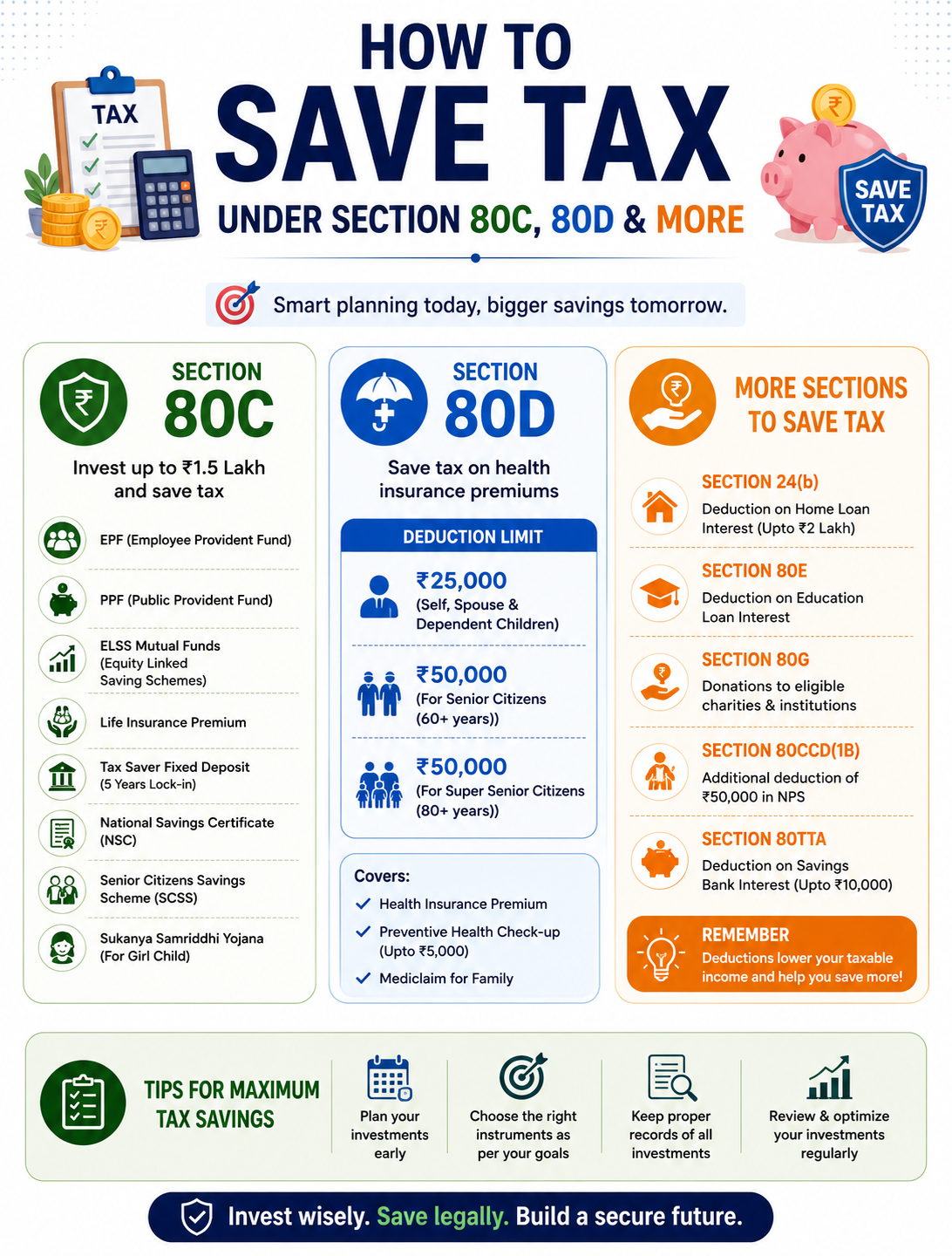
Paying tax is unavoidable, but paying more tax than you need to is a mistake many people make simply because they don't know about the deductions available to them. Here's a simple breakdown of the most useful ones. Section 80C — Save Up to ₹1,50,000 This is the most common deduction people use. You can claim up to ₹1,50,000 by investing or spending in things like: PPF (Public Provident Fund) EPF (already deducted from your salary) ELSS mutual funds Life insurance premiums Tuition fees for up to 2 children 5-year tax-saving fixed deposits Home loan principal repayment
All of these together are capped at ₹1,50,000 — not ₹1,50,000 for each one.
Section 80D — Health Insurance
If you have health insurance, you can claim:
- Up to ₹25,000 for self, spouse, and children
- An extra ₹25,000 if you also insure your parents
- These limits go up to ₹50,000 each if you or your parents are senior citizens
So if you're insuring yourself and senior citizen parents, you could save up to ₹1,00,000 in total.
Section 80CCD(1B) — Extra ₹50,000 via NPS
Beyond the ₹1,50,000 limit above, investing in NPS (National Pension System) gets you an additional ₹50,000 deduction. Many people miss this one.
A Few Other Useful Ones
- 80E — Interest paid on an education loan (no upper limit)
- 80TTA — Interest earned on your savings account, up to ₹10,000
- 80GG — Rent paid, if you don't get HRA from your employer
One Important Thing to Know
All these deductions only work if you're on the old tax regime. The new tax regime has lower rates but doesn't allow most of these deductions. So it's worth checking which one actually saves you more money based on your own investments.
Quick Tip
Don't wait till March to start investing for tax savings — plan it at the start of the financial year so you make better choices instead of rushed ones.
This is general information, not tax advice. Please talk to a Chartered Accountant for guidance specific to your situation.