


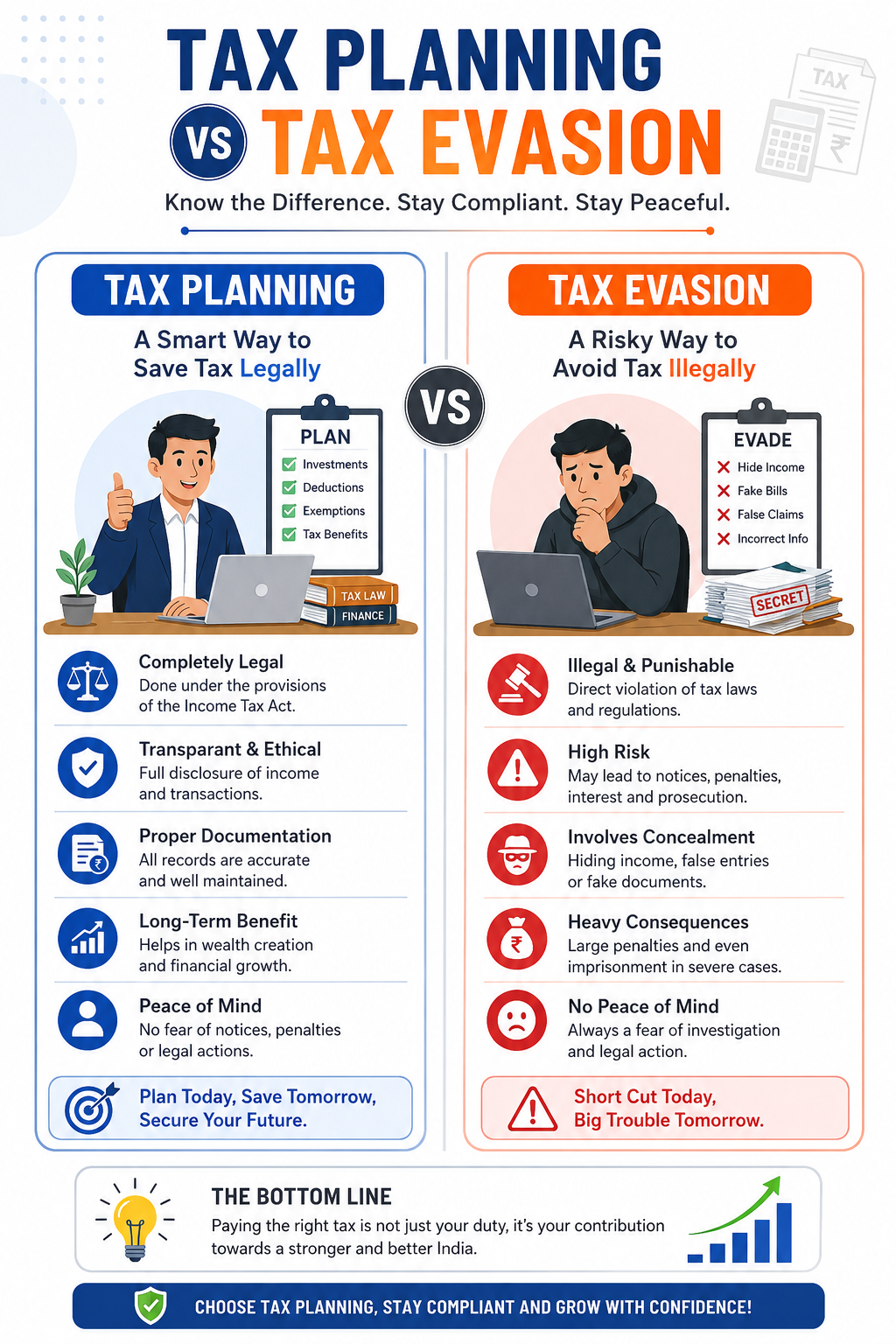
Understanding the distinction between tax planning and tax evasion is crucial for individuals, professionals, and businesses seeking to manage their taxes effectively. While both terms relate to reducing tax liability, they differ significantly in terms of legality and approach. Tax planning involves using legal provisions of the Income Tax Act to organise finances and claim eligible deductions, exemptions, and benefits. Tax evasion, on the other hand, involves deliberately hiding income, providing false information, or violating tax laws to avoid paying taxes.
What Is Tax Planning?
Tax planning is the process of arranging your financial affairs legally and efficiently to minimise your tax liability while complying with applicable tax laws.
A taxpayer may use available deductions, exemptions, investment options, and other provisions permitted under tax laws. The objective is not to hide income but to make informed financial decisions within the legal framework.
Examples of Tax Planning
Some common examples include:
- Claiming eligible deductions and exemptions
- Choosing an appropriate tax regime based on individual circumstances
- Planning investments that qualify for applicable tax benefits
- Timing certain financial transactions appropriately
- Maintaining accurate accounting and financial records
- Structuring business expenses correctly under applicable tax provisions
Effective tax planning for businesses can help improve financial management while keeping tax compliance on track.
What Is Tax Evasion?
Tax evasion is an illegal attempt to reduce or completely avoid tax by concealing income, submitting incorrect information, creating false records, or deliberately violating tax regulations.
Unlike tax planning, tax evasion involves intentional non-compliance.
Examples of Tax Evasion
Examples can include:
- Deliberately hiding taxable income
- Reporting false expenses
- Maintaining inaccurate financial records
- Concealing business transactions
- Providing incorrect information to tax authorities
- Using fake documents to claim tax benefits
Tax evasion can result in tax penalties, interest, additional tax liability, and other legal consequences, depending on the nature and severity of the violation.
Tax Planning vs Tax Evasion: Key Difference
| Basis | Tax Planning | Tax Evasion |
|---|---|---|
| Legality | Legal | Illegal |
| Objective | Reduce tax liability legally | Illegally avoid tax |
| Method | Uses permitted tax provisions | Uses concealment, false information, or prohibited methods |
| Records | Maintains accurate records | May involve manipulation or false records |
| Compliance | Follows tax laws | Violates tax laws |
| Risk | Generally compliant when properly implemented | Can lead to penalties and legal action |
Tax Planning vs Tax Avoidance
Tax planning is also different from tax avoidance.
Tax planning generally refers to legitimate steps taken within the tax framework to manage tax liability. Tax avoidance can refer to arrangements designed primarily to obtain a tax advantage by exploiting gaps or technical aspects of tax rules. Whether a particular arrangement is acceptable can depend on the applicable law and facts.
Therefore, taxpayers should not assume that every strategy that reduces taxes is automatically appropriate.
Why Is Tax Planning Important for Businesses?
For small and growing businesses, proper business tax planning can support better financial decision-making.
A well-organised approach can help businesses:
- Understand their potential tax obligations
- Identify legitimate tax deductions and benefits
- Maintain better financial records
- Prepare for tax payments in advance
- Reduce compliance errors
- Improve cash-flow planning
- Avoid unnecessary tax-related problems
Tax planning should always be based on accurate financial information and the applicable tax rules.
How Can Businesses Avoid Tax Evasion?
Businesses can take several practical steps to maintain proper tax compliance:
1. Maintain Accurate Books
Record sales, purchases, expenses, income, and other financial transactions accurately.
2. Keep Supporting Documents
Maintain invoices, receipts, bank statements, contracts, and other relevant documents needed to support financial transactions and tax claims.
3. Report Income Correctly
Ensure that taxable income and relevant transactions are properly reported in the applicable tax returns.
4. Review Tax Returns Before Filing
Check important figures and supporting records before submitting an Income Tax Return (ITR) or other applicable tax filings.
5. Take Professional Advice When Needed
Tax laws can be complex and change over time. A qualified tax consultant or professional can help businesses understand applicable provisions and maintain better tax compliance.
Benefits of Legal Tax Planning
Responsible tax planning can provide several benefits:
Better financial control: Businesses can understand their expected tax obligations and plan cash flow accordingly.
Reduced compliance risk: Proper records and accurate reporting can help minimise avoidable mistakes.
Better use of tax benefits: Taxpayers can identify deductions, exemptions, and other benefits available under applicable laws.
Improved decision-making: Tax considerations can be incorporated into investment and business decisions.
Common Mistakes to Avoid
Taxpayers should be careful about:
- Claiming deductions without proper eligibility
- Reporting incorrect income figures
- Ignoring tax notices
- Keeping incomplete accounting records
- Mixing personal and business transactions
- Delaying tax compliance
- Relying on unverified tax-saving advice
A tax-saving strategy should always be checked against the current tax rules before implementation.
Conclusion
The difference between tax planning and tax evasion is simple: tax planning works within the law, while tax evasion deliberately breaks the law to avoid tax.
Individuals and businesses should focus on legitimate tax planning strategies, accurate accounting, timely filing, and proper tax compliance rather than attempting to conceal income or manipulate records.
If you are unsure about deductions, tax-saving options, business taxation, or Income Tax Return filing, taking advice from a qualified tax professional can help you make informed and compliant decisions.
Frequently Asked Questions
Is tax planning legal in India?
Yes. Tax planning can be legal when it involves genuine financial arrangements and benefits specifically permitted under applicable tax laws.
Is tax evasion illegal?
Yes. Deliberately concealing income, submitting false information, or using fraudulent methods to avoid tax can constitute tax evasion and may attract penalties and other legal consequences.
What is the main difference between tax planning and tax evasion?
Tax planning uses lawful provisions to manage tax liability, while tax evasion involves intentionally violating tax laws to avoid paying taxes.
Can a tax consultant help with tax planning?
A qualified tax professional can help explain applicable tax provisions, identify legitimate tax-planning opportunities, and assist with tax compliance based on the taxpayer's circumstances.
Why is tax compliance important for businesses?
Proper tax compliance helps businesses maintain accurate records, meet filing obligations, manage tax liabilities, and reduce the risk of avoidable penalties or disputes.