

Tax Deducted at Source (TDS) on salary is an important part of income tax compliance in India. If you are a salaried employee, understanding how TDS is calculated can help you plan your finances, estimate your monthly take-home salary, and avoid unexpected tax liabilities at the end of the year. Employers generally deduct TDS from salary based on the employee's estimated taxable income and applicable income tax rates for the relevant tax year. The calculation considers salary components, eligible deductions and exemptions, the selected tax regime, and any tax already deducted.
What Is TDS on Salary?
TDS stands for Tax Deducted at Source. It is a mechanism in which the payer deducts tax before making a payment and deposits it with the government.
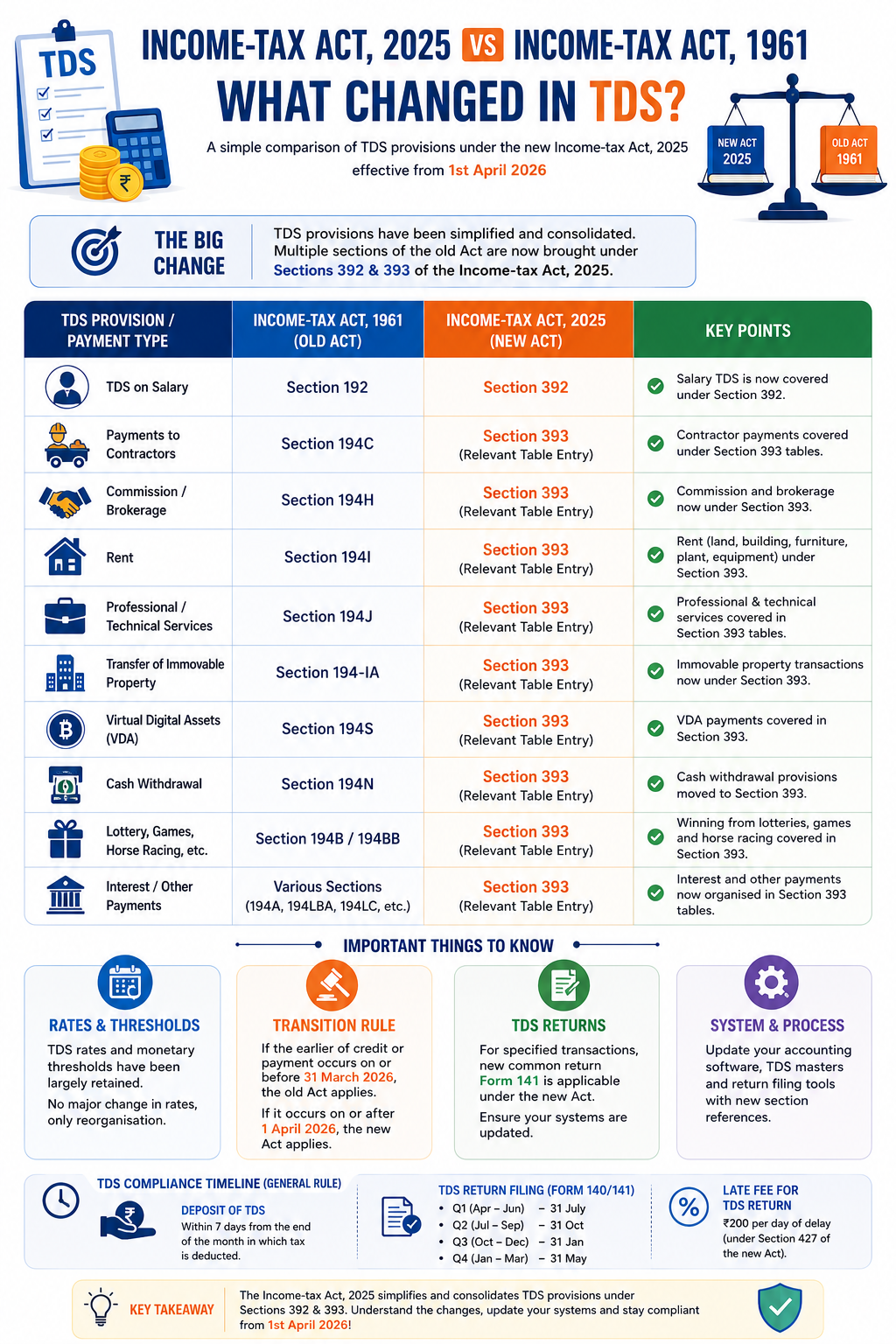
For salaried employees, employers deduct income tax from salary under the applicable salary TDS provisions. For Tax Year 2026–27, salary payments are governed by the Income-tax Act, 2025, which came into effect on 1 April 2026. For the earlier period, salary TDS was covered by Section 192 of the Income-tax Act, 1961.
The employer estimates the employee's annual taxable income, calculates the expected tax liability, adjusts for relevant tax credits and previous deductions where applicable, and deducts tax from salary payments.
Example: If your estimated annual tax liability is ₹60,000 and your employer spreads the deduction evenly over 12 months, your monthly TDS would be approximately ₹5,000.
How to Calculate TDS on Salary in India
You can estimate your salary TDS by following these steps.
Step 1: Calculate Your Estimated Annual Salary
Add your expected salary income for the entire tax year. Depending on your salary structure, this may include:
-
Basic salary
-
House Rent Allowance (HRA)
-
Special allowances
-
Bonus and incentives
-
Taxable perquisites
-
Other taxable salary components
Do not automatically treat your entire Cost to Company (CTC) as taxable salary. Employer contributions, benefits, reimbursements, and other components may receive different tax treatment.
Step 2: Identify the Applicable Tax Regime
Compare the new tax regime with the old tax regime, if you are eligible to choose between them.
The new tax regime is the default regime for eligible taxpayers. The old regime may be beneficial in some cases where substantial eligible deductions and exemptions are available.
Step 3: Calculate Taxable Income
Start with your estimated annual income and subtract the deductions and exemptions permitted under the selected regime.
Under the new tax regime for Tax Year 2026–27, eligible salaried employees can generally claim a standard deduction of up to ₹75,000.
Under the old tax regime, the standard deduction for eligible salaried individuals is up to ₹50,000.
Other deductions and exemptions depend on the applicable regime and the employee's circumstances.
Step 4: Apply the Income Tax Slabs
Calculate tax on the taxable income using the applicable slab rates. Each slab rate applies only to the income falling within that slab, rather than to the entire income.
Step 5: Add Applicable Cess and Surcharge
Add the applicable surcharge, if any, and the 4% Health and Education Cess to the calculated tax, taking the relevant rules into account.
Step 6: Adjust for Tax Already Deducted
Consider TDS already deducted during the year and other eligible tax credits or adjustments available to the employer.
Step 7: Calculate the Remaining Monthly TDS
Divide the remaining estimated tax liability by the number of salary payments remaining in the tax year. This provides an approximate monthly deduction.
Formula:
Estimated monthly TDS = Remaining estimated tax liability ÷ Remaining salary payments
Actual deductions may vary when salary, bonuses, declarations, or tax estimates change during the year.
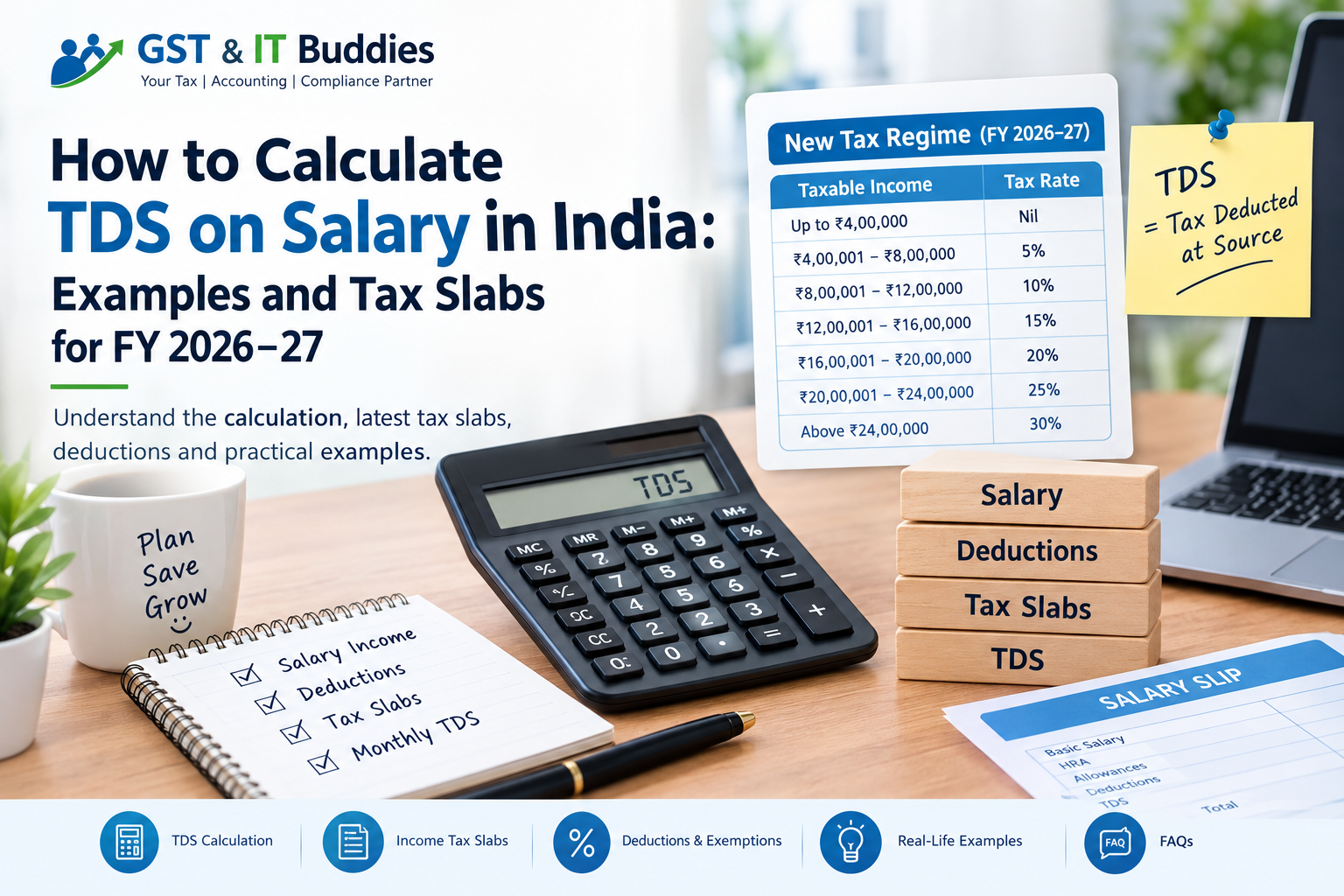
New Tax Regime Income Tax Slabs for FY 2026–27
The following slab rates apply to eligible individual taxpayers under the new tax regime for Tax Year 2026–27.
| Taxable income | Tax rate |
|---|---|
| Up to ₹4,00,000 | Nil |
| ₹4,00,001 to ₹8,00,000 | 5% |
| ₹8,00,001 to ₹12,00,000 | 10% |
| ₹12,00,001 to ₹16,00,000 | 15% |
| ₹16,00,001 to ₹20,00,000 | 20% |
| ₹20,00,001 to ₹24,00,000 | 25% |
| Above ₹24,00,000 | 30% |
These are progressive slab rates. Your final tax liability may also depend on rebates, marginal relief, surcharge, cess, and other applicable provisions.
Important: Section 87A Rebate
Eligible resident individuals under the new tax regime may qualify for a rebate under Section 87A for Tax Year 2026–27. The rebate can be up to ₹60,000 where the relevant conditions are satisfied, generally for total income not exceeding ₹12 lakh.
Marginal relief may apply in qualifying cases where income slightly exceeds the threshold. The rebate does not eliminate tax on special-rate income in all circumstances.
As a result, an eligible resident individual with ordinary taxable income of ₹12 lakh may have no income tax payable after the rebate. This is different from saying that all individuals earning ₹12 lakh have no tax under every circumstance.
Old Tax Regime vs New Tax Regime
The old tax regime has different slab rates and permits various eligible deductions and exemptions that are restricted under the new regime.
| Particulars | New tax regime | Old tax regime |
|---|---|---|
| Default regime | Yes, for eligible taxpayers | Must be selected where permitted |
| Standard deduction | Up to ₹75,000 | Up to ₹50,000 |
| HRA exemption | Generally not available | Available subject to conditions |
| Section 80C deduction | Generally not available | Available subject to conditions |
| Section 80D deduction | Generally not available | Available subject to conditions |
| Section 87A rebate | Available subject to conditions | Separate, lower rebate limits may apply |
The better option depends on your income, eligible deductions, exemptions, and personal financial situation. Compare the total tax liability under both regimes before making a decision.
Example 1: TDS Calculation on an Annual Salary of ₹10 Lakh
Suppose an employee has annual salary income of ₹10,00,000 and opts for the new tax regime for Tax Year 2026–27.
Assumptions:
-
Salary income: ₹10,00,000
-
Eligible standard deduction: ₹75,000
-
No other income or special-rate income
-
Resident individual eligible for the Section 87A rebate
Step 1: Calculate taxable income
Annual salary = ₹10,00,000
Less: Standard deduction = ₹75,000
Taxable income = ₹9,25,000
Step 2: Calculate income tax before rebate
-
Up to ₹4,00,000: Nil
-
Next ₹4,00,000 at 5%: ₹20,000
-
Remaining ₹1,25,000 at 10%: ₹12,500
Total income tax before rebate = ₹32,500
Step 3: Apply the eligible rebate
Since taxable income is below ₹12,00,000 and the stated assumptions are satisfied, the eligible Section 87A rebate can eliminate this tax liability.
Final income tax = ₹0
Estimated annual salary TDS = ₹0
Estimated monthly salary TDS = ₹0
This example assumes no other income, special-rate income, or circumstances affecting rebate eligibility. Actual payroll calculations may differ based on the employee's complete tax details.
Example 2: TDS Calculation on an Annual Salary of ₹15 Lakh
Suppose an employee earns ₹15,00,000 annually and qualifies for the new tax regime's standard deduction.
Step 1: Calculate taxable income
Annual salary = ₹15,00,000
Less: Standard deduction = ₹75,000
Taxable income = ₹14,25,000
Step 2: Calculate income tax
| Slab | Tax calculation | Tax |
|---|---|---|
| Up to ₹4,00,000 | Nil | ₹0 |
| ₹4,00,000 to ₹8,00,000 | ₹4,00,000 × 5% | ₹20,000 |
| ₹8,00,000 to ₹12,00,000 | ₹4,00,000 × 10% | ₹40,000 |
| ₹12,00,000 to ₹14,25,000 | ₹2,25,000 × 15% | ₹33,750 |
| Total before cess | ₹93,750 |
Health and Education Cess at 4% = ₹3,750
Estimated total annual income tax = ₹97,500
If the employer deducts this amount evenly over 12 months:
Estimated monthly TDS = ₹97,500 ÷ 12 = ₹8,125
This calculation assumes no other income, surcharge, additional deductions, or tax credits. The final monthly TDS may vary with payroll adjustments and declarations.
Example 3: How to Calculate Monthly TDS
Suppose your employer estimates your total tax liability for the year at ₹1,20,000.
You have already paid or had deducted ₹30,000 in TDS, and six salary payments remain.
Remaining tax liability = ₹1,20,000 − ₹30,000 = ₹90,000
Remaining salary payments = 6
Estimated monthly TDS = ₹90,000 ÷ 6 = ₹15,000
This method helps explain why monthly TDS may increase later in the year if earlier deductions were lower than required.
What Factors Affect TDS on Salary?
Several factors can change your salary TDS calculation:
-
Annual salary: Higher taxable income may result in higher tax liability.
-
Tax regime: Different slab rates and deductions affect the final calculation.
-
Standard deduction: The applicable amount reduces salary income for tax purposes.
-
Other income: Interest, rental income, and other reportable income may affect the estimate when considered by the employer under the applicable rules.
-
Bonus and incentives: Additional taxable salary can increase estimated tax.
-
Previous employment: Salary and TDS details from an earlier employer may need to be provided to your current employer.
-
Tax already deducted: Existing TDS affects the amount remaining to be deducted.
-
Declarations and proofs: Eligible deductions and exemptions should be supported by the required information and documents.
How to Reduce Excess TDS on Salary Legally
You cannot reduce TDS simply by asking your employer to deduct less than the legally required amount. However, you can help ensure that the calculation is accurate.
-
Choose the tax regime appropriate to your circumstances.
-
Submit accurate salary, investment, and deduction declarations.
-
Provide previous-employer salary and TDS details when applicable.
-
Review taxable allowances and perquisites.
-
Check your payslip and Form 16 when available.
-
Compare your employer's estimate with the official Income Tax Department calculator.
Remember that deductions available under the old regime may not be available under the new regime. Always verify eligibility before claiming any tax benefit.
Common Mistakes to Avoid While Calculating Salary TDS
-
Applying tax rates to gross salary without considering eligible deductions.
-
Treating all CTC components as taxable salary.
-
Forgetting taxable bonuses or perquisites.
-
Using outdated tax slabs.
-
Ignoring tax already deducted during the year.
-
Assuming the Section 87A rebate applies to every taxpayer or every category of income.
-
Confusing the employer's monthly TDS with the final tax liability calculated in the income tax return.
Avoiding these mistakes can help employees plan their finances more accurately and reduce the risk of unexpected tax payments.
Frequently Asked Questions (FAQs)
1. How is TDS calculated on salary in India?
TDS is calculated using the estimated taxable salary income for the tax year, applicable income tax slab rates, eligible deductions and rebates, applicable cess or surcharge, and tax already deducted. The remaining estimated liability is generally spread over the remaining salary payments.
2. What is the TDS rate on salary?
There is no single flat TDS rate for salary. The employer calculates TDS using the applicable income tax rates and the employee's estimated taxable income.
3. What is the standard deduction for salaried employees in FY 2026–27?
The standard deduction is generally up to ₹75,000 under the new tax regime and up to ₹50,000 under the old tax regime for eligible salaried individuals.
4. Is salary up to ₹12 lakh tax-free under the new tax regime?
Eligible resident individuals may have no tax liability on ordinary income up to ₹12 lakh after the Section 87A rebate, subject to applicable conditions. The result may differ for special-rate income or other circumstances.
5. Can I claim a TDS refund?
Yes. If the total tax deducted or paid exceeds your final tax liability, you may claim a refund by filing the applicable income tax return and meeting the relevant requirements.
6. Where can I check my salary TDS?
You can review your payslips, Form 16, and tax credit information available through the Income Tax Department's e-filing portal.
7. How can I calculate TDS on salary online?
Use the official Income Tax Department calculator. Enter your relevant tax year, income details, deductions, and tax regime to estimate your tax liability.
Conclusion
Calculating TDS on salary becomes easier when you understand your annual taxable income, applicable tax regime, income tax slabs, standard deduction, rebate eligibility, and previous TDS deductions.
For Tax Year 2026–27, eligible employees under the new tax regime should use the updated slab rates and verify their final liability after considering the applicable rebate and other provisions. Reviewing your payslip regularly can also help identify discrepancies before the end of the tax year.
For more practical guides on GST, income tax, TDS, accounting, and business compliance, follow GST & IT Buddies.
Disclaimer: This article is for educational purposes only and is not individual tax advice. Tax provisions may depend on the taxpayer's circumstances and subsequent official updates. Verify calculations using the latest government guidance or consult a qualified tax professional.