

Managing inventory efficiently is critical for scaling any business. A well-structured inventory audit process ensures accurate stock levels, prevents losses, and improves financial reporting. If your business is growing, regular audits are not optional—they’re essential. In this guide, you’ll learn the step-by-step inventory audit process, best practices, and tools to streamline operations. What is an Inventory Audit? An inventory audit is the process of verifying that your physical stock matches your recorded inventory data. It helps identify discrepancies caused by theft, damage, mismanagement, or system errors.
Why Inventory Audits Are Important for Growing Businesses
- Improve inventory accuracy
- Reduce stock shrinkage and losses
- Ensure financial statement accuracy
- Optimize supply chain management
- Support better business decision-making
Types of Inventory Audits
- Periodic Inventory Audit – Conducted at specific intervals (monthly, quarterly, annually)
- Cycle Counting – Continuous counting of small inventory segments
- ABC Analysis Audit – Focus on high-value items first
- Spot Checks – Random inventory verification
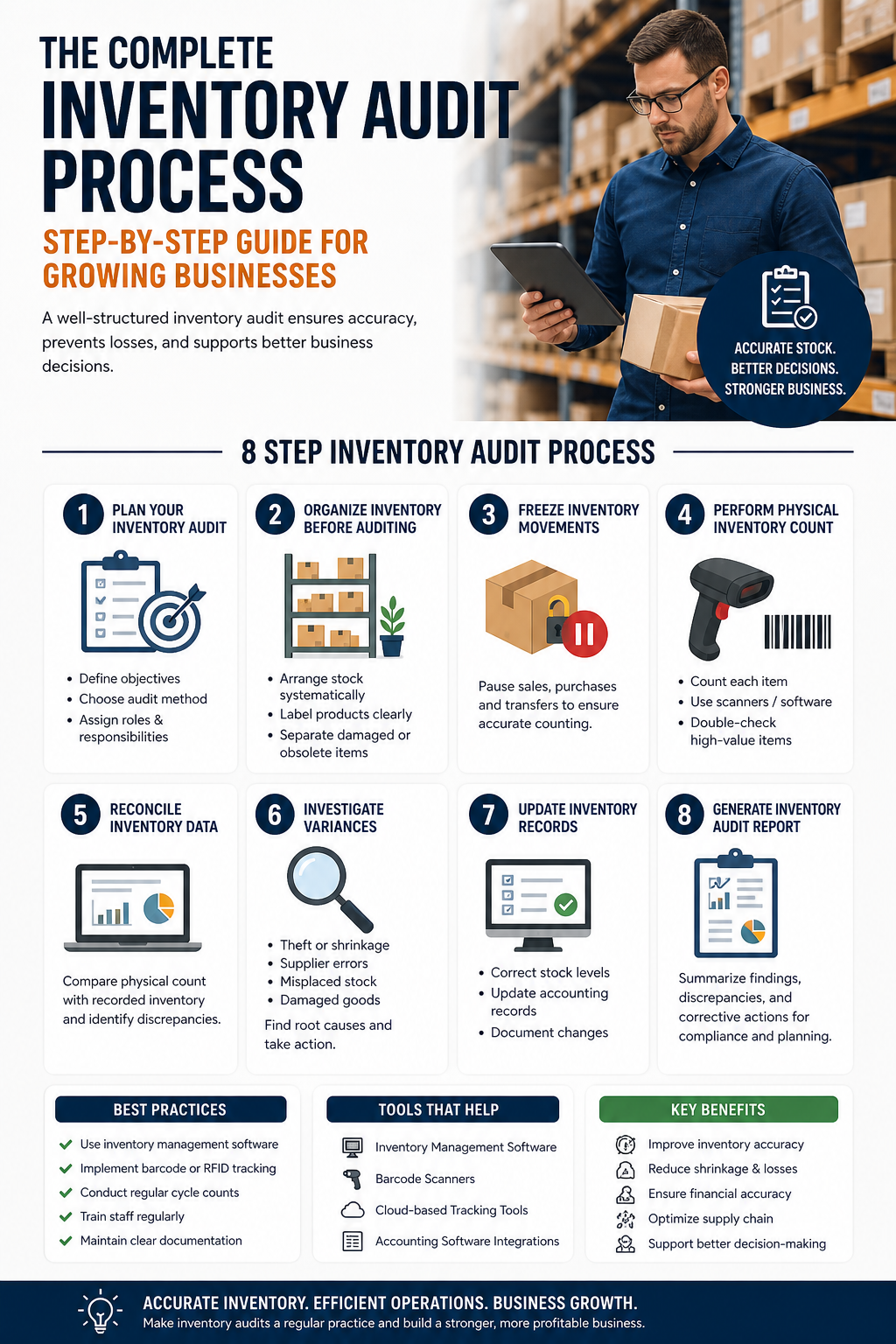
Step-by-Step Inventory Audit Process
1. Plan Your Inventory Audit
Start with a clear audit strategy:
- Define audit objectives
- Select audit method (cycle count, full count)
- Assign roles to staff
👉 Pro Tip: Schedule audits during low business activity to avoid disruptions.
2. Organize Inventory Before Auditing
- Arrange stock systematically
- Label products clearly
- Separate damaged or obsolete items
This reduces counting errors and speeds up the process.
3. Freeze Inventory Movements
Pause:
- Sales
- Purchases
- Transfers
This ensures accurate stock counting without real-time changes.
4. Perform Physical Inventory Count
- Count each item manually or using barcode scanners
- Use inventory management software for real-time recording
- Double-check high-value items
5. Reconcile Inventory Data
Compare:
- Physical count vs recorded inventory
Identify discrepancies such as:
- Missing stock
- Overstocking
- Data entry errors
6. Investigate Variances
Common causes:
- Theft or shrinkage
- Supplier errors
- Misplaced stock
- Damaged goods
Take corrective actions immediately.
7. Update Inventory Records
Adjust your system based on findings:
- Correct stock levels
- Update accounting records
- Document changes for compliance
8. Generate Inventory Audit Report
Include:
- Audit summary
- Discrepancies found
- Corrective actions taken
This report helps in strategic planning and compliance.
Best Practices for Inventory Audit
✔ Use automated inventory management systems
✔ Implement barcode or RFID tracking
✔ Conduct regular cycle counts
✔ Train staff properly
✔ Maintain clear documentation
Common Inventory Audit Mistakes to Avoid
- Ignoring small discrepancies
- Not documenting audit results
- Lack of staff accountability
- Using outdated inventory systems
Tools to Simplify Inventory Auditing
- Inventory Management Software (ERP systems)
- Barcode Scanners
- Cloud-based tracking tools
- Accounting software integrations
Final Thoughts
An efficient inventory audit process is a backbone of operational success for growing businesses. By implementing structured audits, leveraging technology, and maintaining consistency, you can significantly improve inventory control, accuracy, and profitability.
FAQs on Inventory Audit
Q1. How often should a business conduct an inventory audit?
Growing businesses should perform cycle counts monthly and full audits at least annually.
Q2. What is the best inventory audit method?
Cycle counting is the most efficient for scaling businesses.
Q3. Can small businesses automate inventory audits?
Yes, using inventory management software and barcode systems.