


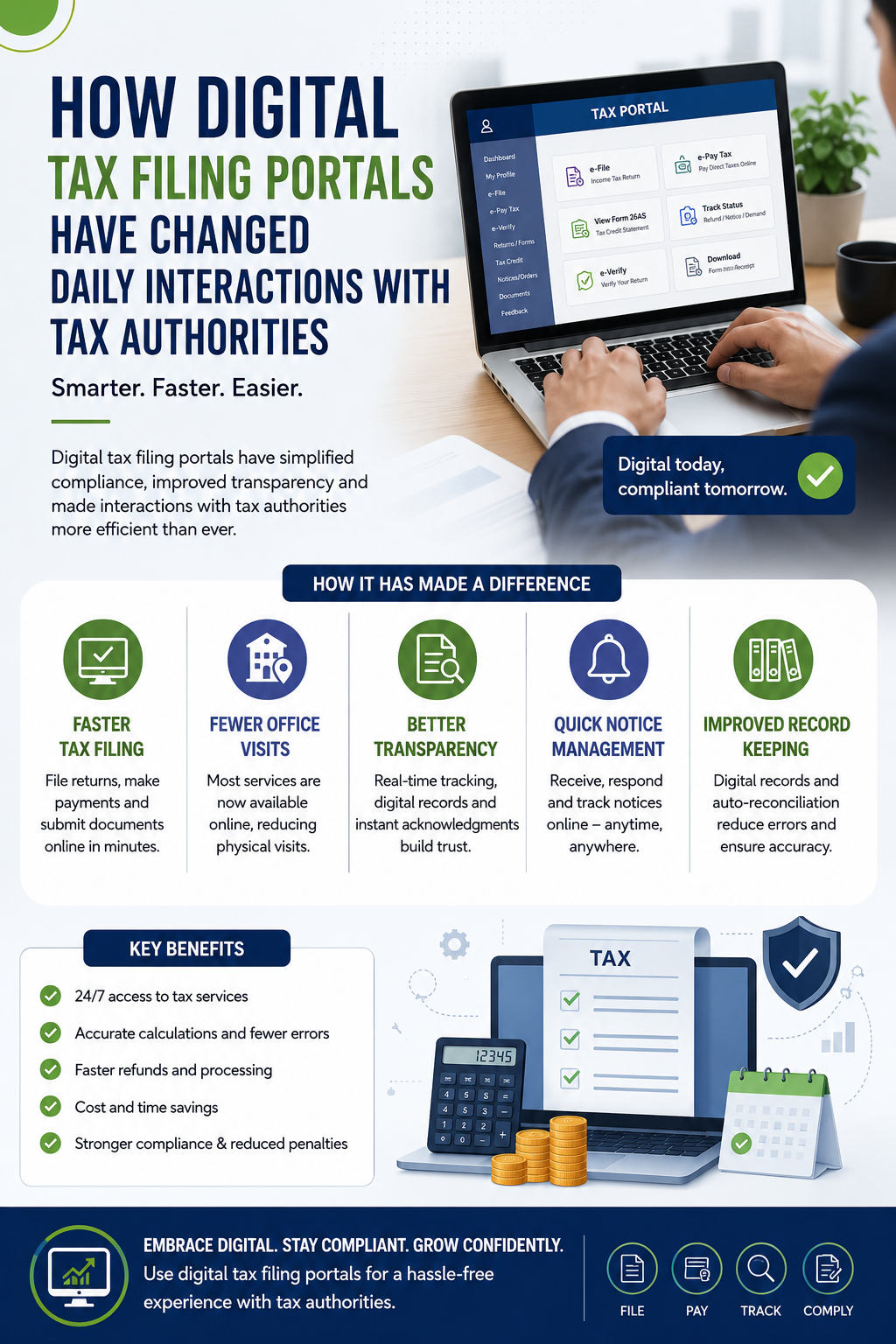
The introduction of digital tax filing portals has completely transformed the way businesses, professionals, and taxpayers interact with local tax authorities. Earlier, tax compliance involved long queues, paperwork, manual submissions, and frequent visits to government offices. Today, digital tax filing systems have made the process faster, more transparent, and highly efficient. With the rise of online GST filing, income tax e-filing portals, and digital compliance systems, taxpayers can now manage taxes from anywhere with ease.
1. Faster and Easier Tax Filing Process
Digital tax filing portals have simplified the tax return filing process. Businesses and individuals can now:
- File GST returns online
- Submit Income Tax Returns (ITR)
- Track refund status
- Download tax documents
- Respond to notices digitally
This has reduced dependency on physical paperwork and manual processes.
SEO Keywords:
digital tax filing, online tax filing, GST return filing, income tax e-filing, tax compliance
2. Reduced Physical Visits to Tax Offices
One of the biggest advantages of digital tax portals is the reduction in physical interaction with tax departments. Earlier, taxpayers had to visit offices for:
- Return submissions
- Tax clarifications
- Refund follow-ups
- Compliance approvals
Now, most services are available online, saving time and operational costs for businesses.
3. Improved Transparency in Tax Compliance
Digital tax systems have increased transparency between taxpayers and tax authorities. Every filing, payment, notice, and response is recorded online, reducing confusion and compliance disputes.
Benefits Include:
- Real-time status tracking
- Digital acknowledgment receipts
- Online notice management
- Better compliance monitoring
This has improved trust and accountability in the taxation system.
4. Better GST and Income Tax Management
Modern tax portals help businesses manage GST compliance and income tax filings more effectively. Automated calculations, pre-filled data, and integrated systems reduce human errors.
Key Features:
- Auto-populated tax details
- Online Input Tax Credit reconciliation
- E-invoicing integration
- Digital payment systems
Businesses can now monitor tax liabilities more efficiently.
5. Quick Response to Tax Notices
Digital portals allow taxpayers to respond to notices and compliance queries online. This has significantly improved communication with tax authorities.
Instead of visiting offices physically, businesses can:
- Upload supporting documents
- Reply to notices online
- Track case status digitally
This creates a smoother and more professional compliance experience.
6. Increased Importance of Accurate Record Keeping
Since tax systems are now digitally connected, authorities can easily identify mismatches in returns, invoices, or tax payments. Businesses must maintain accurate records to avoid penalties and notices.
Businesses Should Maintain:
- GST invoices
- Accounting records
- Tax payment proofs
- E-way bills
- Vendor reconciliation reports
Strong bookkeeping practices are now more important than ever.
7. Challenges of Digital Tax Filing
Although digital tax portals offer many benefits, businesses still face some challenges:
- Technical glitches
- Portal downtime
- Frequent compliance changes
- Lack of digital awareness among small businesses
However, with professional guidance and proper tax planning, these challenges can be managed effectively.
Conclusion
The introduction of digital tax filing portals has revolutionized the tax compliance system. It has made tax filing faster, easier, and more transparent for businesses and individuals. From online GST filing to digital income tax compliance, technology has significantly improved daily interactions with tax authorities.
Businesses that adopt proper digital accounting systems and stay updated with tax regulations can benefit greatly from these modern tax solutions.