

Choosing between the Old Tax Regime and the New Tax Regime is one of the most crucial decisions for salaried employees, freelancers, and business owners when filing their Income Tax Returns (ITR). The right choice can help you save thousands of rupees in taxes every year. In this detailed guide, we’ll explain the difference between the two tax regimes, their tax slabs, deductions, benefits, and how to calculate which regime is better for you. differences between the two tax regimes, their tax slabs, deductions, and benefits, and how to determine
What is the Old Tax Regime?
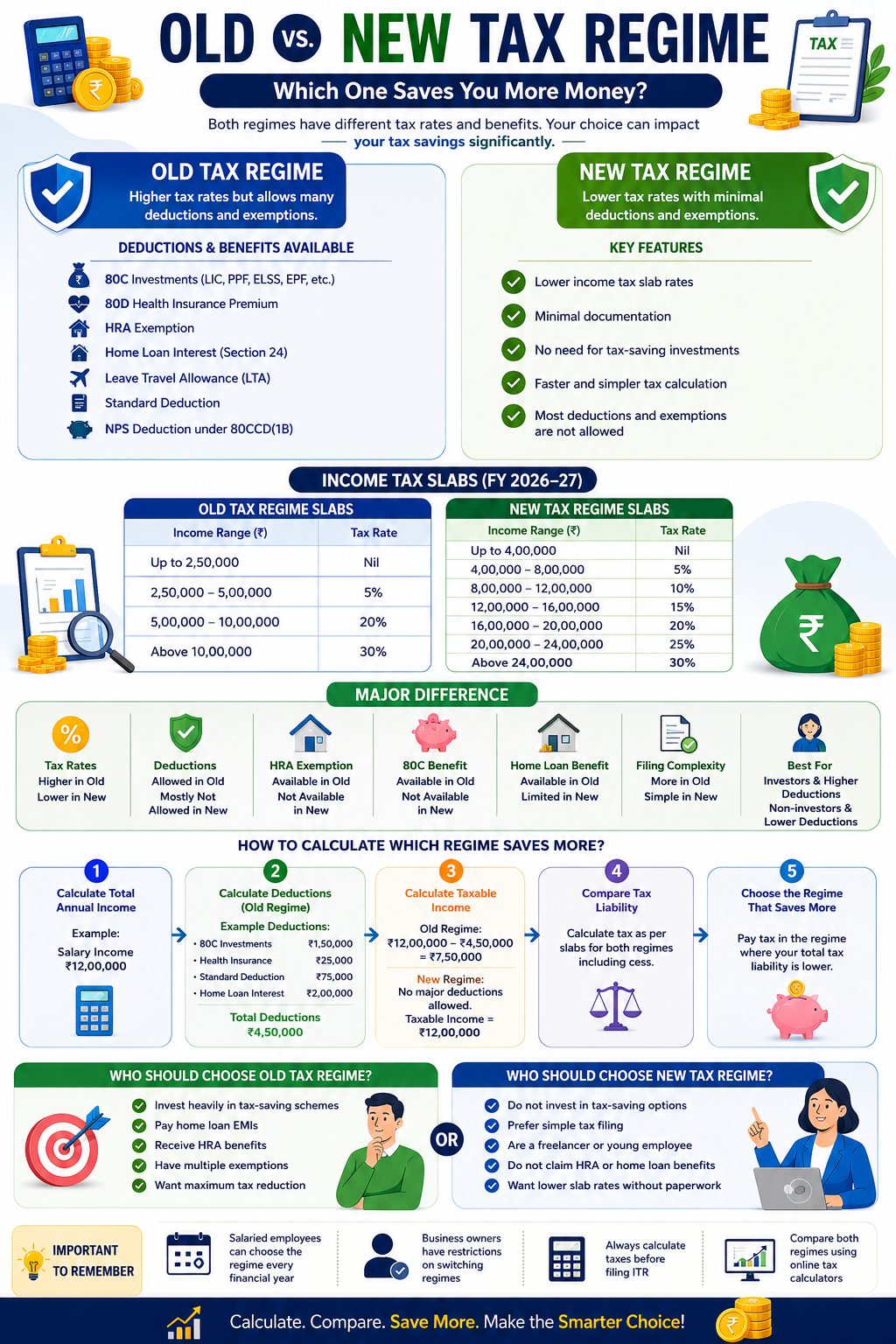
The Old Tax Regime follows the traditional income tax structure where taxpayers can claim multiple deductions and exemptions to reduce taxable income.
Popular Deductions Available in the Old Regime
✅ Section 80C (LIC, PPF, ELSS, EPF, Tuition Fees)
✅ Section 80D (Health Insurance Premium)
✅ HRA Exemption
✅ Home Loan Interest (Section 24)
✅ Standard Deduction
✅ Leave Travel Allowance (LTA)
✅ NPS Deduction under 80CCD(1B)
This regime is beneficial for people who make tax-saving investments.
What is the New Tax Regime?
The New Tax Regime offers lower tax rates but removes most deductions and exemptions.
The government introduced it to simplify tax filing and reduce paperwork.
Features of the New Tax Regime
✔ Lower income tax slab rates
✔ Minimal documentation
✔ No need for tax-saving investments
✔ Faster and simpler tax calculation
However, most deductions available in the old regime cannot be claimed here.
Income Tax Slabs Comparison FY 2026–27
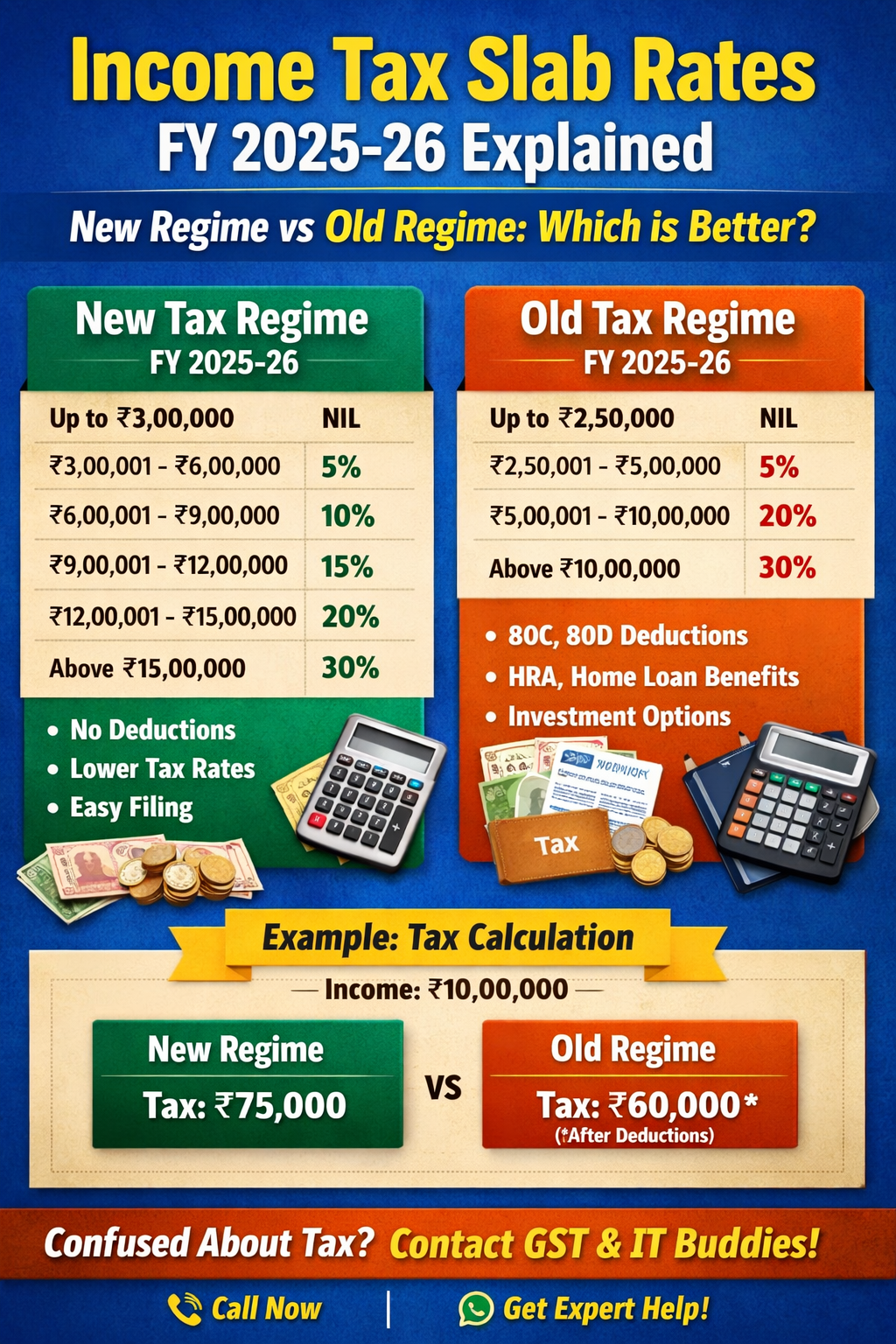
Old Tax Regime Slabs
| Income Range | Tax Rate |
|---|---|
| Up to ₹2.5 lakh | Nil |
| ₹2.5 lakh – ₹5 lakh | 5% |
| ₹5 lakh – ₹10 lakh | 20% |
| Above ₹10 lakh | 30% |
New Tax Regime Slabs
| Income Range | Tax Rate |
|---|---|
| Up to ₹4 lakh | Nil |
| ₹4 lakh – ₹8 lakh | 5% |
| ₹8 lakh – ₹12 lakh | 10% |
| ₹12 lakh – ₹16 lakh | 15% |
| ₹16 lakh – ₹20 lakh | 20% |
| ₹20 lakh – ₹24 lakh | 25% |
| Above ₹24 lakh | 30% |
Major Difference Between Old and New Tax Regime
| Feature | Old Regime | New Regime |
|---|---|---|
| Tax Rates | Higher | Lower |
| Deductions Allowed | Yes | Mostly No |
| HRA Exemption | Available | Not Available |
| 80C Benefit | Available | Not Available |
| Home Loan Benefit | Available | Limited |
| Filing Complexity | More | Simple |
| Best For | Investors & salaried employees | People without deductions |
How to Calculate Which Tax Regime Saves More Money?
The best regime depends on:
- Your annual salary
- Total deductions claimed
- Investments made
- Home loan benefits
- HRA exemption
- Insurance premiums
Step-by-Step Tax Comparison Method
Step 1: Calculate Total Annual Income
Example:
- Salary Income = ₹12,00,000
Step 2: Calculate Deductions Under Old Regime
Suppose you claim:
| Deduction | Amount |
|---|---|
| 80C Investments | ₹1,50,000 |
| Health Insurance | ₹25,000 |
| Standard Deduction | ₹75,000 |
| Home Loan Interest | ₹2,00,000 |
Total Deductions = ₹4,50,000
Step 3: Calculate Taxable Income
Old Regime
₹12,00,000 – ₹4,50,000 = ₹7,50,000 taxable income
New Regime
No major deductions allowed.
Taxable Income = ₹12,00,000
Step 4: Compare Tax Liability
In many cases:
✅ If deductions are high → Old Regime saves more tax
✅ If deductions are low → New Regime is beneficial
Who Should Choose the Old Tax Regime?
The old regime is better if you:
✔ Invest heavily in tax-saving schemes
✔ Pay home loan EMIs
✔ Receive HRA benefits
✔ Have multiple exemptions
✔ Want maximum tax reduction
Who Should Choose the New Tax Regime?
The new regime is ideal if you:
✔ Do not invest in tax-saving options
✔ Prefer simple tax filing
✔ Are you a freelancer or a young employee
✔ Do not claim HRA or home loan benefits
✔ Want lower slab rates without paperwork
Example Comparison
Case 1: Salaried Employee with Investments
- Salary = ₹15 lakh
- Tax-saving investments = ₹3 lakh
- Home loan + HRA benefits available
👉 The old tax regime usually works better.
Case 2: Young Professional with No Investments
- Salary = ₹10 lakh
- No deductions claimed
👉 New Tax Regime generally saves more money.
Important Things to Remember
✅ Salaried employees can choose the regime every financial year
✅ Business owners have restrictions on switching regimes
✅ Always calculate taxes before filing ITR
✅ Compare both regimes using online tax calculators
Final Verdict: Old vs. New Tax Regime
There is no one-size-fits-all answer.
- Choose the Old Tax Regime if you actively invest and claim deductions.
- Choose the New Tax Regime if you prefer simplicity and have fewer exemptions.
The smartest way is to calculate tax under both systems before filing your return.
Frequently Asked Questions (FAQs)
Which tax regime is better for salaried employees?
It depends on deductions and exemptions claimed. Employees with higher deductions usually benefit from the old regime.
Can I switch between the old and the new tax regime every year?
Yes, salaried individuals can switch every financial year while filing ITR.
Is HRA allowed in the new tax regime?
No, HRA exemption is generally not available in the new regime.
Is 80C deduction available in the new regime?
No, most deductions, including Section 80C, are not allowed.
Which regime is simpler?
The new tax regime is simpler because it removes most deductions and paperwork.