
Managing taxes is one of the most important responsibilities for any business. Whether you're a startup, freelancer, small business owner, or established company, maintaining accurate accounting records makes tax filing easier, ensures compliance, and helps reduce unnecessary tax liabilities. Good accounting isn't just about recording income and expenses—it's about creating a clear financial picture that supports better tax planning and smarter business decisions. In this blog, we'll explore how accounting helps with taxes and why every business should prioritize proper bookkeeping throughout the year.
What Is Accounting?
Accounting is the process of recording, organizing, classifying, and analyzing financial transactions. It helps businesses monitor income, expenses, assets, liabilities, and overall financial performance.
With organized accounting records, businesses can prepare financial statements, calculate taxable income, and file accurate tax returns on time.
Why Is Accounting Important for Tax Management?
Taxes are calculated based on financial data. If accounting records are incomplete or inaccurate, businesses may face:
- Incorrect tax calculations
- Missed deductions
- Penalties and interest
- Delayed tax filing
- Increased chances of tax notices
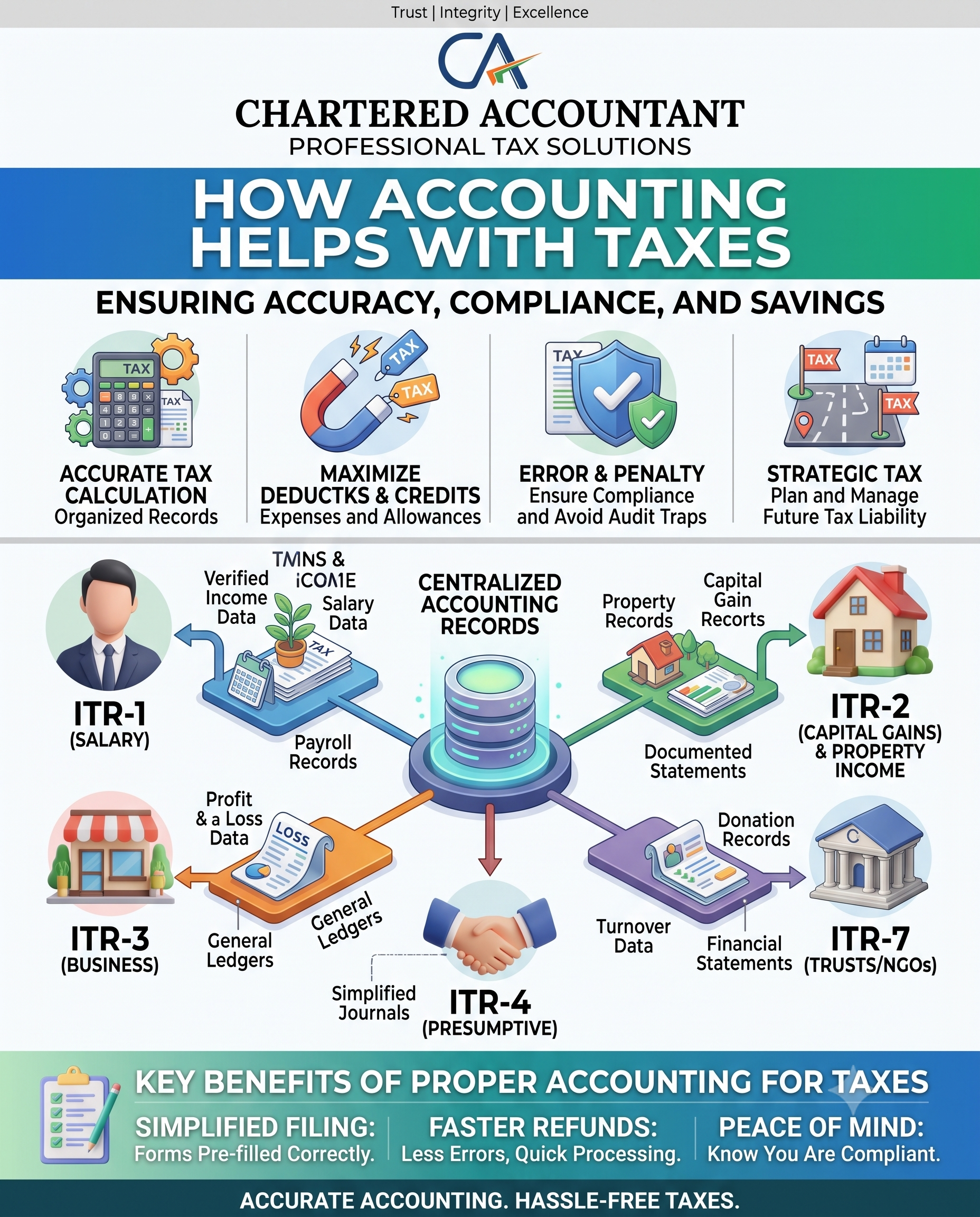
Accurate accounting minimizes these risks and ensures smooth tax compliance.
1. Maintains Accurate Financial Records
Proper accounting records every financial transaction throughout the year.
These records include:
- Sales
- Purchases
- Business expenses
- Bank transactions
- Payroll
- Investments
- Assets and depreciation
When tax season arrives, businesses already have organized financial information ready for filing.
2. Helps Calculate Taxable Income Correctly
Tax liability depends on the actual taxable income earned during the financial year.
Accounting helps businesses calculate:
- Total revenue
- Operating expenses
- Depreciation
- Business losses
- Net profit
This ensures businesses pay the correct amount of tax—not more and not less.
3. Identifies Eligible Tax Deductions
One of the biggest advantages of good accounting is identifying deductible business expenses.
Common deductions include:
- Office rent
- Employee salaries
- Internet expenses
- Electricity bills
- Professional fees
- Business travel
- Marketing expenses
- Software subscriptions
- Office supplies
Proper accounting ensures these expenses are recorded with supporting documents, helping businesses claim all eligible deductions.
4. Simplifies Tax Filing
Preparing tax returns becomes much easier when financial records are updated regularly.
Instead of searching for invoices and receipts at the last minute, businesses can quickly generate reports such as:
- Profit & Loss Statement
- Balance Sheet
- Expense Summary
- Income Reports
- GST Reports
- Bank Reconciliation Statements
These reports simplify income tax and indirect tax return preparation.
5. Supports GST Compliance
For GST-registered businesses, accounting plays a major role in maintaining compliance.
It helps track:
- GST collected on sales
- GST paid on purchases
- Input Tax Credit (ITC)
- Tax invoices
- GST liability
Proper accounting ensures timely GST return filing and reduces errors in tax calculations.
6. Prevents Tax Penalties
Late filings, incorrect returns, and inaccurate records can result in penalties.
Accounting helps businesses:
- Meet filing deadlines
- Maintain proper documentation
- Calculate taxes accurately
- Keep audit-ready records
This significantly reduces the risk of penalties and legal complications.
7. Makes Tax Audits Easier
If a business is selected for a tax audit, organized accounting records become extremely valuable.
Auditors may ask for:
- Sales invoices
- Purchase bills
- Bank statements
- Payroll records
- Expense vouchers
- Financial reports
Well-maintained books make the audit process faster and less stressful.
8. Improves Cash Flow Planning for Taxes
Many businesses struggle because they don't set aside enough money for taxes.
Accounting helps estimate future tax liabilities by monitoring profits throughout the year.
This allows businesses to:
- Budget for taxes
- Avoid cash shortages
- Plan advance tax payments
- Manage working capital effectively
9. Helps with Business Growth
Accounting provides valuable financial insights that support better decision-making.
Businesses can analyze:
- Profit margins
- Operating costs
- Revenue trends
- Tax expenses
- Investment opportunities
These insights help owners make informed decisions while remaining tax-efficient.
10. Keeps Financial Documents Organized
Proper accounting creates a centralized system for storing financial records, including:
- Invoices
- Receipts
- Tax returns
- Payroll records
- Purchase orders
- Vendor bills
- Bank statements
Organized documentation saves time during tax filing and future financial reviews.
Benefits of Accounting for Tax Compliance
Businesses that maintain proper accounting enjoy several advantages:
- Accurate tax calculations
- Timely tax return filing
- Better financial planning
- Reduced risk of penalties
- Easier audit preparation
- Improved cash flow management
- Maximum eligible tax deductions
- Better business decision-making
- Strong financial transparency
- Compliance with tax regulations
Best Practices for Tax-Friendly Accounting
To make tax filing hassle-free:
- Record transactions regularly.
- Keep business and personal finances separate.
- Save invoices and receipts digitally.
- Reconcile bank accounts every month.
- Review financial statements periodically.
- File tax returns before the due date.
- Maintain proper documentation for deductions.
- Use accounting software for better accuracy.
- Consult a tax professional for complex tax matters.
Common Mistakes Businesses Should Avoid
Avoid these accounting mistakes that can create tax issues:
- Mixing personal and business expenses
- Missing expense records
- Delaying bookkeeping
- Ignoring bank reconciliation
- Losing invoices and receipts
- Claiming unsupported deductions
- Filing taxes with incomplete records
- Failing to review financial statements before filing
Conclusion
Accounting plays a crucial role in effective tax management. Accurate bookkeeping helps businesses calculate taxes correctly, claim eligible deductions, maintain compliance, avoid penalties, and prepare for audits with confidence.
Instead of treating accounting as a year-end activity, businesses should maintain accurate financial records throughout the year. Consistent accounting not only simplifies tax filing but also provides valuable financial insights that contribute to long-term business growth and stability.
By investing in proper accounting practices, businesses can save time, reduce stress during tax season, and build a strong financial foundation for future success.
Frequently Asked Questions (FAQs)
1. Why is accounting important for taxes?
Accounting maintains accurate financial records, helping businesses calculate taxes correctly, claim deductions, and file returns on time.
2. Can accounting reduce tax liability?
Yes. Proper accounting identifies eligible deductions and credits, ensuring businesses pay only the taxes they legally owe.
3. How does accounting help during a tax audit?
Organized financial records, invoices, and reports make it easier to provide the documentation required during an audit.
4. What records should businesses keep for tax purposes?
Businesses should retain invoices, receipts, bank statements, payroll records, expense reports, GST records, and previous tax returns.
5. Is accounting software useful for tax filing?
Yes. Accounting software automates bookkeeping, generates financial reports, tracks taxes, and simplifies return preparation while reducing manual errors.
Focus Keyword: How Does Accounting Help with Taxes
Keyword Density: Naturally optimized throughout the article.
Suggested Internal Links:
- Importance of Bookkeeping for Small Businesses
- GST Compliance Guide for Businesses
- Tax Planning Strategies for Business Owners
- Benefits of Professional Accounting Services
Suggested External References:
- Income Tax Department (India)
- Goods and Services Tax (GST) Portal
- Ministry of Corporate Affairs (MCA)