


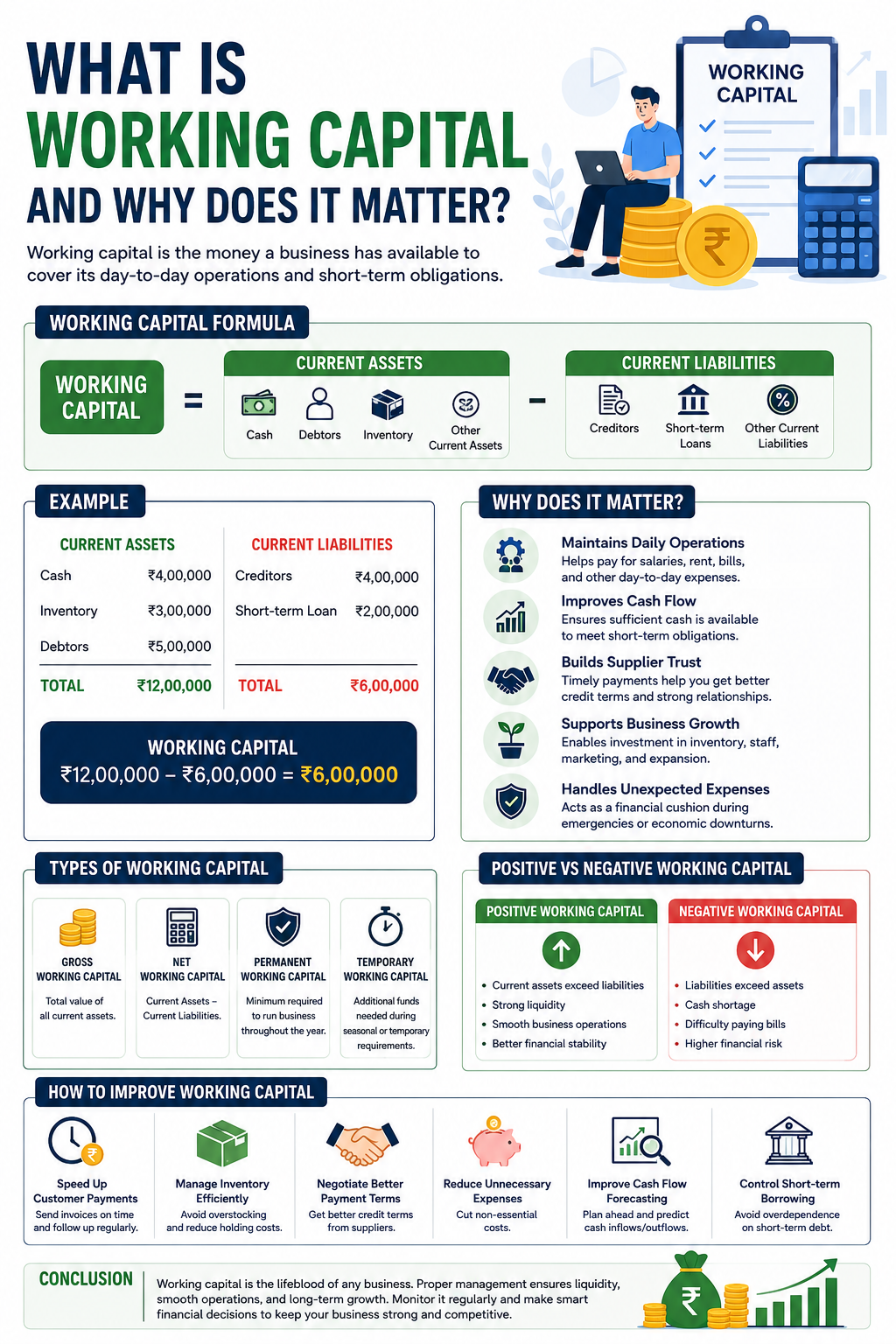
What Is Working Capital? Working capital is the money a business has available to cover its day-to-day operating expenses. It is the difference between a company's current assets and current liabilities. A healthy working capital ensures that a business can pay its short-term obligations, manage daily operations, and invest in future growth without facing financial stress. Whether you run a startup, small business, or large enterprise, understanding working capital is essential for maintaining financial stability.
Working Capital Formula
The formula for calculating working capital is:
Working Capital = Current Assets − Current Liabilities
Current Assets Include:
- Cash and Bank Balance
- Accounts Receivable (Debtors)
- Inventory
- Short-term Investments
- Prepaid Expenses
Current Liabilities Include:
- Accounts Payable (Creditors)
- Short-term Loans
- Outstanding Expenses
- Taxes Payable
- Current Portion of Long-term Debt
Example of Working Capital
Suppose a company has:
Current Assets
- Cash: ₹4,00,000
- Inventory: ₹3,00,000
- Debtors: ₹5,00,000
Total Current Assets = ₹12,00,000
Current Liabilities
- Creditors: ₹4,00,000
- Short-term Loan: ₹2,00,000
Total Current Liabilities = ₹6,00,000
Working Capital
₹12,00,000 − ₹6,00,000 = ₹6,00,000
This means the company has ₹6 lakh available to manage its daily business operations.
Why Does Working Capital Matter?
1. Maintains Daily Operations
Working capital helps businesses pay salaries, rent, electricity bills, supplier payments, and other operating expenses without interruptions.
2. Improves Cash Flow
A positive working capital ensures that sufficient cash is available when payments are due, reducing financial pressure.
3. Builds Supplier Trust
Businesses that pay suppliers on time often receive better credit terms, discounts, and stronger business relationships.
4. Supports Business Growth
Healthy working capital allows businesses to:
- Purchase additional inventory
- Expand operations
- Hire employees
- Launch new products
- Invest in marketing
without relying heavily on external financing.
5. Handles Unexpected Expenses
Unexpected repairs, seasonal demand, or economic downturns can impact a business. Adequate working capital acts as a financial safety cushion.
Types of Working Capital
Gross Working Capital
The total value of all current assets owned by a business.
Net Working Capital
The difference between current assets and current liabilities.
Net Working Capital = Current Assets − Current Liabilities
Permanent Working Capital
The minimum amount of working capital required to keep the business operating throughout the year.
Temporary Working Capital
Additional working capital needed during seasonal demand or temporary business expansion.
Positive vs Negative Working Capital
| Positive Working Capital | Negative Working Capital |
|---|---|
| Current assets exceed liabilities | Liabilities exceed assets |
| Strong liquidity | Cash shortage |
| Smooth business operations | Difficulty paying bills |
| Better financial stability | Higher financial risk |
Signs Your Business Has Poor Working Capital
- Frequent cash shortages
- Delayed salary payments
- Difficulty paying suppliers
- Excess inventory lying unused
- Increasing short-term debt
- Declining cash balance
- Missed business opportunities
If these issues persist, it's time to review your working capital management strategy.
How to Improve Working Capital
Speed Up Customer Payments
- Send invoices promptly
- Offer early payment discounts
- Follow up on overdue payments
- Use digital payment methods
Manage Inventory Efficiently
Avoid overstocking and regularly monitor inventory levels to reduce unnecessary storage costs.
Negotiate Better Payment Terms
Work with suppliers to secure longer payment periods while maintaining healthy business relationships.
Reduce Unnecessary Expenses
Review operational costs regularly and eliminate non-essential spending.
Improve Cash Flow Forecasting
Prepare monthly cash flow forecasts to identify potential shortages before they occur.
Control Short-Term Borrowing
Avoid relying heavily on expensive short-term loans for regular business expenses.
Common Working Capital Mistakes
- Keeping excessive inventory
- Ignoring unpaid customer invoices
- Poor budgeting
- Delaying financial reporting
- Overdependence on short-term loans
- Lack of cash flow planning
Benefits of Effective Working Capital Management
- Better liquidity
- Stronger cash flow
- Timely supplier payments
- Improved profitability
- Increased business stability
- Higher investor confidence
- Better creditworthiness
- Faster business growth
Frequently Asked Questions (FAQs)
What is a good working capital ratio?
A working capital ratio between 1.2 and 2.0 is generally considered healthy, indicating that a business has enough current assets to meet its short-term obligations.
Can a business survive with negative working capital?
Some businesses, such as supermarkets or fast-moving retail chains, can operate with negative working capital due to quick cash collections. However, for most businesses, prolonged negative working capital may lead to liquidity issues.
Why is working capital important for small businesses?
Small businesses often have limited access to financing. Proper working capital helps them manage daily expenses, pay suppliers on time, and seize growth opportunities without cash flow disruptions.
How often should working capital be reviewed?
Businesses should review working capital at least monthly to monitor liquidity, identify cash flow issues early, and make informed financial decisions.
Conclusion
Working capital is one of the most important indicators of a company's financial health. It ensures that your business can meet short-term obligations, maintain smooth operations, and invest in future growth opportunities.
By monitoring current assets and liabilities, improving cash flow, managing inventory efficiently, and controlling expenses, businesses can build a strong financial foundation for long-term success.
Whether you're a startup, SME, or established enterprise, effective working capital management is essential for sustainable growth and business resilience.