


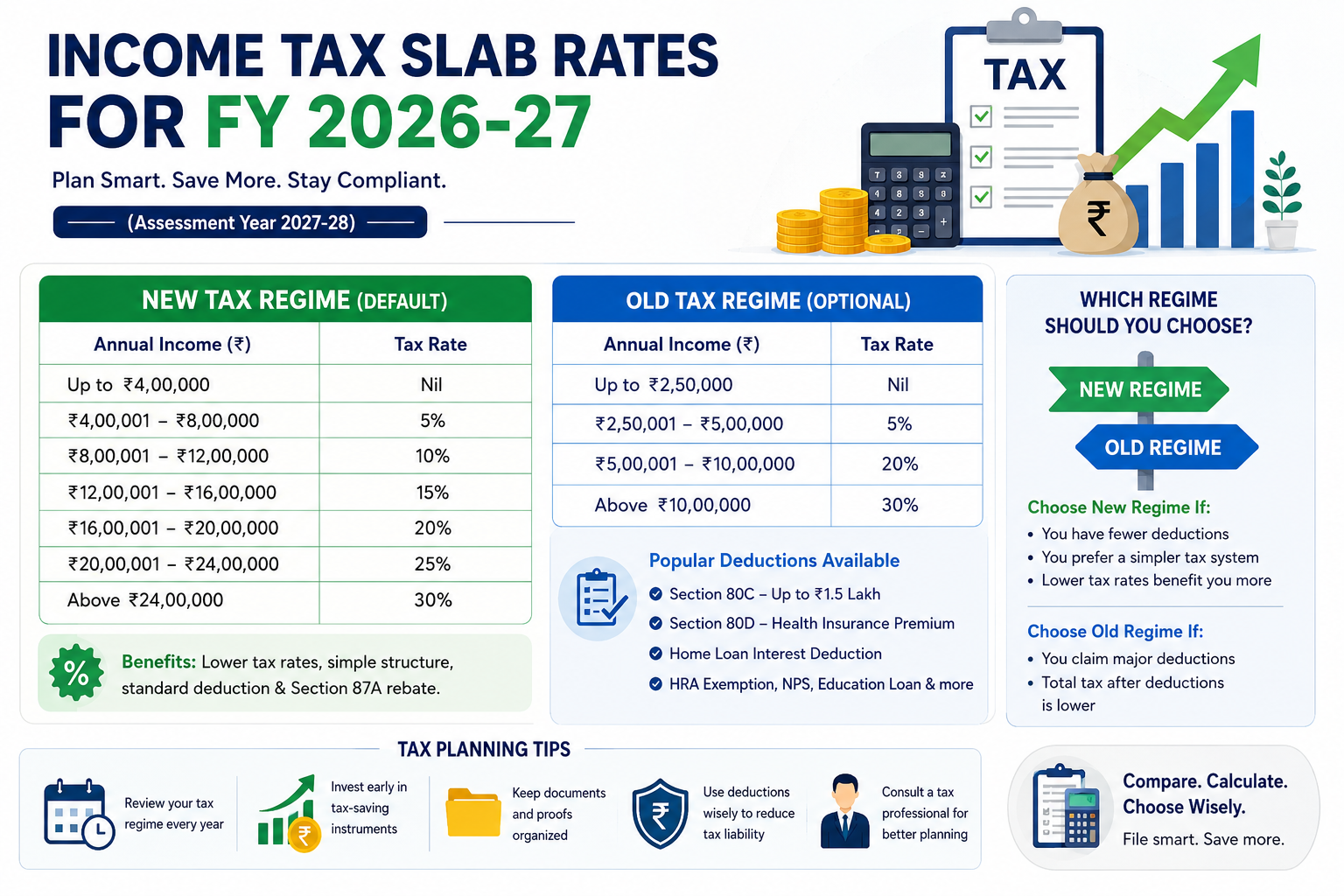

India’s new Income-tax Act, 2025, is a major overhaul of the country’s direct-tax framework. One of the most common questions taxpayers and businesses have is: How many sections are there in the Income-tax Act, 2025? The answer is 536 sections. The new Act also contains 16 Schedules. The Income Tax Department confirms that the 2025 Act is more streamlined than the Income-tax Act, 1961, which had 819 sections and 14 Schedules.
What Is the Income-tax Act, 2025?
The Income-tax Act, 2025 is India’s new legislation governing income-tax provisions. It reorganises and simplifies many provisions of the earlier Income-tax Act, 1961.
The new framework is designed to make tax provisions easier to understand by incorporating explanations and provisos into the main provisions, using tables and formulas where appropriate, removing redundant provisions, and improving cross-references.
How Many Sections Are in the Income-tax Act, 2025?
The Income-tax Act, 2025 contains 536 sections and 16 Schedules.
| Particular | Income-tax Act, 2025 | Income-tax Act, 1961 |
|---|---|---|
| Sections | 536 | 819 |
| Schedules | 16 | 14 |
This reduction in the number of sections does not mean that important tax provisions have been removed. Many provisions have been consolidated, reorganised and rewritten to create a more structured framework.
Why Does the New Act Have Fewer Sections?
The Income Tax Department explains that the reduction is linked to several structural changes:
- Explanations and provisos have been incorporated into the main text.
- Tables and formulas replace lengthy narrative provisions in some areas.
- Redundant and obsolete provisions have been removed.
- Cross-references have been made clearer and more direct.
- The chapter structure has been reorganised into a more logical sequence.
Therefore, comparing the number of sections alone does not fully show how much tax law has changed.
When Does the Income-tax Act, 2025 Apply?
The new Act applies from 1 April 2026, while the previous Income-tax Act, 1961 continues to govern tax years beginning before 1 April 2026 in accordance with the transition provisions.
For example, income earned during FY 2025–26 is assessed for AY 2026–27 under the Income-tax Act, 1961.
For tax years beginning on or after 1 April 2026, the new Act becomes the applicable framework.
What Is Section 536 of the Income-tax Act, 2025?
Section 536 is particularly important because it deals with the repeal and savings provisions.
It helps manage the transition from the Income-tax Act, 1961 to the Income-tax Act, 2025. Certain proceedings, rights, liabilities, approvals, losses and other matters relating to earlier tax years continue under the old framework as provided by the savings provisions.
This means the introduction of the new Act does not simply erase everything that happened under the 1961 Act.
Does the New Act Make Income Tax Simpler?
The new Act is intended to make the legislation more structured and easier to navigate. The Income Tax Department states that the overall complexity has been reduced through consolidation, removal of obsolete provisions and clearer drafting.
However, taxpayers should still carefully check the applicable provisions because tax treatment can depend on the relevant tax year, taxpayer category, income source and transitional rules.
Conclusion
The Income-tax Act, 2025 contains 536 sections and 16 Schedules. This is significantly fewer sections than the 819 sections in the Income-tax Act, 1961.
The reduction reflects an effort to reorganise and simplify India’s income-tax law rather than simply remove tax provisions. With the new Act applying from 1 April 2026, understanding the transition between the old and new laws is important for individuals, businesses and tax professionals.