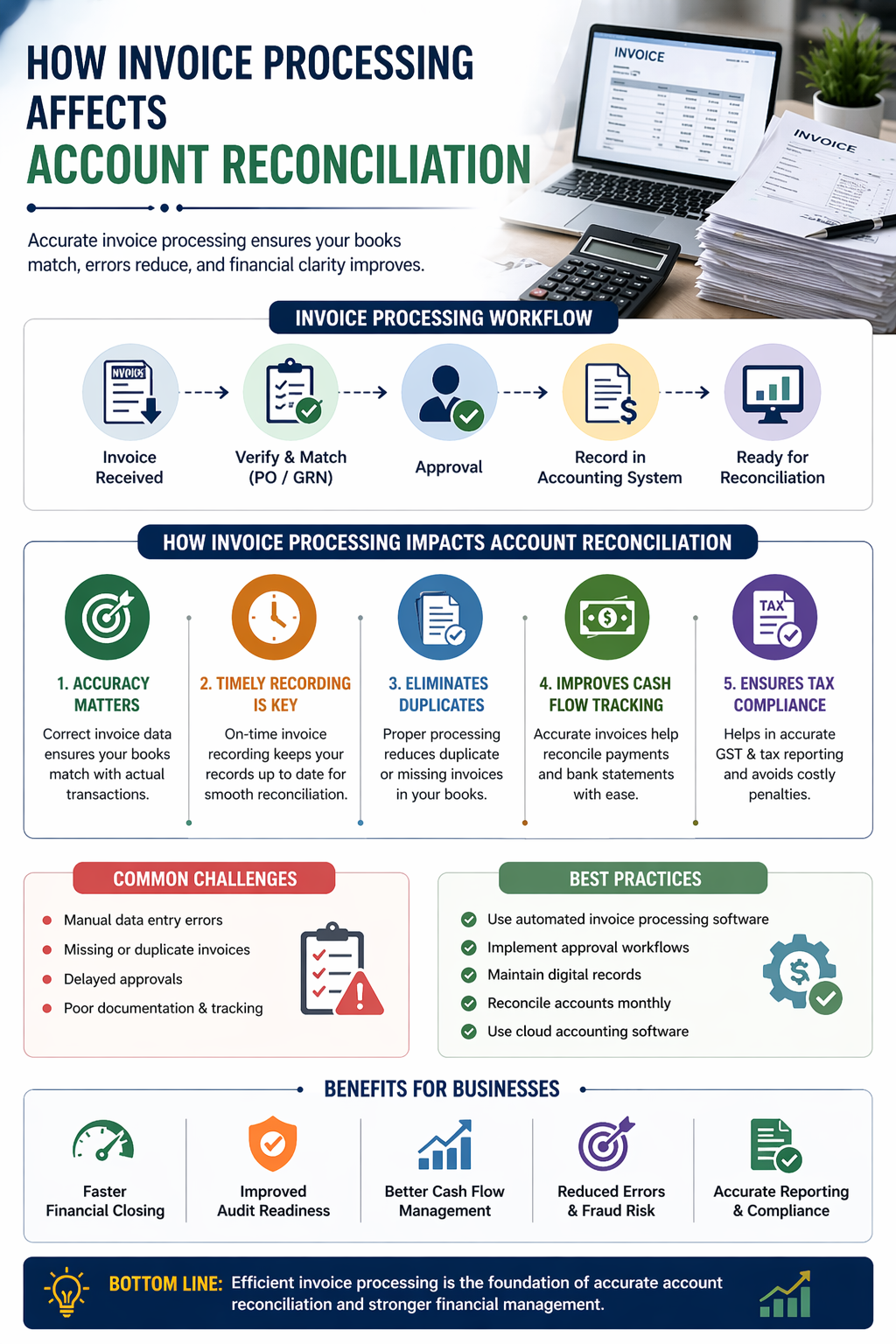
Accurate **invoice processing** is the backbone of smooth **account reconciliation**. If your invoices are delayed, incorrect, or poorly recorded, your books won’t match—leading to errors, compliance risks, and cash flow issues. **What is Invoice Processing?** **Invoice processing** is the workflow of receiving, verifying, approving, and recording invoices in your accounting system. It includes: * Invoice data entry * Validation against purchase orders * Approval workflows * Posting to accounts
What is Account Reconciliation?
Account reconciliation is the process of matching financial records (like bank statements, ledgers, and invoices) to ensure accuracy and consistency.
How Invoice Processing Impacts Account Reconciliation
1. Data Accuracy = Error-Free Reconciliation
Incorrect invoice entries lead to mismatched balances. Proper invoice data capture ensures your books align with actual transactions.
2. Timely Recording Improves Financial Matching
Delayed invoices create gaps in records. Real-time invoice management systems help maintain updated books for smooth reconciliation.
3. Reduces Duplicate & Missing Entries
Manual processing often causes duplication or missed invoices. Automated accounts payable automation eliminates these risks.
4. Improves Cash Flow Tracking
Accurate invoices help track outgoing payments, making bank reconciliation faster and more reliable.
5. Ensures GST & Tax Compliance
Proper invoice processing ensures correct tax calculations, helping in accurate GST reconciliation and avoiding penalties.
Common Challenges
- Manual data entry errors
- Missing invoices
- Delayed approvals
- Poor documentation
Best Practices for Better Reconciliation
✔️ Use automated invoice processing software
✔️ Implement approval workflows
✔️ Maintain digital records
✔️ Reconcile accounts monthly
✔️ Use cloud accounting software
Benefits for Businesses
- Faster financial closing
- Improved audit readiness
- Better cash flow management
- Reduced errors and fraud risk
Conclusion
Efficient invoice processing directly improves account reconciliation accuracy. By using automation and maintaining proper records, businesses can ensure compliance, reduce errors, and make smarter financial decisions.