
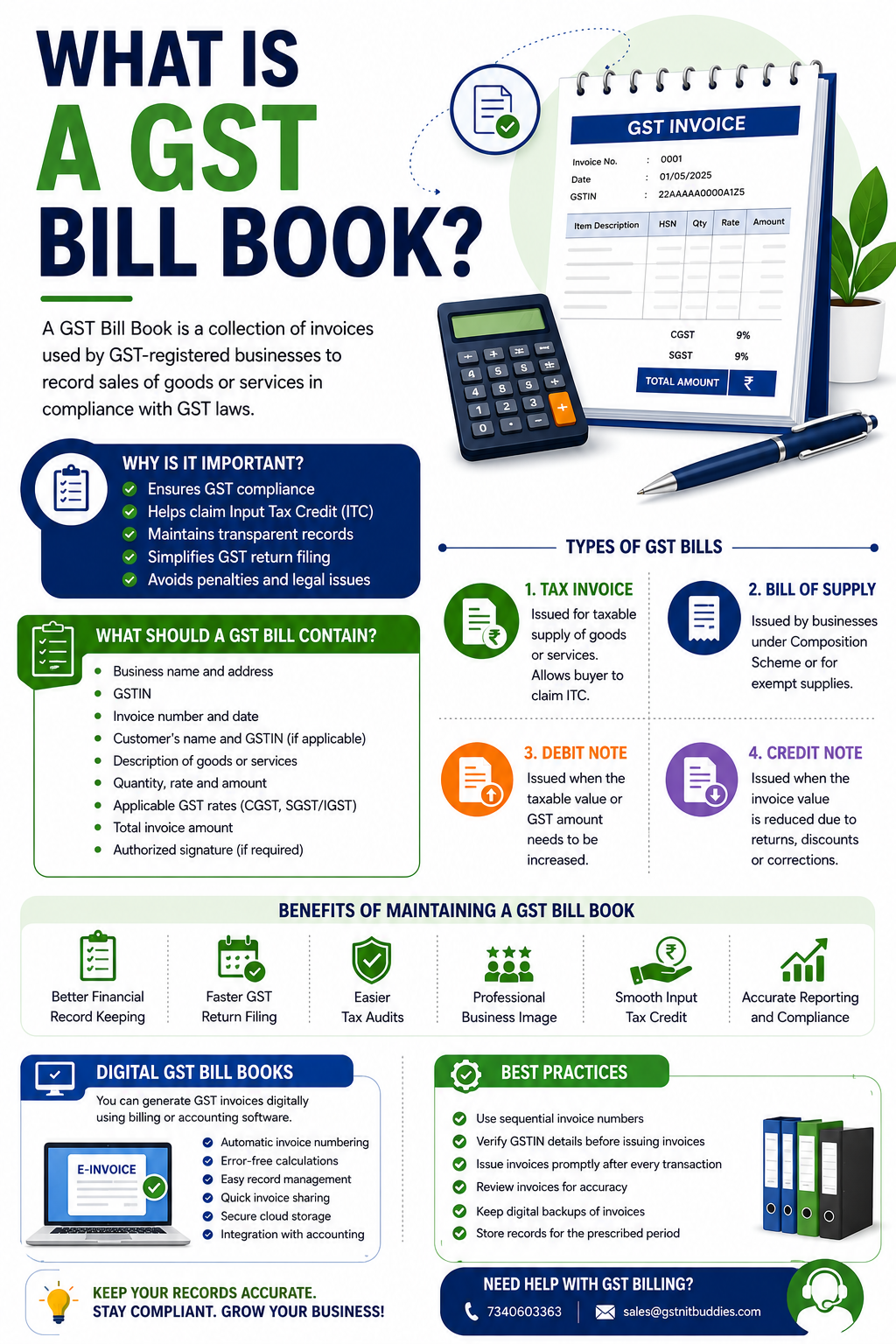
A GST Bill Book is a collection of pre-printed or digitally generated invoices used by businesses registered under the Goods and Services Tax (GST) system. It helps record sales transactions while ensuring compliance with GST regulations. Every taxable sale of goods or services should be supported by a GST-compliant invoice. Whether you run a small business, retail store, online business, or provide professional services, maintaining a proper GST Bill Book is essential for accurate accounting and tax filing.
Why Is a GST Bill Book Important?
A GST Bill Book is more than just a record of sales. It serves multiple purposes, including:
- Ensures GST compliance
- Helps claim Input Tax Credit (ITC)
- Maintains transparent business records
- Simplifies GST return filing
- Reduces the chances of penalties during audits
- Builds customer trust with professional invoices
Using a properly maintained GST Bill Book makes accounting easier and keeps your business financially organized.
What Should a GST Bill Contain?
A GST-compliant invoice should include the following details:
- Business name and address
- GST Identification Number (GSTIN)
- Invoice number
- Invoice date
- Customer's name and GSTIN (if applicable)
- Description of goods or services
- Quantity and unit price
- Taxable value
- Applicable GST rates (CGST, SGST, or IGST)
- Total invoice amount
- Authorized signature (if required)
Including these details ensures that your invoices meet GST requirements.
Types of GST Bills
1. Tax Invoice
Issued when selling taxable goods or services. It allows the buyer to claim Input Tax Credit (ITC).
2. Bill of Supply
Used by businesses registered under the Composition Scheme or those dealing in GST-exempt goods or services.
3. Debit Note
Issued when the taxable value or GST charged needs to be increased after issuing the original invoice.
4. Credit Note
Issued when there is a reduction in the invoice value due to returns, discounts, or corrections.
Benefits of Maintaining a GST Bill Book
Better Financial Record Keeping
Every transaction is properly documented, making accounting more accurate.
Faster GST Return Filing
Well-maintained invoices simplify monthly and annual GST return filing.
Easier Tax Audits
Organized records help businesses respond quickly during GST audits.
Professional Business Image
A properly designed GST invoice creates confidence among customers and clients.
Smooth Input Tax Credit Claims
Accurate invoices help both buyers and sellers claim eligible tax credits.
Can You Use Digital GST Bill Books?
Yes. Most businesses now use accounting software to generate GST invoices electronically.
Advantages of digital GST billing include:
- Automatic invoice numbering
- Error-free calculations
- Easy record management
- Quick invoice sharing
- Secure cloud storage
- Integration with accounting systems
Digital billing saves time and improves efficiency.
Common Mistakes to Avoid
Many businesses make avoidable mistakes while issuing GST invoices:
- Incorrect GSTIN
- Wrong GST rate
- Missing invoice number
- Incorrect customer details
- Duplicate invoices
- Calculation errors
- Failure to maintain invoice records
Review every invoice before issuing it to avoid compliance issues.
Who Should Maintain a GST Bill Book?
A GST Bill Book is useful for:
- Retail businesses
- Wholesalers
- Manufacturers
- Service providers
- Freelancers
- Consultants
- E-commerce sellers
- Startups
- Small and medium enterprises (SMEs)
Any GST-registered business should maintain proper billing records.
Best Practices for GST Billing
To ensure compliance:
- Use sequential invoice numbers.
- Keep digital backups of invoices.
- Verify GSTIN details before issuing invoices.
- Issue invoices promptly after every transaction.
- Reconcile invoices regularly with your accounting records.
- Store records for the prescribed period under GST law.
Following these practices helps businesses avoid penalties and maintain accurate financial records.
Conclusion
A GST Bill Book is an essential tool for every GST-registered business. It helps maintain accurate sales records, ensures tax compliance, simplifies return filing, and supports Input Tax Credit claims. Whether you use a printed bill book or digital invoicing software, maintaining proper GST invoices is a vital part of running a successful business.
Investing in an organized GST billing system not only keeps your business compliant but also improves financial management and operational efficiency.
Frequently Asked Questions (FAQs)
1. What is a GST Bill Book?
A GST Bill Book is a record of GST-compliant invoices issued for the sale of goods or services.
2. Is a GST Bill Book mandatory?
GST-registered businesses are required to issue GST-compliant invoices for taxable supplies as per applicable GST rules.
3. Can GST bills be generated online?
Yes. Businesses can generate GST invoices using accounting and billing software.
4. What is the difference between a Tax Invoice and a Bill of Supply?
A Tax Invoice is issued for taxable supplies, while a Bill of Supply is used for exempt supplies or by businesses under the Composition Scheme.
5. How long should GST invoices be preserved?
Businesses should retain GST invoices and related records for the period prescribed under applicable GST regulations.