


Introduction A business may be profitable on paper but still face financial difficulties if it does not have sufficient cash to cover its day-to-day expenses. This is where working capital becomes important. Working capital helps a business understand whether it has enough short-term resources to meet its immediate financial obligations. Effective working capital management can help businesses maintain healthy cash flow, pay suppliers on time, manage operating expenses, and support growth. In this article, we explain what working capital means, how it is calculated, why it is important, and how businesses can manage it effectively.
What Is Working Capital?
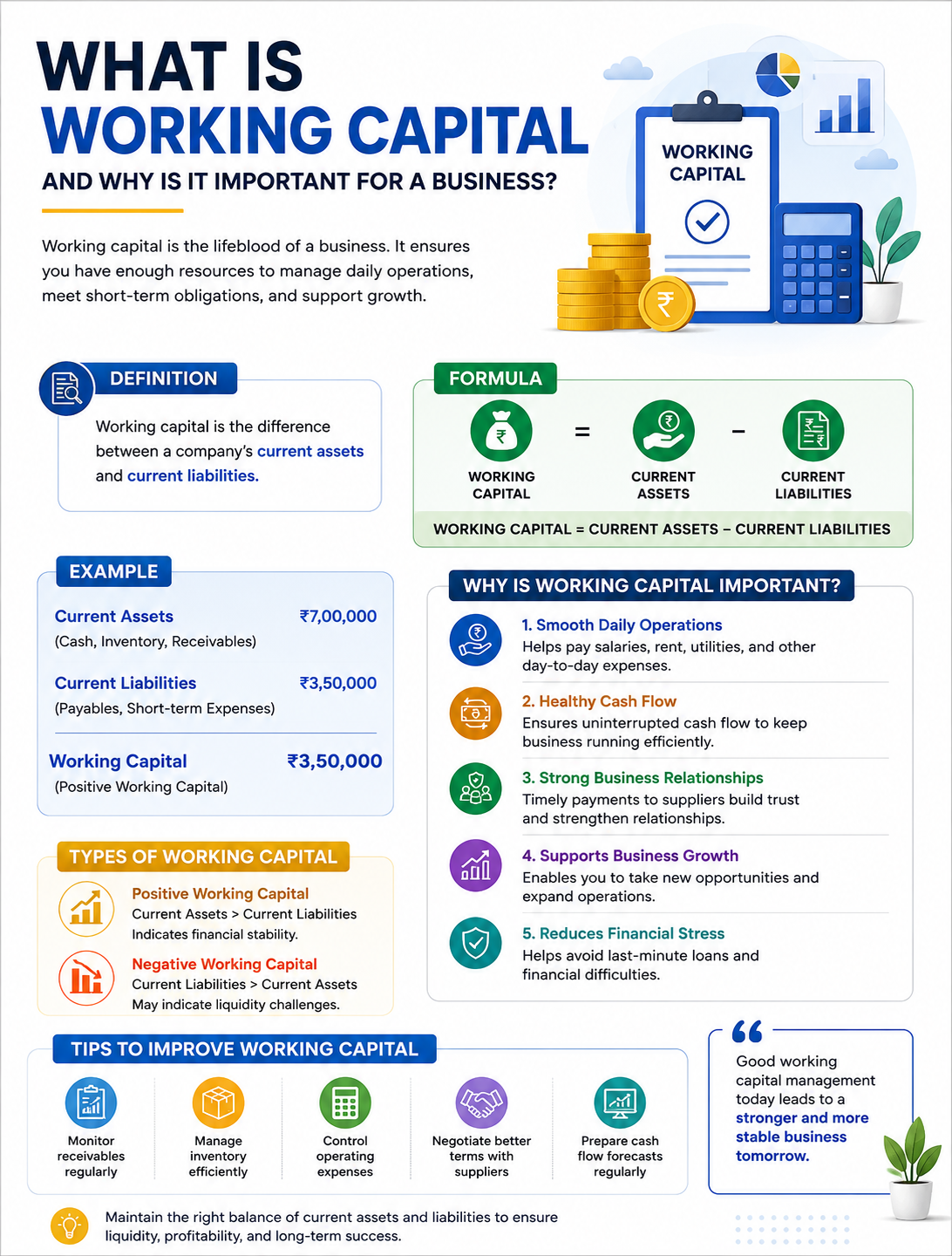
Working capital is the difference between a company's current assets and current liabilities.
It represents the short-term financial resources available to a business for running its everyday operations.
The basic formula is:
Working Capital = Current Assets − Current Liabilities
Example
Suppose a business has:
- Cash and bank balance: ₹2,00,000
- Inventory: ₹3,00,000
- Trade receivables: ₹2,00,000
Total Current Assets = ₹7,00,000
If its current liabilities are:
- Trade payables: ₹2,50,000
- Short-term expenses payable: ₹1,00,000
Total Current Liabilities = ₹3,50,000
Therefore:
Working Capital = ₹7,00,000 − ₹3,50,000 = ₹3,50,000
The business has positive working capital of ₹3.5 lakh.
What Are Current Assets?
Current assets are assets that a business expects to convert into cash, sell, or use within its normal operating cycle, generally within one year.
Common examples include:
- Cash and cash equivalents
- Bank balances
- Trade receivables
- Inventory
- Short-term investments
- Prepaid expenses
These assets help a business fund its routine operations.
What Are Current Liabilities?
Current liabilities are short-term obligations that a business generally needs to settle within one year or within its normal operating cycle.
Examples include:
- Trade payables
- Short-term borrowings
- Outstanding expenses
- Taxes payable
- Other short-term obligations
Managing these liabilities properly is essential for maintaining healthy cash flow.
Why Is Working Capital Important for a Business?
1. Helps Manage Daily Expenses
Businesses have regular expenses such as salaries, rent, utilities, transportation, and supplier payments.
Adequate working capital helps ensure these expenses can be paid when they become due.
2. Supports Healthy Cash Flow
Profit does not always mean that cash is immediately available. For example, a business may make a sale on credit but receive payment several weeks later.
Working capital helps bridge this timing gap.
3. Helps Pay Suppliers on Time
Maintaining sufficient working capital allows businesses to make timely payments to suppliers. This can help preserve good supplier relationships and support smoother operations.
4. Supports Business Growth
When a business receives more orders, it may need to purchase additional inventory, hire employees, or increase production before receiving customer payments.
Healthy working capital can help finance this temporary increase in operating requirements.
5. Reduces Short-Term Financial Pressure
Insufficient working capital can make it difficult to pay bills and other obligations on time.
Maintaining an appropriate level of working capital can reduce short-term financial pressure and improve financial stability.
What Is Positive and Negative Working Capital?
Positive Working Capital
When current assets exceed current liabilities, the business has positive working capital.
This generally indicates that the business has more short-term assets available than short-term obligations.
Negative Working Capital
When current liabilities exceed current assets, the business has negative working capital.
This may indicate short-term liquidity pressure, although the meaning can vary depending on the business model and industry.
For example, some businesses receive customer payments quickly but have longer payment periods with suppliers. Such businesses may operate successfully with relatively low or negative working capital.
Working Capital vs Cash Flow
Working capital and cash flow are related but they are not the same.
Working capital measures the difference between current assets and current liabilities at a particular point in time.
Cash flow tracks the movement of cash into and out of a business over a period.
A company can have positive working capital but still experience temporary cash flow problems if a large portion of its current assets consists of inventory or unpaid customer invoices.
What Is Working Capital Management?
Working capital management involves managing current assets and current liabilities efficiently so that a business can meet its short-term obligations while using its resources productively.
Key areas include:
- Managing cash balances
- Controlling inventory
- Collecting customer payments efficiently
- Negotiating suitable supplier payment terms
- Monitoring short-term liabilities
- Preparing regular cash flow forecasts
How Can a Business Improve Working Capital?
Monitor Receivables
Businesses should regularly track outstanding customer invoices and follow up on overdue payments.
Control Inventory
Excess inventory can tie up cash, while insufficient inventory can disrupt sales and operations. Businesses should maintain inventory at an appropriate level.
Review Expenses
Regularly reviewing operating expenses can help identify unnecessary costs and improve cash availability.
Manage Supplier Payments
Businesses should plan supplier payments carefully while maintaining good relationships with vendors.
Prepare Cash Flow Forecasts
Cash flow forecasts can help businesses anticipate periods of high expenses or lower collections and plan accordingly.
Why Should Business Owners Monitor Working Capital Regularly?
Working capital can change frequently as sales, purchases, collections, inventory levels, and expenses change.
Regular monitoring can help business owners identify potential liquidity problems before they become serious.
A simple monthly review can include:
- Current cash balance
- Outstanding receivables
- Inventory levels
- Supplier payments
- Current liabilities
- Expected cash inflows and outflows
Conclusion
Working capital is an important indicator of a business's short-term financial health. It helps businesses understand whether their current resources are sufficient to meet their immediate obligations and support everyday operations.
Effective working capital management can improve cash flow, strengthen supplier relationships, support business growth, and reduce short-term financial pressure.
Business owners should therefore monitor working capital regularly rather than focusing only on revenue and profit.
Need help with accounting, tax planning, GST compliance, or financial management? Professional accounting support can help your business maintain accurate records and make better financial decisions.
Frequently Asked Questions
1. What is working capital in simple terms?
Working capital is the amount left after subtracting current liabilities from current assets. It indicates the short-term resources available to run a business.
2. What is the formula for working capital?
The formula is: Working Capital = Current Assets − Current Liabilities.
3. Why is working capital important?
It helps businesses manage daily expenses, meet short-term obligations, maintain liquidity, and support operational growth.
4. Is negative working capital always bad?
Not necessarily. Some business models naturally operate with low or negative working capital because they collect customer payments quickly and pay suppliers later. The situation should be evaluated based on the business model and industry.
5. What is the difference between working capital and cash flow?
Working capital compares current assets with current liabilities, while cash flow measures the actual movement of cash into and out of a business over a period.