

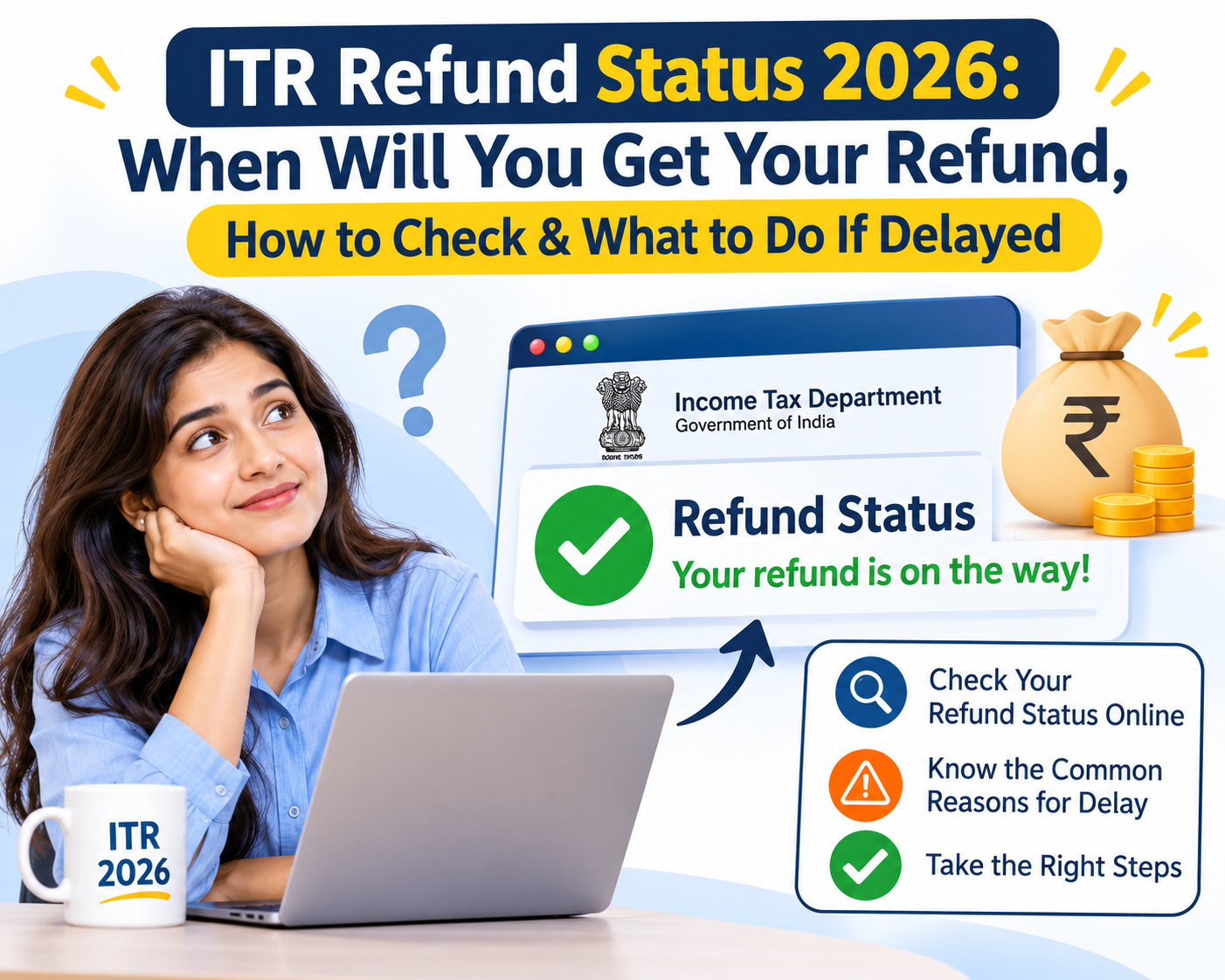
Filed your Income Tax Return on time but still waiting for the money? You are not alone. More than 78 million ITRs were filed for AY 2026-27 by 31 August 2026, and many taxpayers are still searching "when will I get my income tax refund?" every day. This guide explains how to check your income tax refund status online, what each status means, the most common reasons for an income tax refund delay, and exactly what to do if your ITR refund is not received. What Is an Income Tax Refund? An income tax refund is the extra tax you get back when the tax you paid during the year is more than your actual tax liability. The extra payment usually comes from: • Higher TDS deducted by your employer, bank or client • Advance tax paid in excess • Self-assessment tax paid before filing • TCS collected on foreign travel, remittances or other transactions .
When Will I Get My Income Tax Refund?
In most cases, the refund is credited within 4 to 5 weeks after you e-verify your ITR. Processing starts only after e-verification, not after filing.
Your refund may take longer if:
- You e-verified late (you get 30 days from filing)
- Your return was picked for additional checks
- There is a mismatch between your ITR and AIS / Form 26AS
- Your bank account is not pre-validated
If it has been more than 5 weeks since e-verification, check your status using the steps below.
How to Check Income Tax Refund Status Online (Step by Step)
Method 1: Income Tax e-Filing Portal (most detailed)
- Go to the official portal: incometax.gov.in
- Log in with your PAN / Aadhaar as user ID and your password.
- Click e-File → Income Tax Returns → View Filed Returns.
- Select Assessment Year 2026-27.
- Click View Details to see the full timeline of your return and refund.
This view shows every stage: filed, verified, processed, refund issued, and any notice or demand.
Method 2: Protean (NSDL) Refund Status Page
The refund banker's page shows whether the money has actually been sent to your bank.
- Open the Protean (formerly NSDL) refund status page on the TIN website.
- Enter your PAN and select Assessment Year 2026-27.
- Enter the captcha and click Submit.
Tip: If the e-filing portal shows "Processed" but the NSDL page shows "Refund failed", the problem is almost always your bank details.
ITR Refund Status Meaning: What Each Status Tells You
|
Status |
What it means |
What you should do |
|---|---|---|
|
Refund issued / credited |
Refund has been sent to your bank |
Check your bank statement |
|
Processed with refund due |
Return is processed, refund is in the queue |
Wait 1 to 2 weeks |
|
Refund failed / unpaid |
Bank credit failed |
Fix bank details and raise a refund reissue request |
|
Refund adjusted against demand |
Refund was set off against an old tax demand (Section 245) |
Check the demand; respond if you disagree |
|
Processed with no demand, no refund |
Department found no excess tax |
Compare your ITR with AIS / 26AS |
|
Processed with demand |
Department says you owe tax |
Read the 143(1) intimation and respond |
|
Defective return |
Notice under Section 139(9) |
Respond within the given time |
|
Pending for e-verification |
Return not verified yet |
E-verify immediately |
Why Is My Income Tax Refund Delayed? 8 Common Reasons
- ITR not e-verified. An unverified return is never processed. This is the most common reason.
- Bank account not pre-validated. The refund goes only to a validated account linked to your PAN.
- Inoperative PAN. If your PAN is not linked with Aadhaar, it becomes inoperative and refunds are blocked. The Income Tax Department flagged this again in August 2026.
- Mismatch with AIS or Form 26AS. If the income or TDS in your ITR does not match the department's records, your return goes for extra checks.
- Wrong ITR form. Filing ITR-1 when you should file ITR-2 can lead to a defective return notice.
- Old outstanding demand. The department can adjust your refund against a past demand.
- Defective return notice (Section 139(9)). Your refund waits until you respond.
- Additional verification by CPC. High-value refunds or unusual claims (large deductions, HRA, losses) may be held for review.
What to Do If Your ITR Refund Is Not Received
Step 1: Check e-verification
Go to View Filed Returns. If the status says "Pending for e-verification", verify now using Aadhaar OTP, net banking or a bank account EVC.
Step 2: Check your bank account validation
Go to My Profile → My Bank Account. Make sure the account is validated and nominated for refund. Check the account number and IFSC. If needed, add the account again and re-validate.
Step 3: Check PAN-Aadhaar link status
On the portal home page, use Link Aadhaar Status. If the PAN is inoperative, complete the linking first.
Step 4: Raise a refund reissue request (if refund failed)
- Log in and go to Services → Refund Reissue.
- Click Create Refund Reissue Request.
- Select the record and choose a validated bank account.
- Verify with Aadhaar OTP or EVC and submit.
You can track the request on the same page.
Step 5: Respond to any notice or demand
Check Pending Actions → e-Proceedings and your registered email. If there is a 139(9) notice or a demand you do not agree with, respond on the portal with your reasons.
Step 6: Raise a grievance
If everything is correct and your refund is still stuck, go to Grievances → Submit Grievance and choose the CPC-ITR category for refund issues. Keep your acknowledgement number handy.
Step 7: File a revised return if you made a mistake
If the delay is because of an error in your ITR (wrong income, missed TDS, wrong bank), you can file a revised return under Section 139(5). For AY 2026-27, the Finance Act, 2026 extended this window to 31 March 2027.
Will I Get Interest on a Delayed Refund? (Section 244A)
Yes. Under Section 244A, the department pays simple interest of 0.5% per month (6% per year) on your refund.
- If you filed on or before the due date, interest is calculated from 1 April 2026 to the date the refund is granted.
- If you filed late, interest starts from the date you filed.
- If the delay is because of you (for example, late response to a notice), interest for that period may not be paid.
- Interest on refund is taxable as "Income from Other Sources" in the year you receive it.
Tips to Get Your Income Tax Refund Faster Next Time
- File early, before the rush near the due date.
- E-verify on the same day you file.
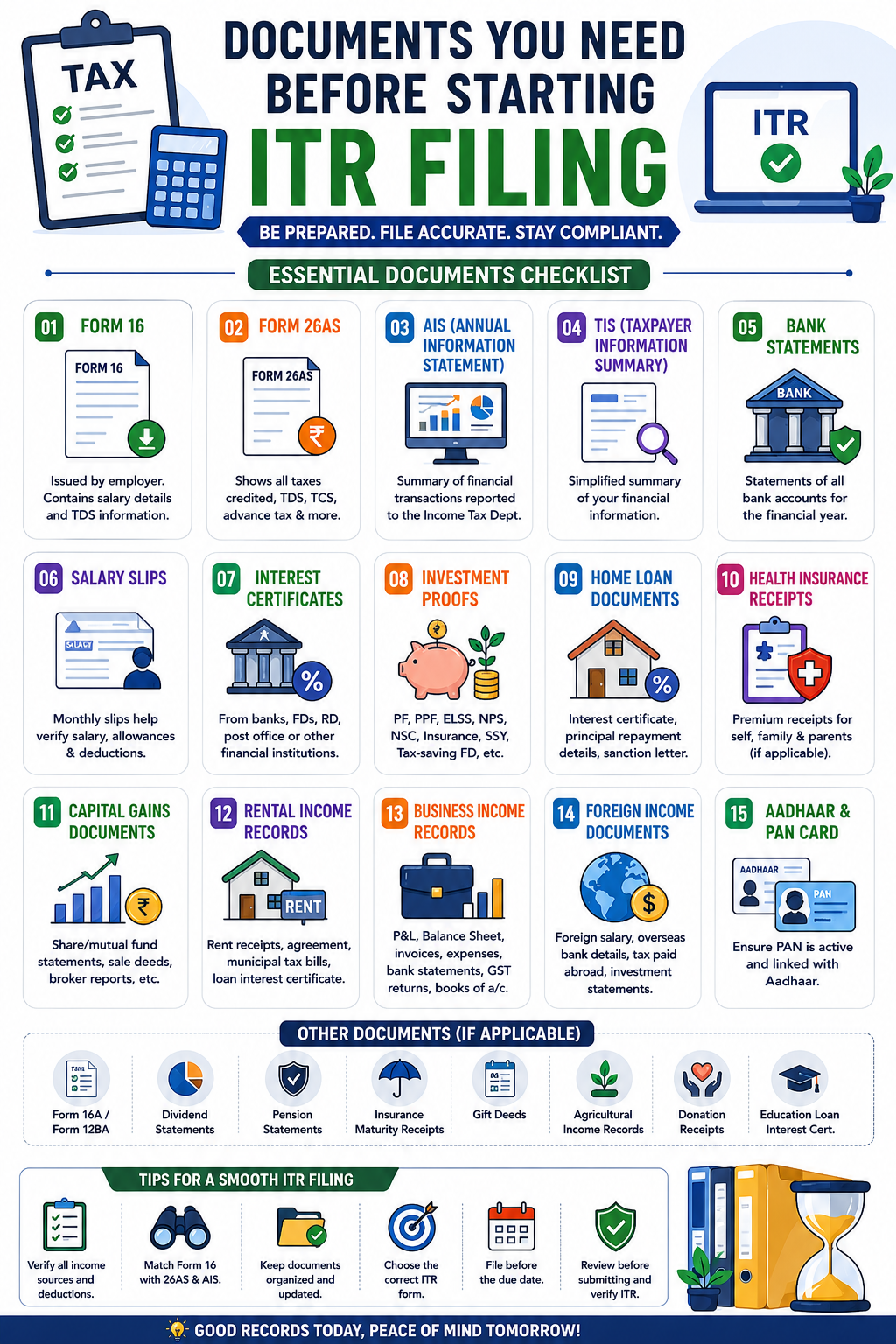
- Match your ITR with AIS, TIS and Form 26AS before filing.
- Keep one bank account pre-validated and nominated for refund.
- Make sure your PAN is linked with Aadhaar.
- Choose the correct ITR form.
- Respond to notices quickly.
Frequently Asked Questions (FAQs)
1. How many days does it take to get an income tax refund? Usually 4 to 5 weeks after e-verification. It can take longer if your return needs extra checks.
2. How can I check my income tax refund status without logging in? You can check it on the Protean (NSDL) refund status page using your PAN and assessment year.
3. What does "refund failed" mean? The department tried to credit the refund but the bank rejected it, usually due to wrong account details or an unvalidated account. Fix the bank details and raise a refund reissue request.
4. My ITR is processed but I have not received the refund. What should I do? Check the NSDL refund status, your bank account validation and whether the refund was adjusted against a demand. If nothing is wrong, raise a grievance under CPC-ITR.
5. Is interest on income tax refund taxable? Yes. Interest received under Section 244A is taxable under "Income from Other Sources".
6. Can I change my bank account after filing the ITR? Yes. Add and validate the new account in your profile, nominate it for refund, and then raise a refund reissue request if the refund has failed.
Refund Stuck? Let GST & IT Buddies Help
If your income tax refund is delayed, failed or adjusted against a demand you do not understand, our tax experts can check your ITR, AIS, Form 26AS and refund status, find the exact reason and fix it for you.
Contact GST & IT Buddies today for ITR filing, refund follow-up, notice replies and revised returns.
Disclaimer: This article is for general information only. Tax rules and portal steps may change, so always confirm on the official Income Tax e-Filing portal or consult a tax professional.