What Is a Belated ITR? Due Dates, Consequences and Filing Process

  • 2026-10-20
  • suneel
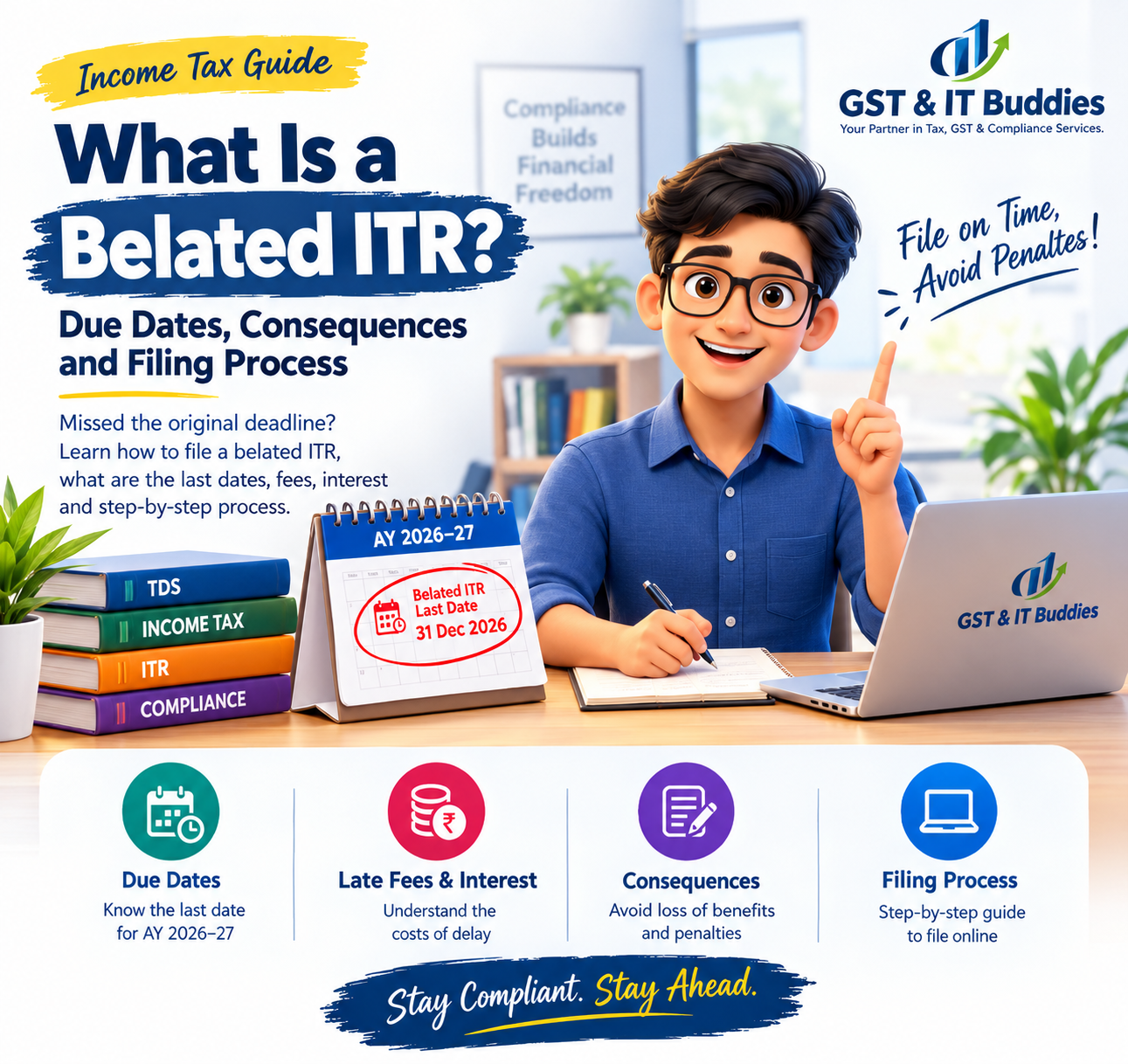
Filing an Income Tax Return (ITR) within the prescribed deadline is an important responsibility for taxpayers in India. However, if you miss the original due date, you may still be able to file your return through a process known as belated ITR filing. A belated Income Tax Return allows eligible taxpayers to report their income after the original filing deadline, subject to the applicable time limit, late filing fees, interest, and other conditions. In this guide, we will explain what a belated ITR is, its due date for Assessment Year (AY) 2026–27, the consequences of late filing, the documents required, and the steps to file it online.
What is the difference between LLP registration and private limited company registration?

  • 2026-10-23
  • suneel
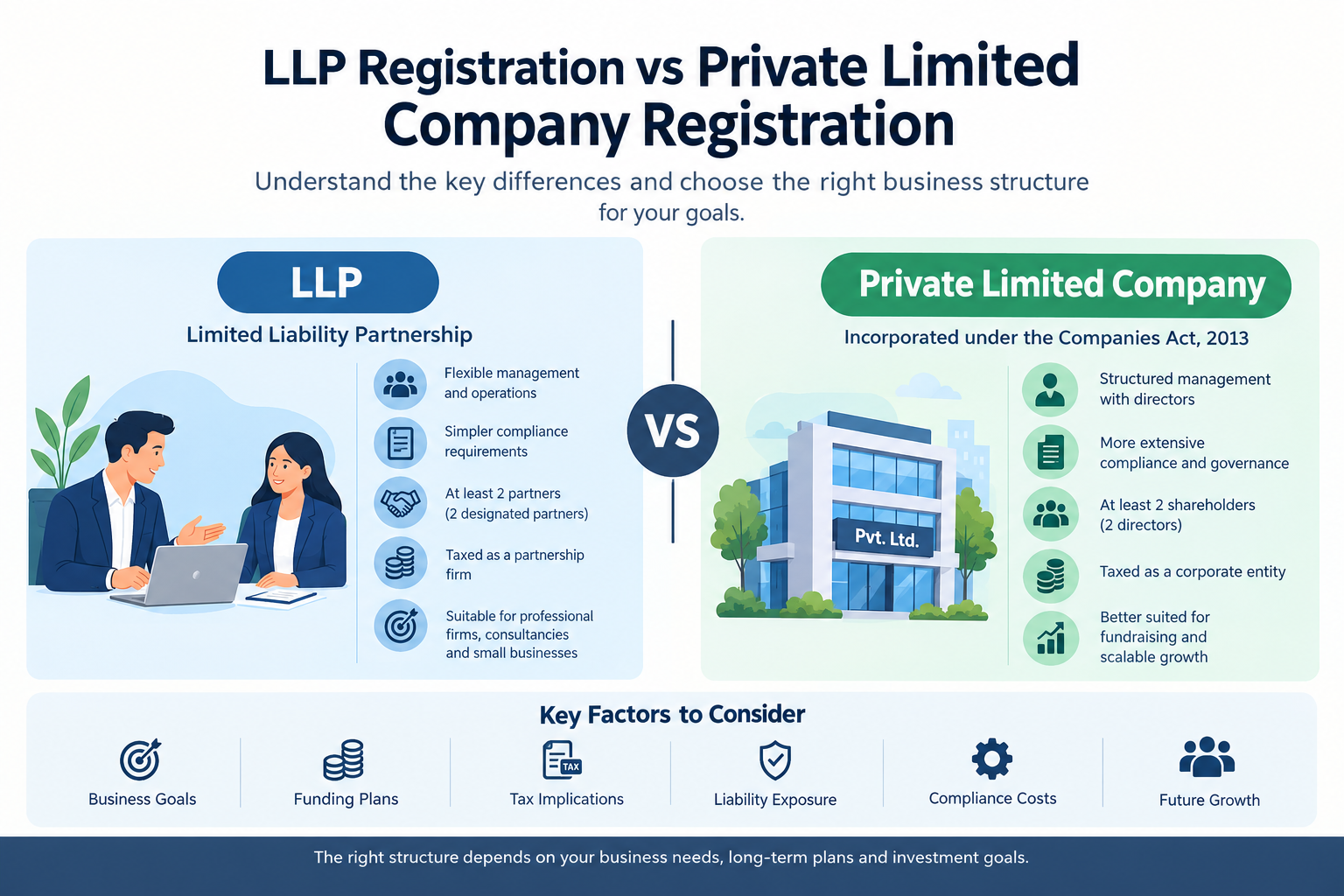
Introduction Choosing the right business structure is one of the most important decisions when starting a business in India. Entrepreneurs often compare Limited Liability Partnership (LLP) registration with Private Limited Company registration because both structures offer limited liability protection but differ in ownership, management, compliance, and fundraising opportunities. An LLP is generally suitable for businesses that prefer flexible management and relatively simpler ongoing compliance. A private limited company may be more appropriate for startups planning to raise investment, issue shares, and expand their operations. Understanding the difference between LLP registration and private limited company registration can help business owners choose a structure that aligns with their business goals, financial plans, and long-term growth strategy.

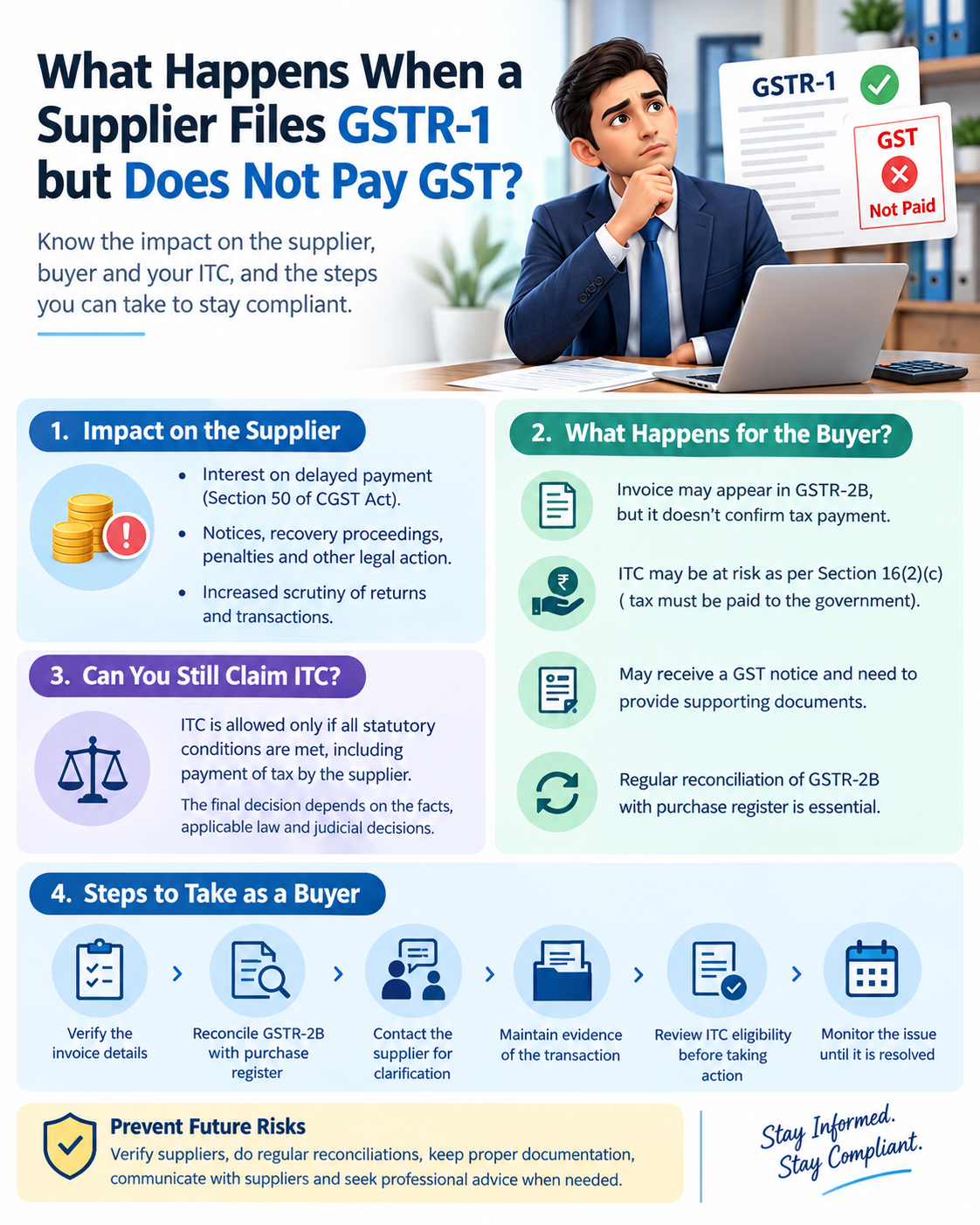
What Happens When a Supplier Files GSTR-1 but Does Not Pay GST?

  • 2026-10-23
  • suneel
Goods and Services Tax (GST) compliance involves filing returns, reporting sales, paying tax liabilities, and maintaining accurate financial records. However, a common concern for businesses arises when a supplier files GSTR-1 but fails to pay the GST due to the government. This situation can create complications for both the supplier and the buyer, particularly when the buyer intends to claim Input Tax Credit (ITC) on the purchase. Goods and Services Tax (GST) compliance involves filing returns, reporting sales, paying tax liabilities, and maintaining accurate financial records. However, a common concern for businesses arises when a supplier files GSTR-1 but fails to pay the GST due to the government. This situation can create complications for both the supplier and the buyer, particularly when the buyer intends to claim Input Tax Credit (ITC) on the purchase.

How to Generate a Tax Invoice in Tally Prime – Step-by-Step Guide

  • 2026-10-26
  • suneel
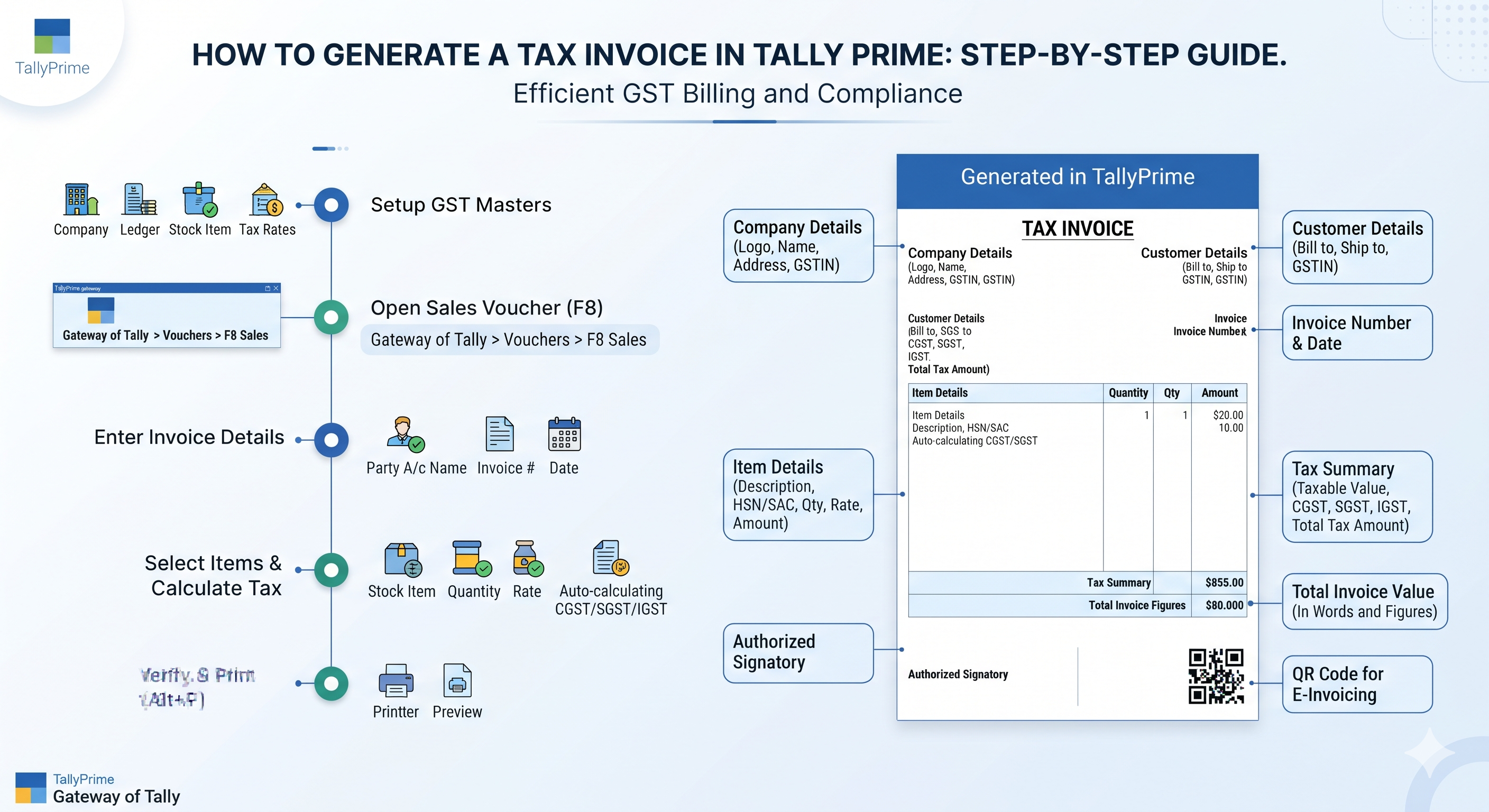
Generating a tax invoice is an essential task for businesses registered under the Goods and Services Tax (GST) system in India. A properly prepared tax invoice helps businesses maintain accurate accounting records, calculate GST correctly, and meet applicable tax compliance requirements. Tally Prime is widely used by businesses, accountants, and tax professionals to record sales transactions and generate GST invoices. Once the company, customer, sales ledger, stock items, and tax details are configured correctly, creating an invoice becomes a straightforward process. In this guide, you will learn how to generate a tax invoice in Tally Prime, configure GST settings, enter sales details, verify tax calculations, and print or share the final invoice.