Income-tax Act, 2025 vs Income-tax Act, 1961: What Changed in TDS?

  • 2026-09-07
  • suneel
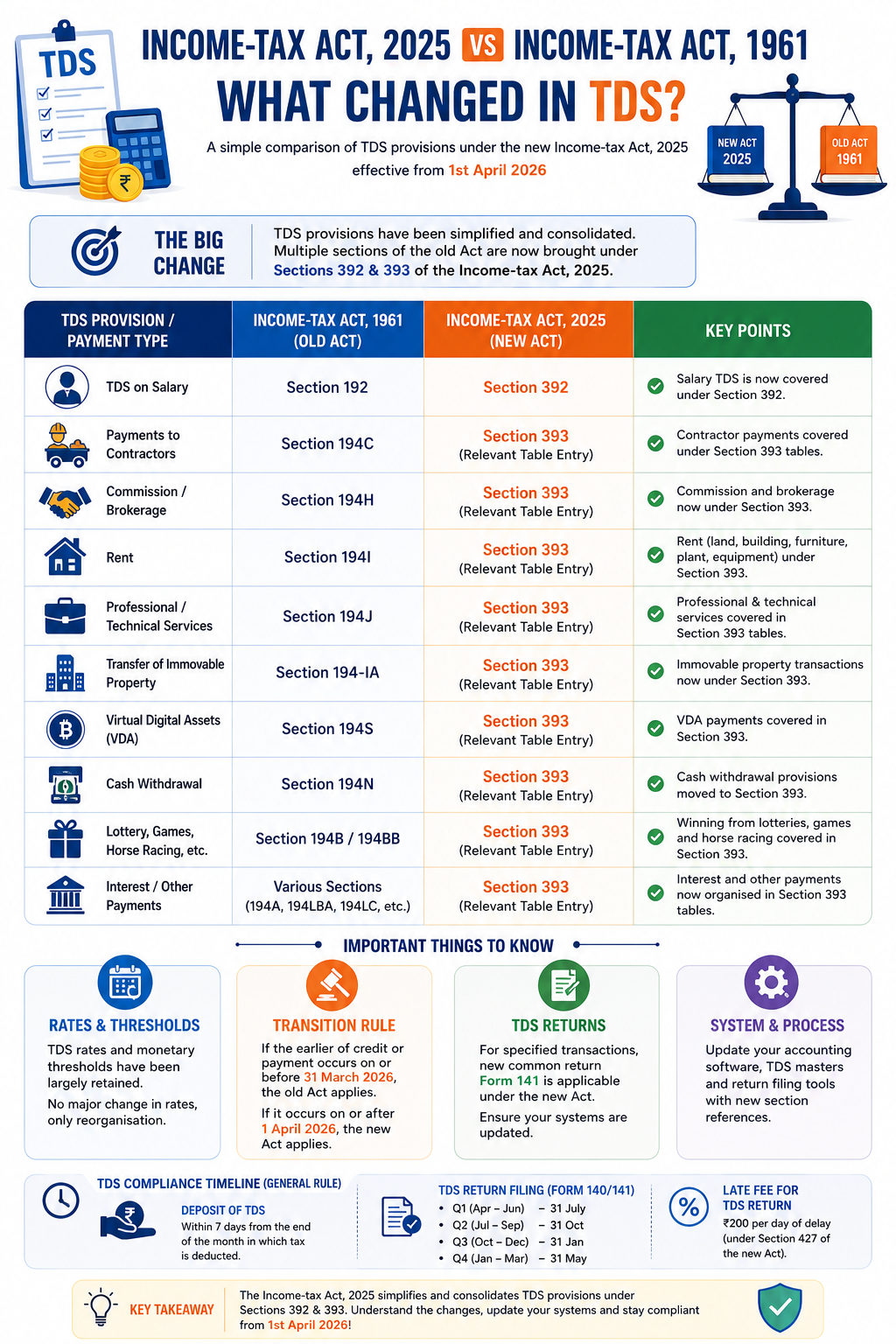
The Income-tax Act, 2025 introduces a major structural change to India's direct-tax framework from 1 April 2026. For businesses, professionals, employers, and other tax deductors, one key change is Tax Deducted at Source (TDS). However, the key point is that the new law does not fundamentally change the TDS policy, rates, or monetary thresholds for most categories of payments. Instead, the TDS provisions have been reorganised and consolidated into a simpler, more tabular structure.
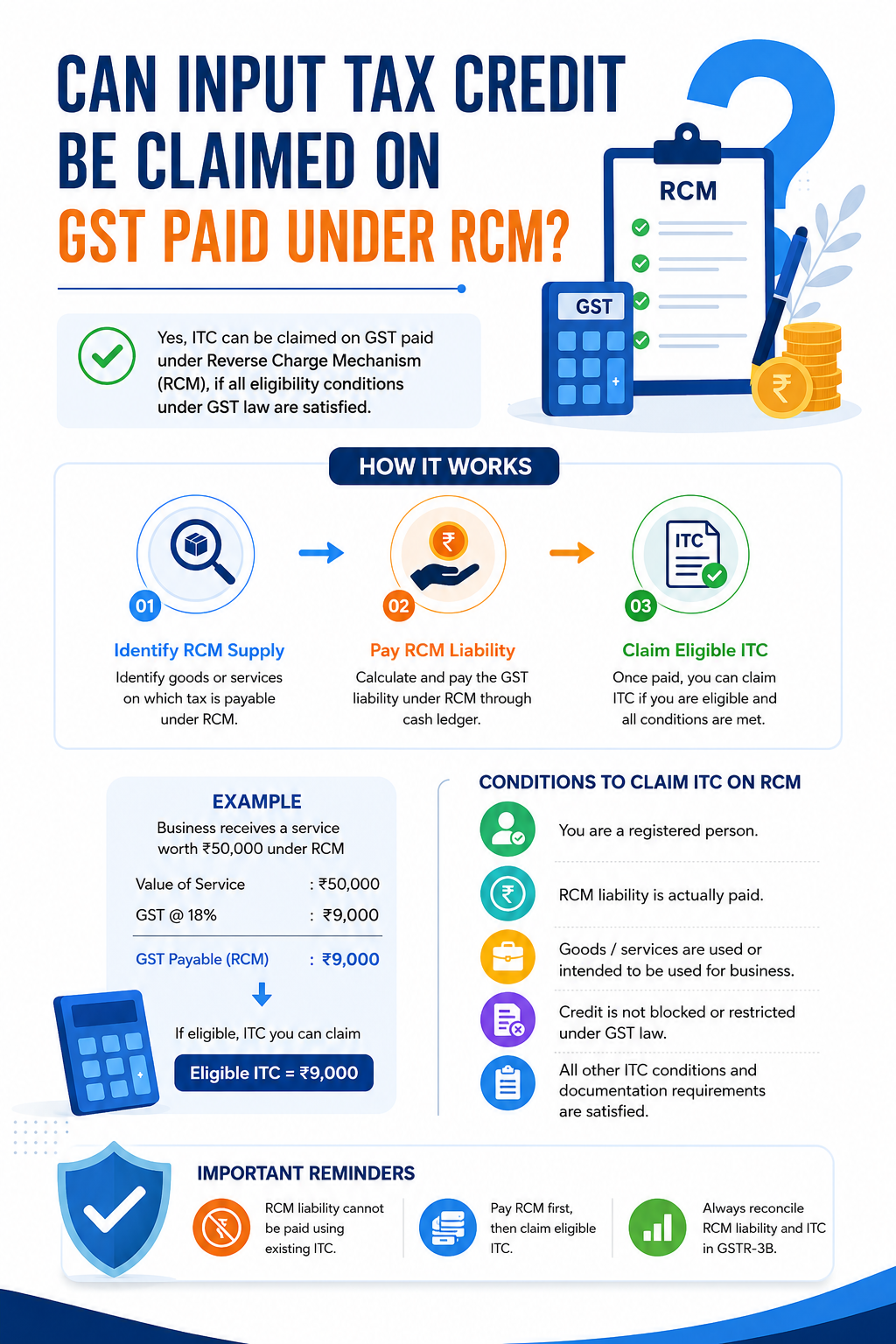
Learn whether ITC can be claimed on GST paid under RCM, how RCM works, eligibility conditions, GSTR-3B reporting and common mistakes.

  • 2026-09-08
  • suneel
Yes, Input Tax Credit (ITC) can generally be claimed on GST paid under the Reverse Charge Mechanism (RCM), provided the recipient is otherwise eligible to claim the credit and all applicable conditions under GST law are satisfied.Under RCM, the recipient of certain goods or services becomes responsible for paying GST instead of the supplier. However, paying GST under RCM does not automatically mean that the tax becomes an eligible credit. The recipient must meet the applicable ITC conditions and ensure that the underlying expense is eligible for credit.

How Many Sections Are There in the Income Tax Act, 2025?

  • 2026-09-10
  • suneel
India’s new Income-tax Act, 2025, is a major overhaul of the country’s direct-tax framework. One of the most common questions taxpayers and businesses have is: How many sections are there in the Income-tax Act, 2025? The answer is 536 sections. The new Act also contains 16 Schedules. The Income Tax Department confirms that the 2025 Act is more streamlined than the Income-tax Act, 1961, which had 819 sections and 14 Schedules.

What Is a Purchase Order (PO)? Purchase Order vs Invoice Explained

  • 2026-09-12
  • suneel
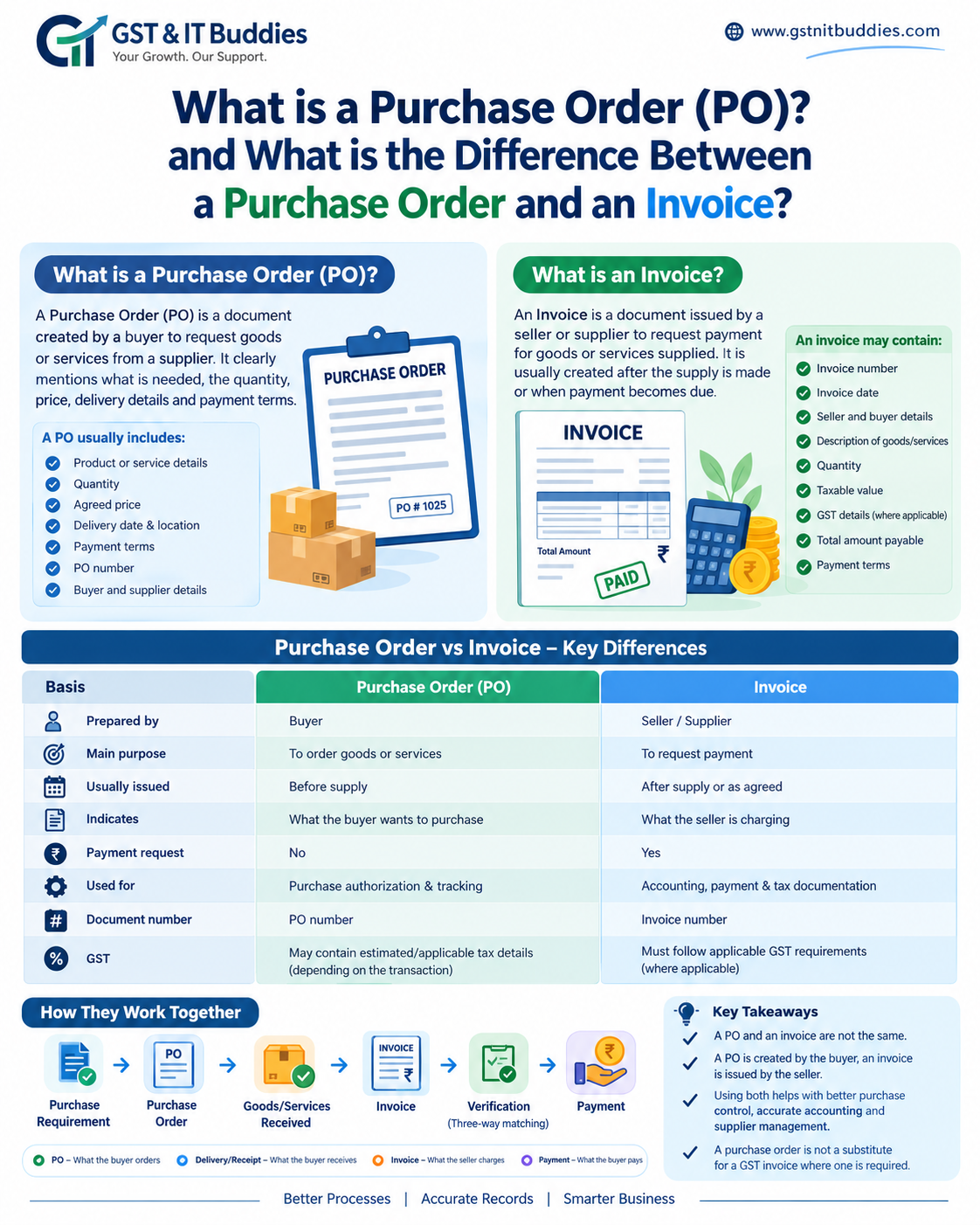
A Purchase Order (PO) is an important document used by businesses when purchasing goods or services from a supplier. It helps the buyer clearly communicate what they want to purchase, including the quantity, price, delivery requirements, and payment terms. Although a Purchase Order and an Invoice may contain similar information, they serve completely different purposes. Understanding the difference between a purchase order and an invoice can help businesses maintain accurate records, control expenses, and manage their accounting processes efficiently.