Sole Proprietorship vs LLP vs Private Limited: Which Business Structure Is Best in India?

  • 2026-05-20
  • suneel
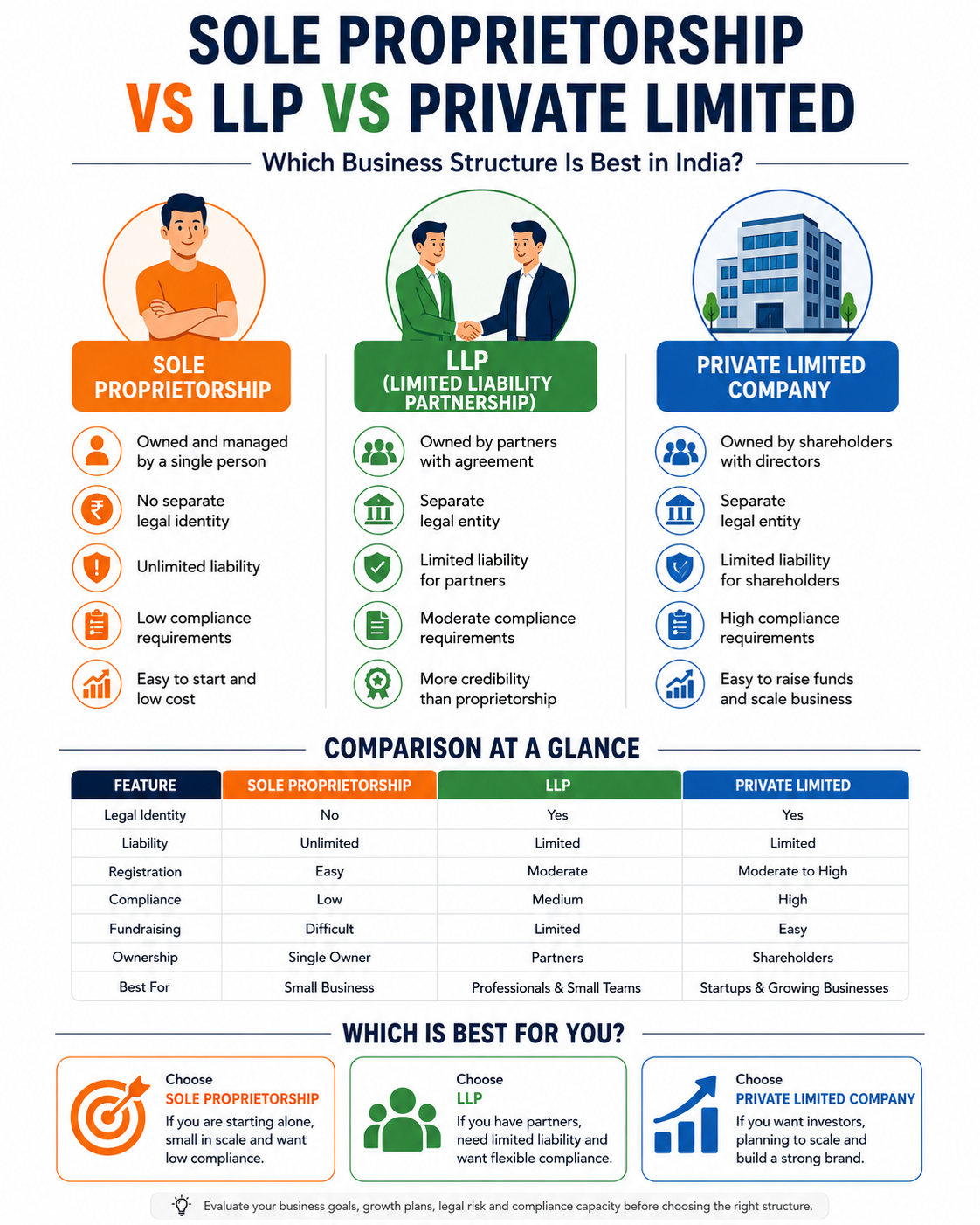
Sole Proprietorship vs LLP vs Private Limited Company: Which Is Best in India? Choosing the right business structure in India is one of the most important decisions for any entrepreneur. Whether you are starting a small business, launching a startup, or planning to scale operations, your legal structure impacts taxation, compliance, liability, funding, and growth opportunities. The three most popular business structures in India are: Sole Proprietorship Limited Liability Partnership (LLP) Private Limited Company (Pvt Ltd) But the big question is: Which business structure is best in India? In this guide, we compare Sole Proprietorship vs LLP vs Private Limited Company to help you make the right decision.
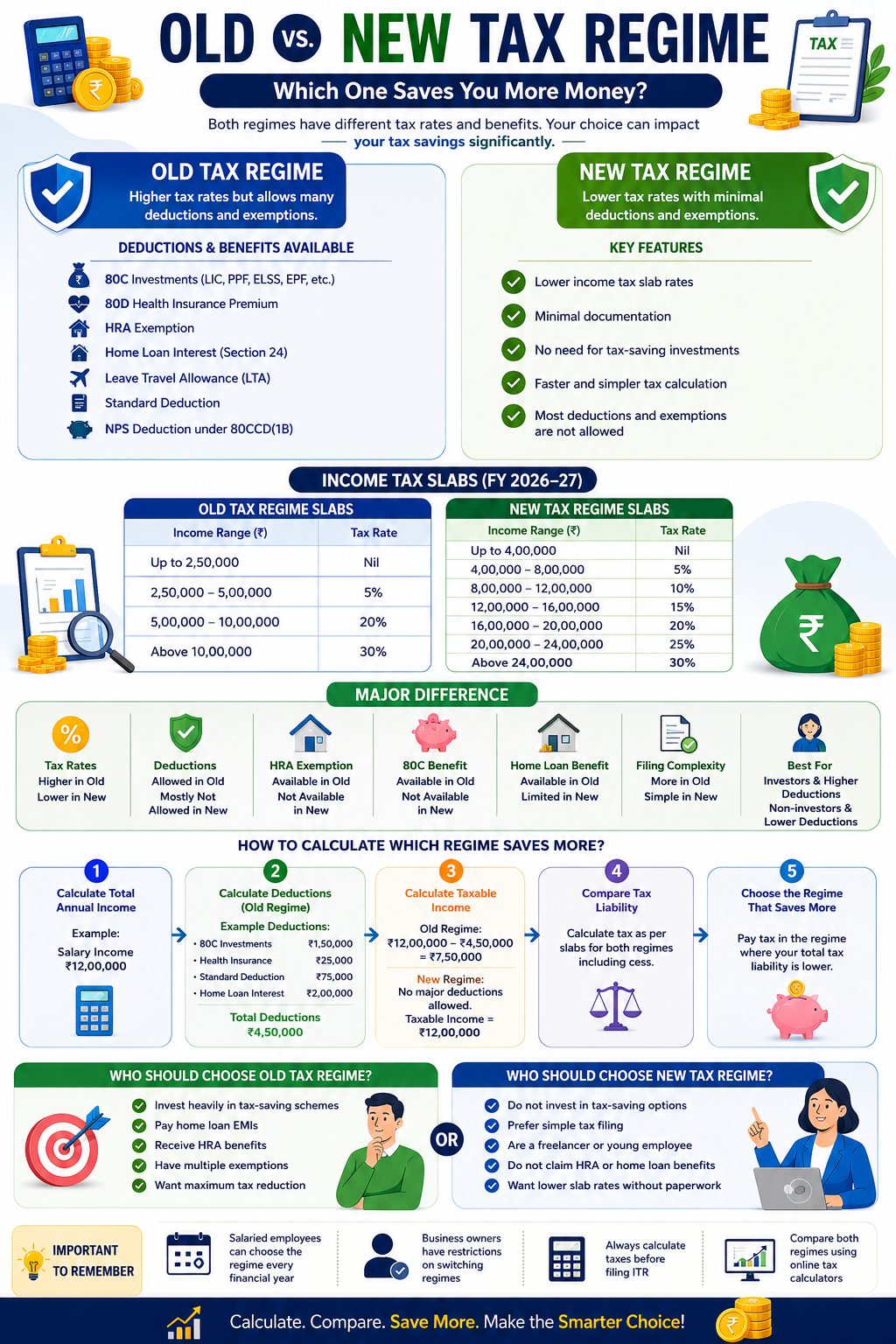
Old vs. New Tax Regime: Which One Saves You More Money in FY 2026–27?

  • 2026-05-21
  • suneel
Choosing between the Old Tax Regime and the New Tax Regime is one of the most crucial decisions for salaried employees, freelancers, and business owners when filing their Income Tax Returns (ITR). The right choice can help you save thousands of rupees in taxes every year. In this detailed guide, we’ll explain the difference between the two tax regimes, their tax slabs, deductions, benefits, and how to calculate which regime is better for you. differences between the two tax regimes, their tax slabs, deductions, and benefits, and how to determine

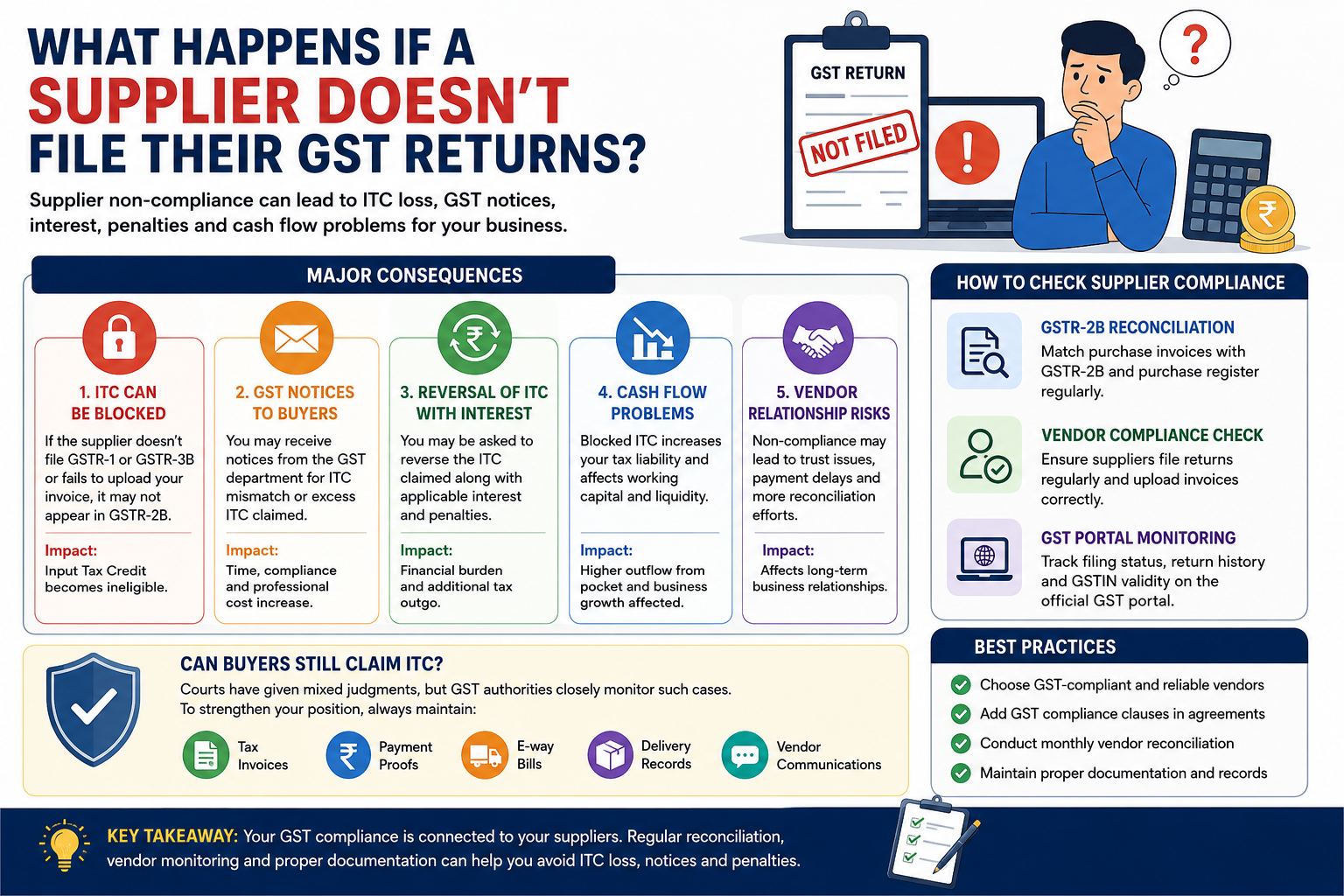
What Happens If a Supplier Doesn’t File Their GST Returns?

  • 2026-02-25
  • suneel
In the GST system, your compliance does not depend only on your own filings. If your supplier fails to file GST returns, it can directly impact your business, especially your Input Tax Credit (ITC), compliance status, and working capital. Many businesses in India receive GST notices simply because vendors or suppliers failed to file their returns on time. Understanding the consequences can help you avoid unnecessary tax disputes and financial losses. Why Supplier GST Filing Matters Under the GST framework, buyers can claim Input Tax Credit only when the supplier: File their GST returns Uploads invoice details correctly If a supplier fails to do this, the buyer may lose ITC eligibility even after making full payment. This is why businesses must regularly verify vendor GST compliance.