

Debit vs Credit in Accounting: Difference, Rules & Examples

  • 2026-08-10
  • suneel
Understanding debit and credit in accounting is one of the first steps toward learning bookkeeping and financial management. Every business transaction affects at least two accounts, and accountants record these changes using debit and credit entries. Although many people associate debit with “money going out” and credit with “money coming in,” accounting works differently. Whether an amount is recorded as a debit or credit depends on the type of account and how the transaction affects it.

12 Common Tax Management Mistakes Small Businesses Make in India

  • 2026-08-11
  • suneel
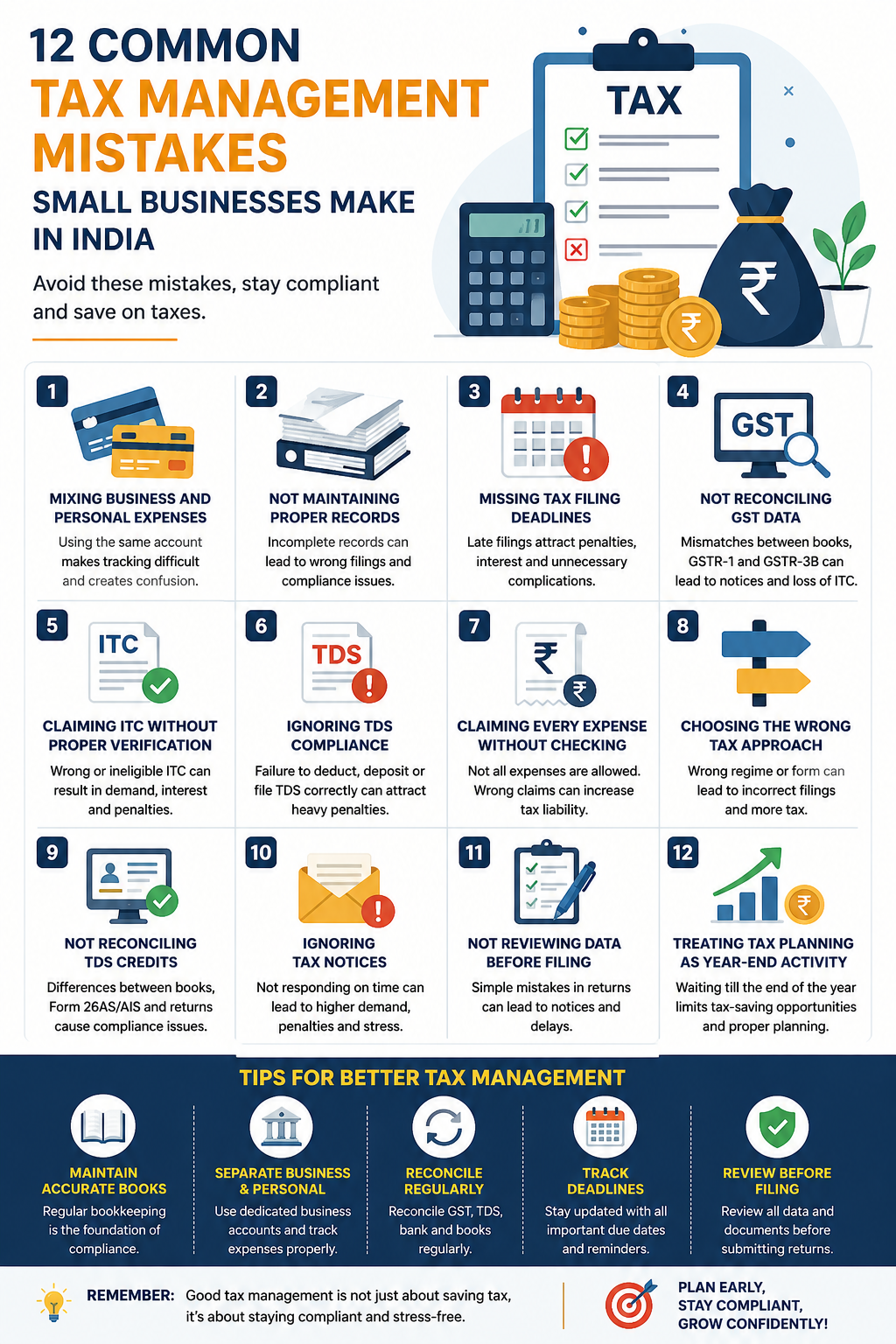
Running a small business in India involves much more than generating sales and managing customers. Business owners also need to stay on top of income tax, GST, TDS, accounting records, invoices, deductions, and filing deadlines. Tax management mistakes are often not intentional. They can occur due to incomplete records, missed deadlines, incorrect data, poor coordination between the accounting and tax teams, or simply a lack of awareness. The good news is that many of these mistakes can be avoided with proper planning and regular review. In this article, we discuss the most common tax management mistakes made by small businesses in India and practical ways to avoid them.

Tax Planning vs Tax Evasion: What Is the Difference?

  • 2026-08-12
  • suneel
Understanding the distinction between tax planning and tax evasion is crucial for individuals, professionals, and businesses seeking to manage their taxes effectively. While both terms relate to reducing tax liability, they differ significantly in terms of legality and approach. Tax planning involves using legal provisions of the Income Tax Act to organise finances and claim eligible deductions, exemptions, and benefits. Tax evasion, on the other hand, involves deliberately hiding income, providing false information, or violating tax laws to avoid paying taxes.

Debit Note vs Credit Note Under GST: When Should a Business Use Each?

  • 2026-08-14
  • suneel
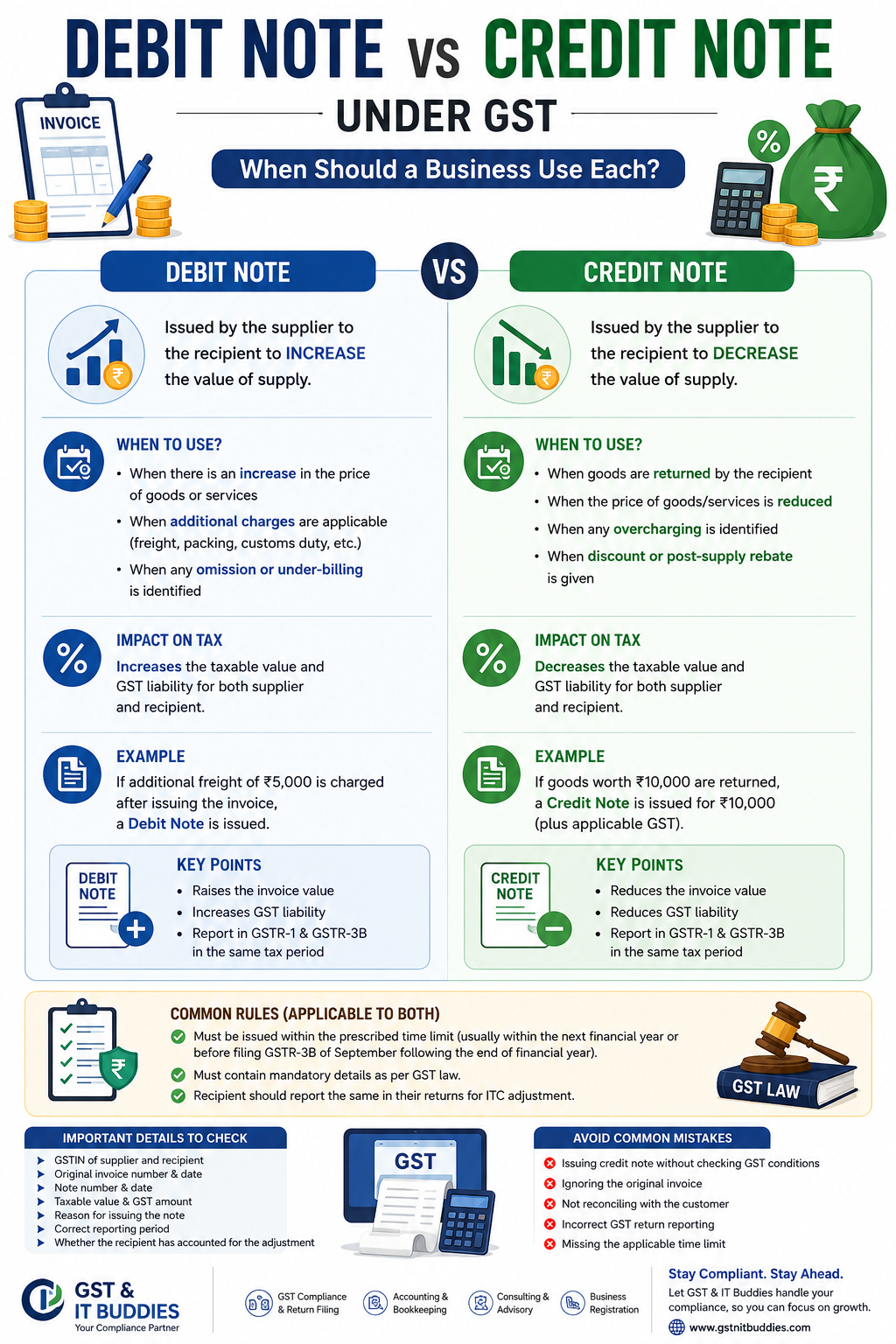
Understanding the difference between a Debit Note and a Credit Note under GST is important for maintaining accurate invoices, GST returns, and input tax credit records. Using the wrong document can lead to incorrect tax liability, reconciliation issues, and compliance problems. In this guide, we explain when a business should issue a debit note or credit note, how each affects GST, and what businesses should keep in mind while reporting them. What Is a Debit Note Under GST? A Debit Note is generally issued by a supplier when the value of a taxable supply or the GST charged in the original invoice needs to be increased. Under GST, a debit note can be issued when:The taxable value mentioned in the original invoice is lower than the actual taxable value. The GST charged in the original invoice is lower than the amount actually payable. Additional charges become applicable after the original invoice was issued. An omission or under-billing is subsequently identified.