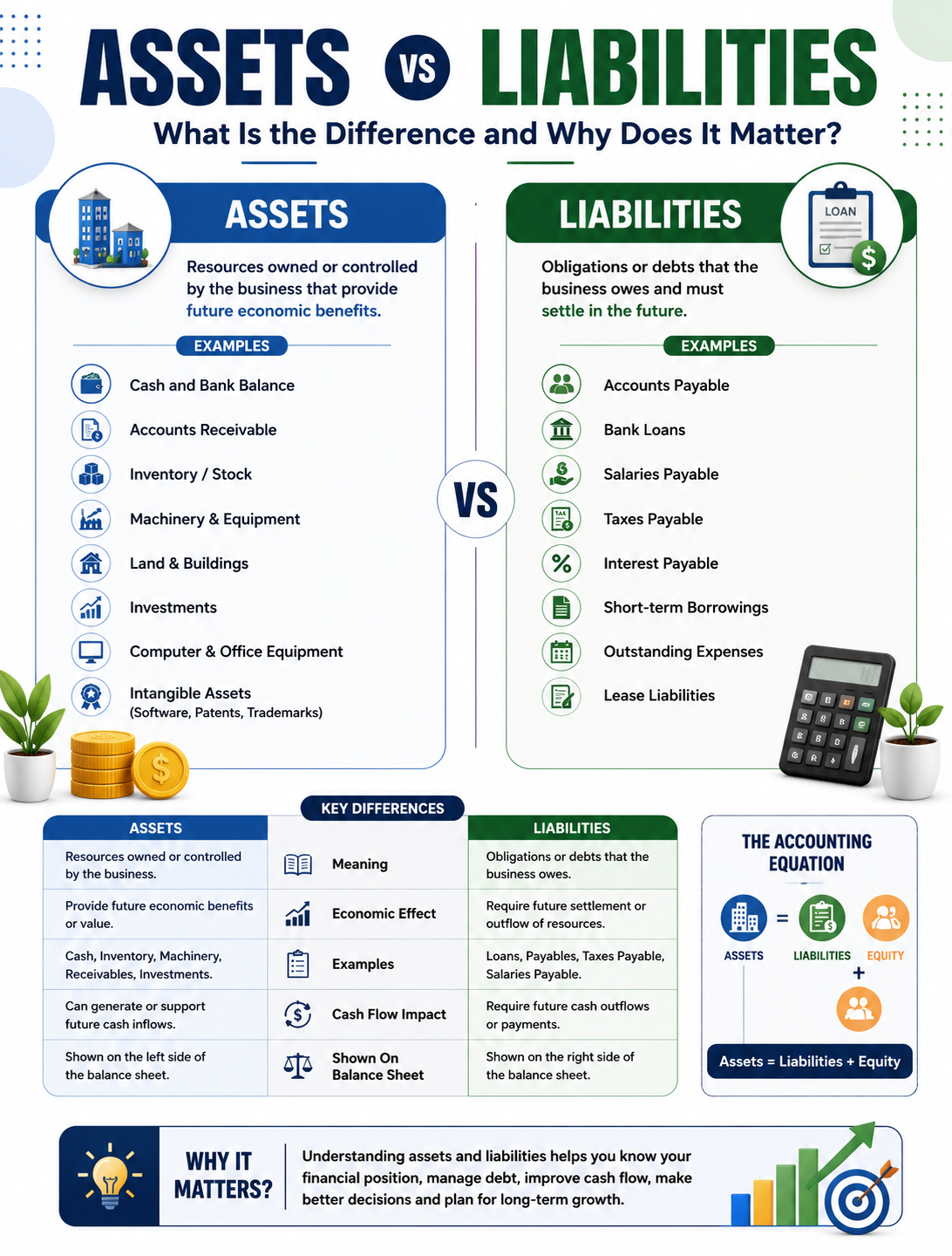
Assets vs Liabilities: What Is the Difference and Why Does It Matter?

  • 2026-08-17
  • suneel
Running a business involves more than generating sales and earning profits. Business owners also need to understand what the business owns and what it owes. This is where the concepts of assets and liabilities become important. Assets and liabilities are two fundamental components of accounting and appear prominently on a company’s balance sheet. Understanding the difference between them can help business owners evaluate financial stability, manage cash flow, make better investment decisions, and plan for future growth.
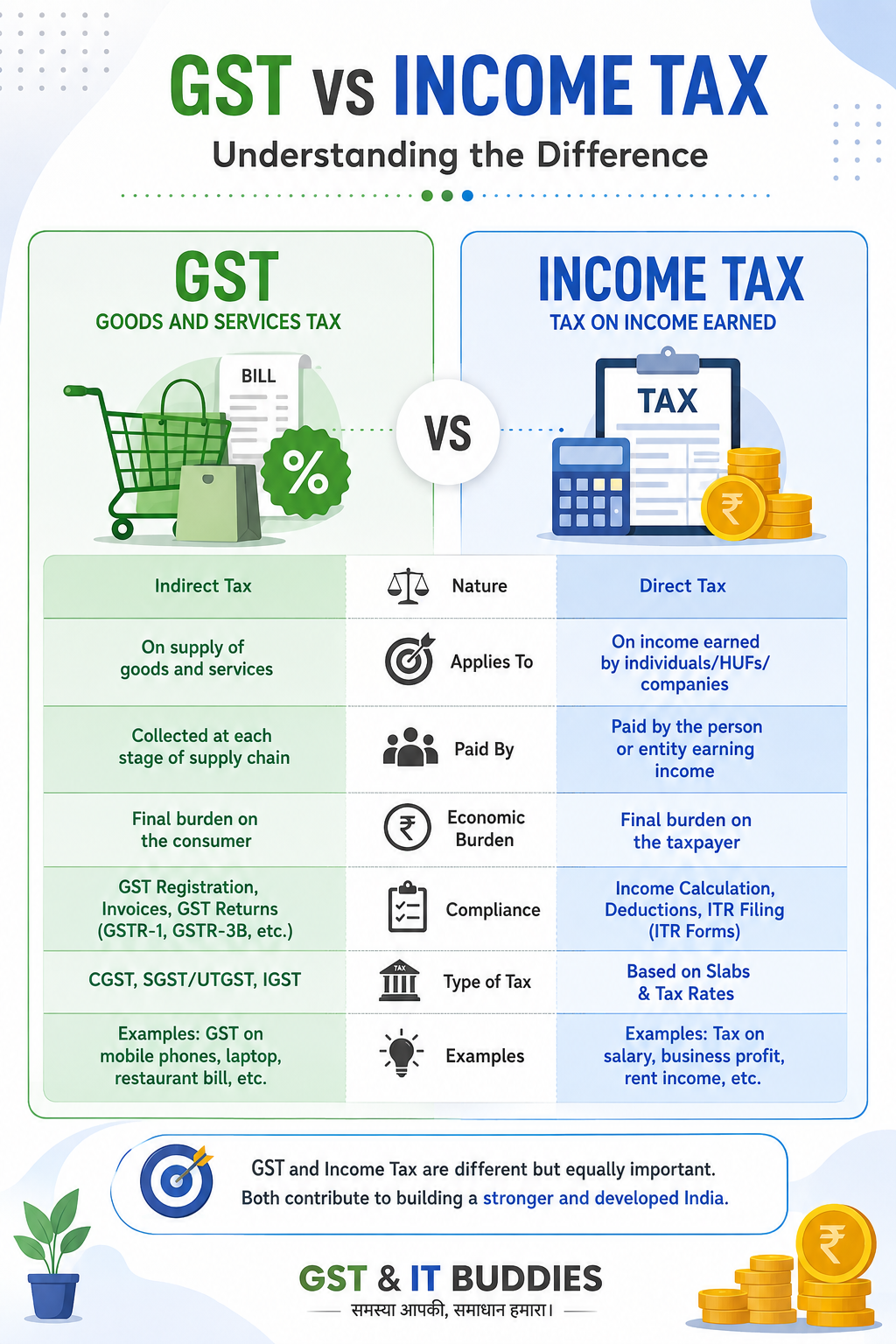
The difference between GST and Income Tax in India, including their meaning, applicability, compliance, and how they affect individuals and businesses.

  • 2026-08-18
  • suneel
Taxes are an important part of India’s financial and economic system. Two of the most commonly discussed taxes are Goods and Services Tax (GST) and Income Tax. Although both are taxes, they apply to different activities and follow different rules. Understanding the difference between GST and Income Tax can help individuals, business owners, and professionals manage their tax responsibilities more effectively.

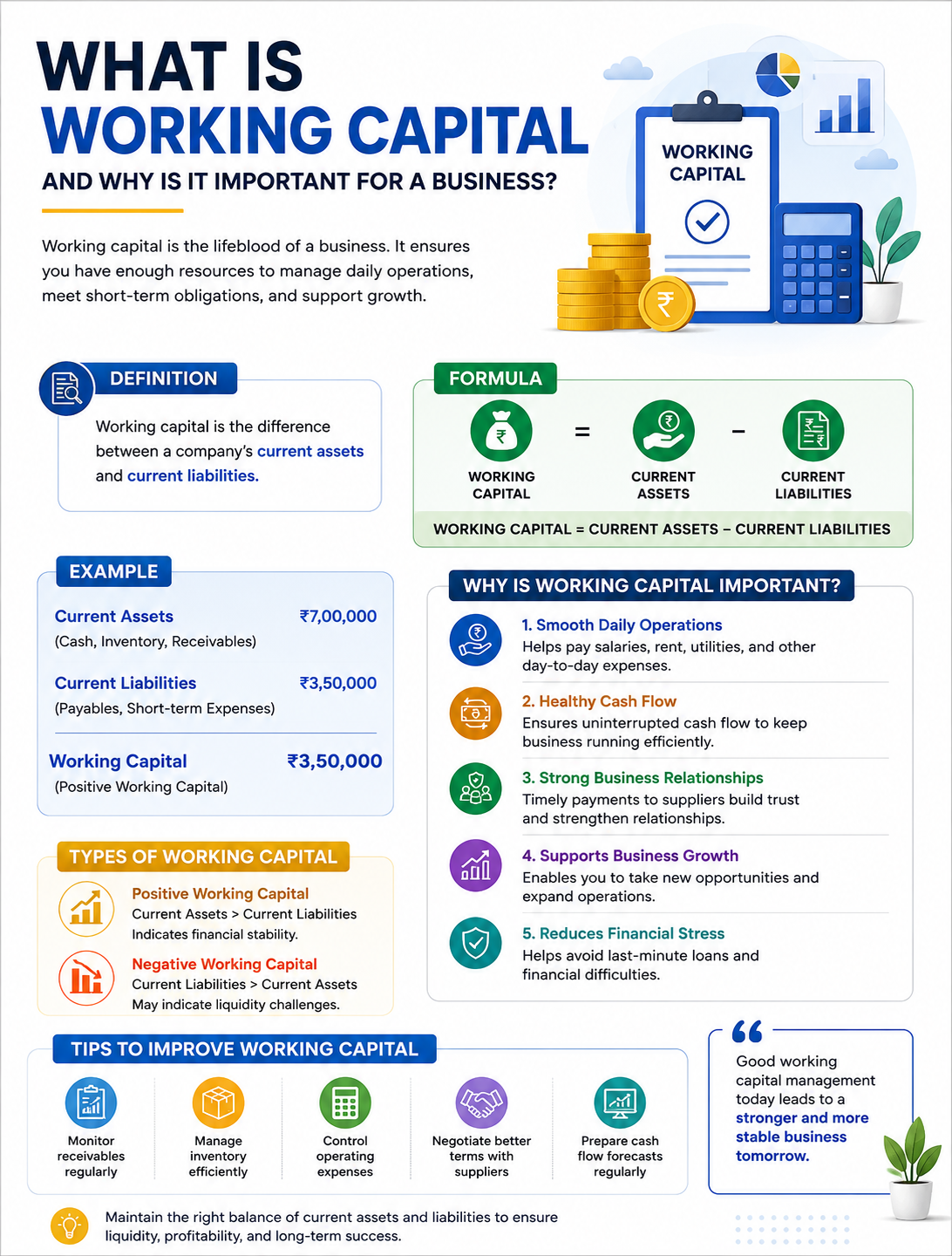
What Is Working Capital and Why Is It Important for a Business?

  • 2026-08-19
  • suneel
Introduction A business may be profitable on paper but still face financial difficulties if it does not have sufficient cash to cover its day-to-day expenses. This is where working capital becomes important. Working capital helps a business understand whether it has enough short-term resources to meet its immediate financial obligations. Effective working capital management can help businesses maintain healthy cash flow, pay suppliers on time, manage operating expenses, and support growth. In this article, we explain what working capital means, how it is calculated, why it is important, and how businesses can manage it effectively.

GST E-Way Bill Closure: Rules, Process & Latest Update 2026

  • 2026-08-21
  • suneel
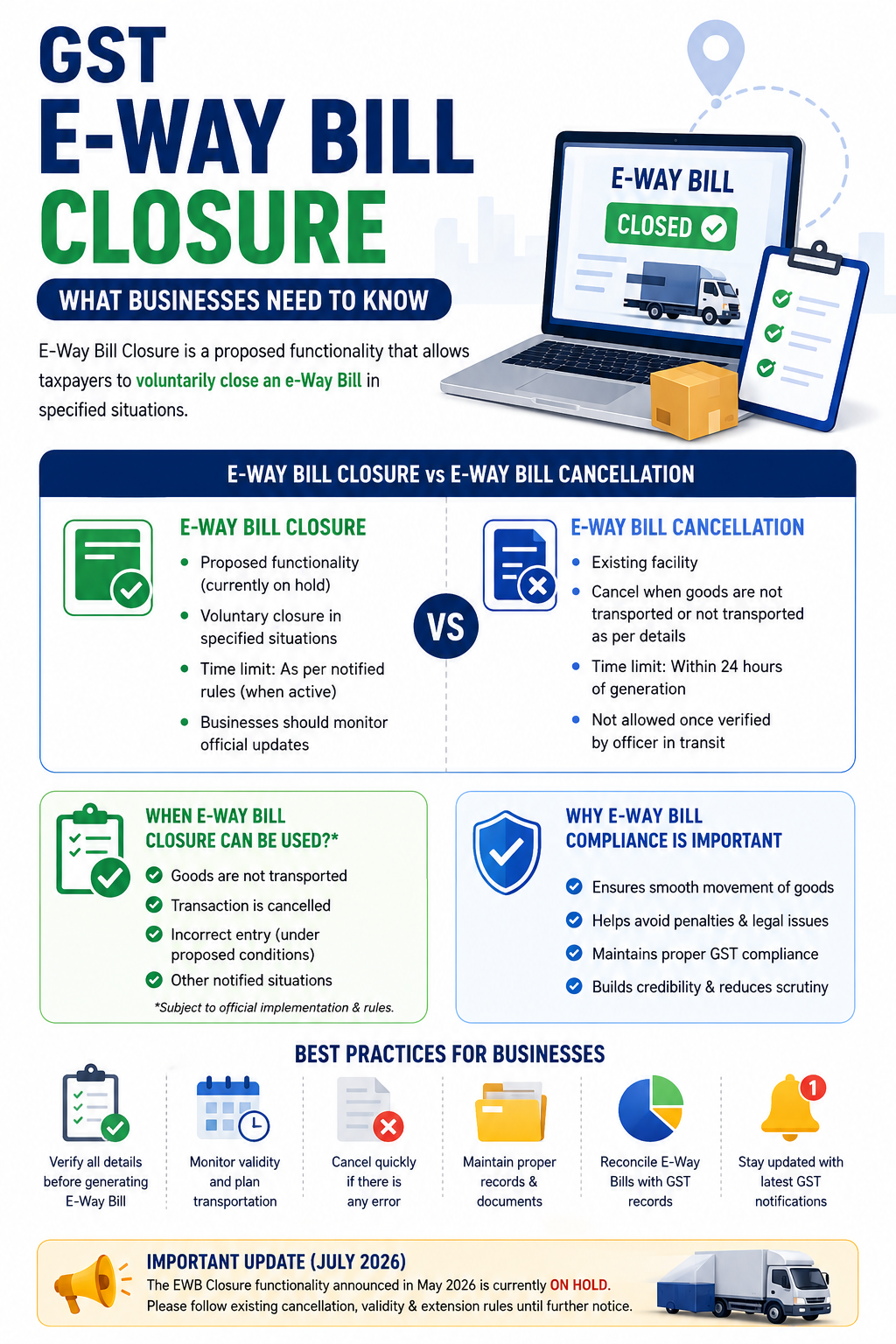
Introduction An e-Way Bill is an important GST compliance document used for the movement of goods. Businesses need to ensure that the information reported in the e-Way Bill matches the actual movement of goods and that the bill remains valid during transportation. In 2026, the e-Way Bill system introduced a proposed EWB Closure functionality, intended to allow taxpayers to voluntarily close certain e-Way Bills in specified situations. However, businesses should note an important current update: according to the official e-Way Bill system release notes dated 30 July 2026, the EWB Closure functionality has been kept on hold.